Mastering Tungsten Gas Welding: Tips for Precision Arc Welding Success
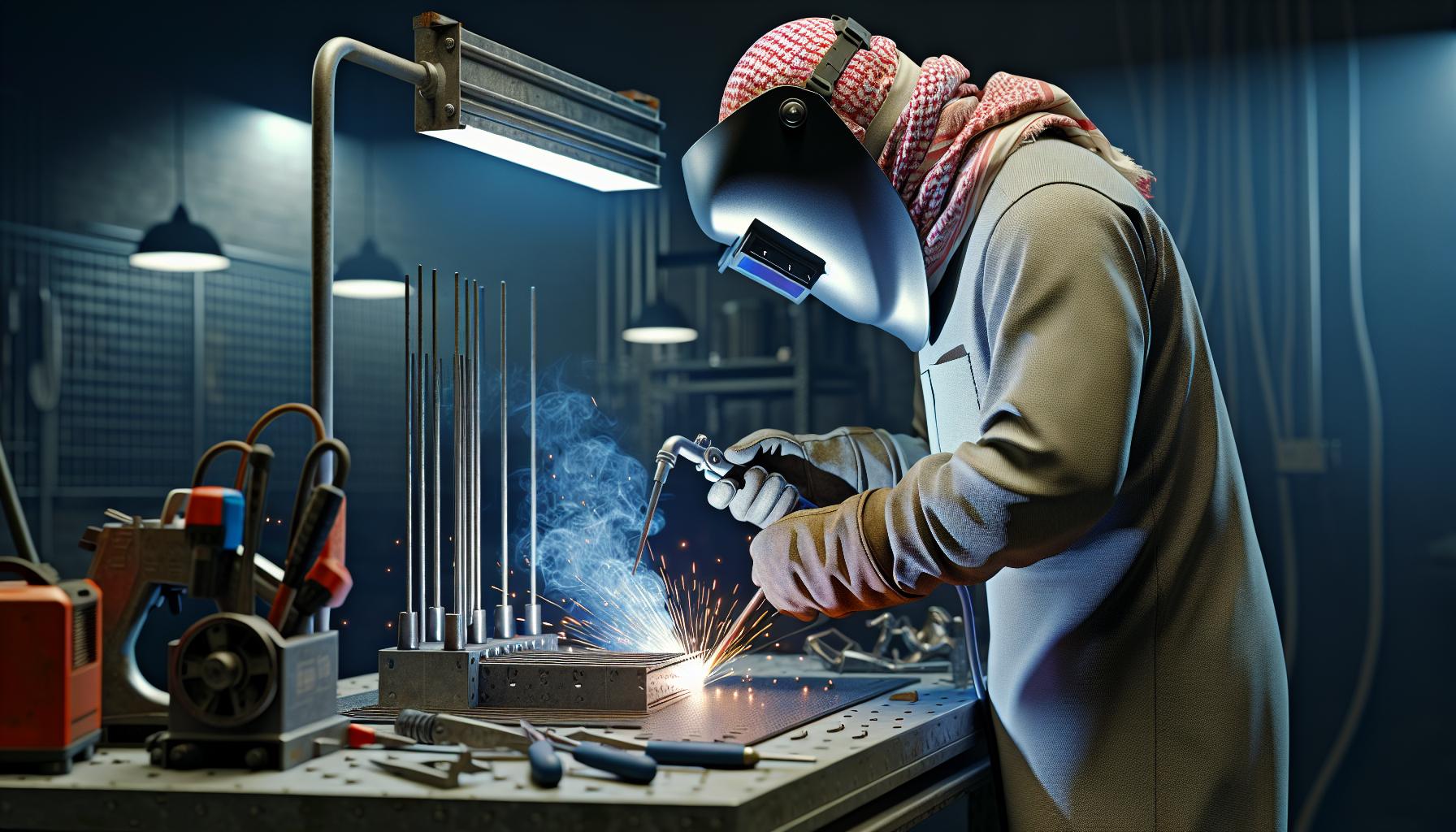
Have you ever wondered how those sleek, seamless metal joints are created? We’re diving into the world of tungsten gas welding, a technique that’s as cool as it sounds. It’s like using a tiny lightning bolt to fuse metals together!

We’ll explore how this precise method works and why it’s the go-to choice for many industries. From aerospace to automotive, tungsten gas welding plays a crucial role in creating strong, durable connections. It’s not just about joining metals; it’s about crafting perfection at the atomic level. So, let’s spark up our curiosity and learn about this fascinating welding process that’s shaping our modern world.

Key Takeaways

  • Tungsten gas welding, also known as GTAW or TIG welding, uses a non-consumable tungsten electrode and inert shielding gas to create precise, high-quality welds.
  • The process offers advantages like clean, spatter-free welds, excellent control, and the ability to weld thin materials and dissimilar metals.
  • Key applications include aerospace, automotive manufacturing, and precision metalwork such as jewellery making and sculpture.
  • Proper safety gear, including welding helmets and flame-resistant clothing, is crucial to protect against harmful UV rays and potential burns.
  • Improving technique involves maintaining cleanliness, practising torch control, using the correct welding angle, and managing heat input effectively.
  • Everything you need for tig welding can be purchased from Norsemen Safety/Welder’s Choice.

What Is Tungsten Gas Welding?

Tungsten Gas Welding, also known as Gas Tungsten Arc Welding (GTAW) or Tungsten Inert Gas (TIG) welding, is a precise arc welding process. It’s like using a tiny lightning bolt to fuse metals together! We use a non-consumable tungsten electrode to produce the weld, which can act as either a cathode or an anode.

Ever wondered how we keep the weld area clean? We’ve got a secret weapon: inert shielding gas. Typically, we use argon or helium to protect the weld area and electrode from atmospheric contamination. It’s like giving the weld its own personal bubble of protection!

But wait, there’s more! We often use a separate filler metal in the form of a wire. However, some welds are rebels and don’t need any filler at all. We call these autogenous welds or fusion welds.

Curious about what powers this welding wizardry? It’s all thanks to a constant-current welding power supply. This clever device generates electrical energy, which zips across the arc through a plasma of highly ionized gas and metal vapours. It’s like a mini lightning storm in your workshop!

The History of Tungsten Gas Welding
f4f21dbd ca95 492d bbf6 151e90a223e7:3lrb7wGRv4Gh7qKpUeyY

Early Beginnings

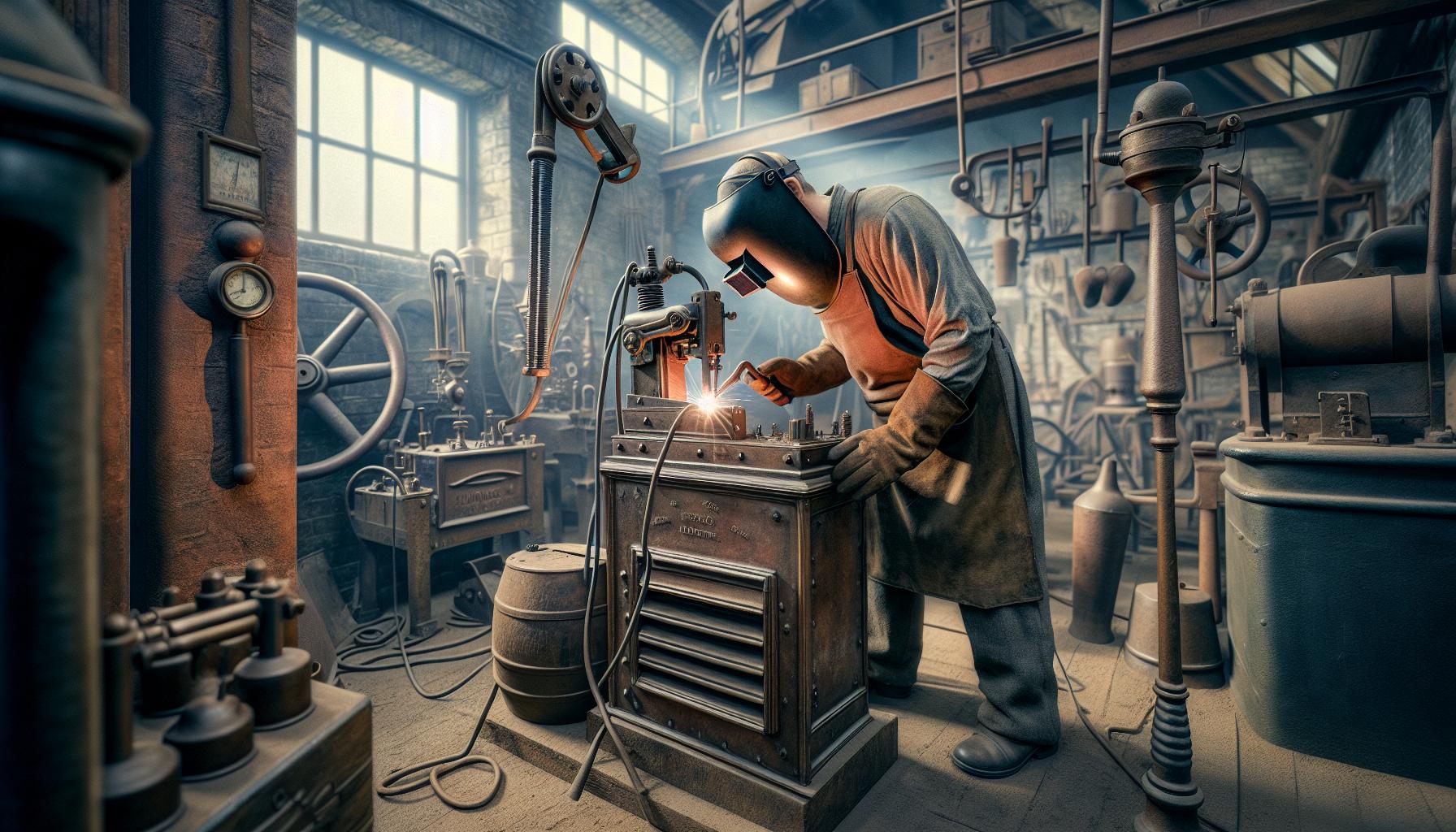
Tungsten gas welding’s story begins in the late 19th century, much like a tiny spark that would eventually ignite a revolution in metal joining. In 1890, C.L. Coffin patented the idea of welding in a nonoxidizing gas atmosphere. It’s as if Coffin had discovered a way to create a magical bubble around the weld, protecting it from the pesky air that loves to ruin a good metal fusion!

Development in the Early 20th Century

Fast forward to the roaring 1920s, when researchers H.M. Hobart and P.K. Devers were busy experimenting with argon and helium atmospheres for shielding the arc. Can you imagine their excitement when they realised they’d stumbled upon something groundbreaking? Their work, patented in 1926, laid the foundation for what we now know as GTAW or TIG welding.

But wait, there’s more! These clever chaps also explored welding with a concentric nozzle and feeding the electrode as a wire through it. It’s like they were playing with a high-tech, metal-melting spaghetti maker! This idea later influenced the development of Gas Metal Arc Welding (GMAW).

Refinement and Commercialization

The 1940s saw GTAW getting a serious makeover. It’s as if the process went from being a scruffy teenager to a polished professional in a matter of years. The refinements made during this period set the stage for GTAW to become the precise and versatile welding method we know today.

As we delve deeper into the history of tungsten gas welding, we’ll uncover more fascinating developments that have shaped this essential technique. Who knows what other welding wonders we’ll discover?

Key Components of Tungsten Gas Welding Equipment

Tungsten gas welding relies on several essential components to create precise, high-quality welds. Let’s explore the key elements that make this welding technique so effective.

Tungsten Electrode

The tungsten electrode is the star of the show in GTAW. It’s like the conductor’s baton in an orchestra, directing the arc with precision. Here’s what you need to know:

  • Made from tungsten or tungsten alloys, these electrodes boast a melting point of about 6,170°F (3,410°C).
  • Various types are available, including pure tungsten, thoriated tungsten, and zirconiated tungsten.
  • Thoriated tungsten electrodes are ground to a point, improving arc starting and stability.
  • The electrode’s taper affects weld shape and penetration.
  • Size matters: larger electrodes handle higher currents, while smaller ones suit thinner materials or out-of-position welding.

Shielding Gas

Think of shielding gas as the bouncer at a exclusive weld party – it keeps the riff-raff (atmospheric contaminants) out. Here’s the lowdown:

  • Crucial for protecting the weld area and tungsten electrode from atmospheric contamination.
  • Typically inert gases like argon or helium are used.
  • The choice of gas affects weld appearance, penetration, and overall quality.
  • Flow rates and gas mixtures can be adjusted for different materials and welding conditions.

Power Source

The power source is the heart of the GTAW system, pumping electrical energy to create that all-important arc. Let’s break it down:

  • Constant-current welding power supplies are used to maintain a steady arc.
  • They can be AC or DC, depending on the material being welded.
  • Modern power sources often include features like pulse welding and high-frequency starting.
  • Amperage control allows for precise adjustments to suit different material thicknesses.
  • Some units offer programmable settings for repeatable welds.

The Tungsten Gas Welding Process Explained

Tungsten Inert Gas (TIG) welding, also known as Gas Tungsten Arc Welding (GTAW), is a precise and high-quality arc welding process. Let’s dive into the key steps of this fascinating technique.

Preparing the Workpiece

Proper preparation is the cornerstone of successful TIG welding. Here’s what we do:

  • Clean the workpiece thoroughly, removing oil, moisture, dirt, and other impurities.
  • Use alcohol or commercial solvents to eliminate oil and grease.
  • Remove oxides from metal surfaces, especially for materials like aluminium, using a stainless steel wire brush or chemical process.
  • Machine the edges of the workpiece for a precise fit-up, particularly important for mechanised systems like orbital welding.
  • Ensure accurate joint fit-up to maintain control over the weld pool and arc behaviour.

Ever tried to paint a dirty wall? It’s a bit like that – the cleaner your canvas, the better your masterpiece!

Striking the Arc

Striking the arc in TIG welding is like lighting a tiny, controlled lightning bolt. Here’s how we do it:

  • Position the torch at a 15-20 degree angle to the workpiece.
  • Bring the tungsten electrode close to the workpiece, about 2-3 mm away.
  • Press the torch switch to initiate the flow of shielding gas.
  • Gently touch the tungsten to the workpiece and immediately lift it to create the arc.
  • Maintain a consistent arc length of about 3-5 mm.

Remember, practice makes perfect. Don’t be discouraged if your first attempts look more like a fireworks display than a weld!

Controlling the Weld Pool

Mastering weld pool control is where the real artistry of TIG welding shines. Here’s how we do it:

  • Move the torch steadily along the joint at a consistent speed.
  • Maintain a constant arc length to keep the heat input uniform.
  • Add filler metal if needed, dipping it into the leading edge of the weld pool.
  • Control the heat input by adjusting the amperage or using a foot pedal.
  • Watch the weld pool size and shape, adjusting your technique as needed.

Advantages of Tungsten Gas Welding

Tungsten Gas Welding, also known as Gas Tungsten Arc Welding (GTAW) or TIG welding, is like having a magic wand for metal. It’s the Rolls-Royce of welding techniques, offering a host of benefits that make welders smile. Let’s dive into why GTAW is the toast of the welding world.

High-Quality Welds

GTAW produces welds that are stronger than a bodybuilder’s biceps and more flexible than a gymnast. These welds are top-notch, surpassing those made by other metal arc welding methods. With GTAW, we’ve got more control over the weld area than a conductor has over an orchestra, resulting in joints that could withstand a zombie apocalypse.

Clean and Precise Welds

GTAW is even cleaner! It doesn’t use flux, so there’s no risk of flux getting trapped in the weld bead. The result? Welds cleaner than your gran’s kitchen floor, with no spatter, sparks, or smoke.

This cleanliness makes GTAW perfect for jobs where looks matter. It’s the supermodel of welding techniques, producing welds so pretty you might want to frame them. And for those serious X-ray quality welds? GTAW’s got you covered.

So, fellow metal enthusiasts, isn’t it time we appreciated the art of tungsten gas welding? It’s not just about joining metals; it’s about creating connections that stand the test of time. Who knew that playing with lightning could be so productive?

Common Applications of Tungsten Gas Welding

Tungsten gas welding, also known as GTAW or TIG welding, is a versatile technique used in various industries. Let’s explore some of its common applications.

Aerospace Industry

In the aerospace sector, tungsten gas welding is the go-to method for creating strong, precise joints. It’s like using a laser-focused lightning bolt to craft the skeleton of aircraft and spacecraft. Here’s why it’s so crucial:

  • Magnesium welding: GTAW excels at joining magnesium parts, which are common in aerospace due to their lightweight properties.
  • High-quality welds: The process produces aesthetically pleasing welds that meet the strict standards of aircraft manufacturing.
  • Precision work: GTAW allows welders to tackle complex components with the accuracy of a surgeon’s scalpel.

Automotive Manufacturing

In the world of cars, GTAW is the unsung hero behind many of the vehicles we drive daily. It’s like the secret ingredient in your favourite recipe – you might not see it, but it makes all the difference. Here’s how:

  • Critical components: GTAW joins crucial vehicle parts, ensuring they can withstand the rigours of the road.
  • Rust-resistant welds: The process creates strong, corrosion-resistant joints that keep cars running smoothly for years.
  • Precise control: Welders can fine-tune their work, much like a painter adding the final touches to a masterpiece.

Precision Metalwork

When it comes to intricate metal projects, tungsten gas welding is the artist’s brush of choice. It’s perfect for tasks that require a steady hand and an eye for detail. Here’s where GTAW shines:

  • Jewellery making: Crafting delicate pieces that’ll make your gran’s eyes light up at Christmas.
  • Sculpture creation: Bringing metal to life in ways that would make Michelangelo jealous.
  • Custom fabrication: Creating one-of-a-kind items that’ll have your mates asking, “Where’d you get that?”

Safety Considerations in Tungsten Gas Welding

We’ve all heard the saying, “Safety first!” And when it comes to tungsten gas welding, it’s not just a catchy phrase—it’s a lifesaver. Picture this: you’re wielding the power of a miniature sun in your hands. Exciting, right? But also potentially dangerous if you’re not careful. .

Eye and Skin Protection

Ever tried to look directly at the sun? Ouch! Well, the arc in tungsten gas welding is just as bright and can be just as harmful. That’s why proper eye protection is non-negotiable. We’re talking about welding helmets with the right shade filter lenses. Think of them as sunglasses on steroids, specifically designed to shield your peepers from those pesky UV and IR rays.

But why stop at the eyes? Your skin needs some love too. The arc’s radiation can give you a nasty sunburn faster than you can say “ouch.” That’s where protective clothing comes in. We’re not suggesting you dress up like an astronaut, but covering up with flame-resistant gear is a must.

Here’s a quick rundown of what you’ll need:

Remember, folks, we’re not just talking about looking cool (although safety gear does have a certain Mad Max vibe to it). We’re talking about keeping your eyes, skin, and overall health in tip-top shape.

Have you ever wondered what would happen if welders didn’t use proper protection? Well, let’s just say “arc eye” or welder’s flash is no laughing matter. It’s like having sand in your eyes, but worse. And don’t even get us started on skin burns. Trust us, you don’t want to experience either of these firsthand.

So, next time you’re gearing up for some tungsten gas welding, take a moment to double-check your safety gear. Your future self will thank you for it. After all, we want you to keep enjoying the art of welding for years to come, not nursing a nasty case of welder’s flash.

Tips for Improving Tungsten Gas Welding Technique

Mastering tungsten gas welding is like learning to dance with electricity. We’ve gathered some top tips to help you perfect your moves and join the community of skilled welders. Ready to boogie with your torch?

Cleanliness Is Next to Wellness

Cleanliness isn’t just for germaphobes; it’s crucial for top-notch welds. Picture your welding area as a pristine kitchen where you’re about to whip up a gourmet meal. You wouldn’t cook in a dirty kitchen, would you?

  • Scrub your workpiece like you’re prepping for a royal inspection
  • Wipe down your filler rod as if it’s the last clean fork at a buffet
  • Keep your electrode sharp and shiny, like a pencil on the first day of school

Ever tried writing with a broken crayon? That’s what welding with a dirty electrode feels like. Don’t be that welder!

Torch Control: The Art of Steady Hands

Holding a welding torch steady is trickier than balancing a spoon on your nose. But fear not! We’ve got some tricks up our sleeve:

  • Practice makes perfect: Try tracing lines on paper with your torch (unpowered, of course!)
  • Use both hands: One for the torch, one for the filler rod – like rubbing your belly and patting your head
  • Find your comfy stance: Welding isn’t a yoga class, but good posture helps

Remember, a wobbly torch leads to wobbly welds. And nobody wants a wobbly weld, do they?

The Right Angle for the Right Weld

Positioning your torch is like aiming a water hose at a specific flower. Too close, and you’ll drown it; too far, and it’ll die of thirst. Here’s how to nail it:

  • Keep a 15-20 degree angle between the torch and workpiece
  • Hold the filler rod at a 90-degree angle to the torch
  • Maintain a consistent arc length, about 1/8 inch

Heat Management: The Goldilocks Zone

Managing heat in welding is like cooking porridge – not too hot, not too cold, but just right. How do we achieve this welding nirvana?

  • Start with a lower amperage and work your way up
  • Move at a steady pace, like a determined snail
  • Watch the weld pool size – it should be consistent, like your grandma’s cooking

Conclusion

Tungsten gas welding stands as a pinnacle of precision and versatility in the world of metal joining. We’ve explored its rich history evolution and applications across industries from aerospace to artistry. This technique’s ability to produce clean strong and visually appealing welds makes it indispensable for modern manufacturing. As we’ve seen mastering GTAW requires skill attention to safety and continuous improvement. By embracing these principles welders can harness the power of this remarkable process creating connections that are both functional and beautiful. The future of tungsten gas welding looks bright poised to continue shaping our world one perfect weld at a time.

Frequently Asked Questions

What is tungsten gas welding?

Tungsten gas welding, also known as Gas Tungsten Arc Welding (GTAW) or Tungsten Inert Gas (TIG) welding, is a precise welding technique that uses a non-consumable tungsten electrode to create strong metal joints. It employs an inert shielding gas to protect the weld area from atmospheric contamination, resulting in high-quality, seamless welds.

When was tungsten gas welding invented?

The concept of welding in a non-oxidising gas atmosphere was patented by C.L. Coffin in 1890. However, significant advancements were made in the 1920s by H.M. Hobart and P.K. Devers, who experimented with argon and helium for shielding. The 1940s brought further refinements, transforming GTAW into the precise and versatile method it is today.

What are the key components of tungsten gas welding equipment?

The key components of tungsten gas welding equipment include:

  1. Tungsten electrode: Directs the arc with precision
  2. Shielding gas: Protects the weld area from contaminants
  3. Power source: Provides electrical energy to maintain a steady arc
    These components work together to create high-quality welds with precise control.

What are the advantages of tungsten gas welding?

Tungsten gas welding offers several advantages:

  1. High-quality, strong, and flexible welds
  2. Precision and control, likened to ‘painting with electricity’
  3. Clean welds without flux, ideal for aesthetically demanding jobs
  4. Versatility across various materials and industries
    These benefits make it the ‘Rolls-Royce’ of welding techniques.

In which industries is tungsten gas welding commonly used?

Tungsten gas welding is widely used in:

  1. Aerospace: For creating strong, precise joints in aircraft components
  2. Automotive: Joining critical vehicle parts with durable, rust-resistant welds
  3. Precision metalwork: Including jewellery making and custom fabrication
  4. Sculpture and art: For creating intricate metal artworks
    Its versatility makes it essential across various manufacturing and creative sectors.

What safety precautions should be taken when tungsten gas welding?

Essential safety precautions for tungsten gas welding include:

  1. Wearing a welding helmet with appropriate shade filter lenses

    Check out the GYS LCD Apollo+

    gys welding helmet

    2. Using flame-resistant clothing to protect against sparks and heat

    Check out the Portwest BIZ5
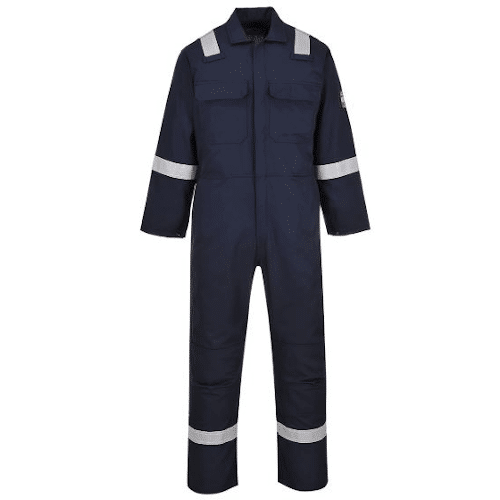
    welding overall

    3. Wearing welding gloves to shield hands from heat and radiation

    Check out the SPIDERHAND TIG Welding gloves

    SPIDERHAND TIG SUPREME 1

    4. Ensuring proper ventilation to avoid inhaling harmful fumes

    Check out the AER Portable Welding Fume Extractor
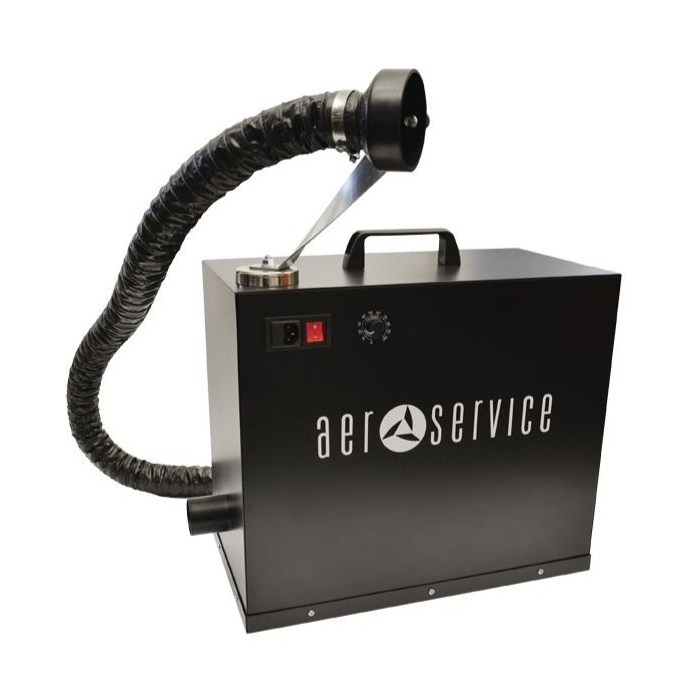
    Portable Welding fume Extractor AER 201

    5. Prioritising safety helps prevent injuries like ‘arc eye’ and skin burns.

      How can I improve my tungsten gas welding technique?

      To improve your tungsten gas welding technique:

      1. Ensure a clean workpiece and welding area
      2. Maintain proper torch control and steady hands
      3. Keep the correct angle between the torch and workpiece
      4. Manage heat input effectively
      5. Practice these tips consistently to enhance your welding skills and achieve high-quality results.
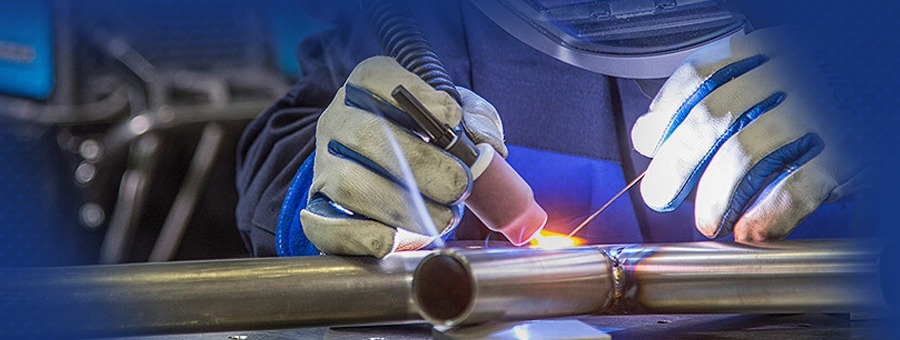
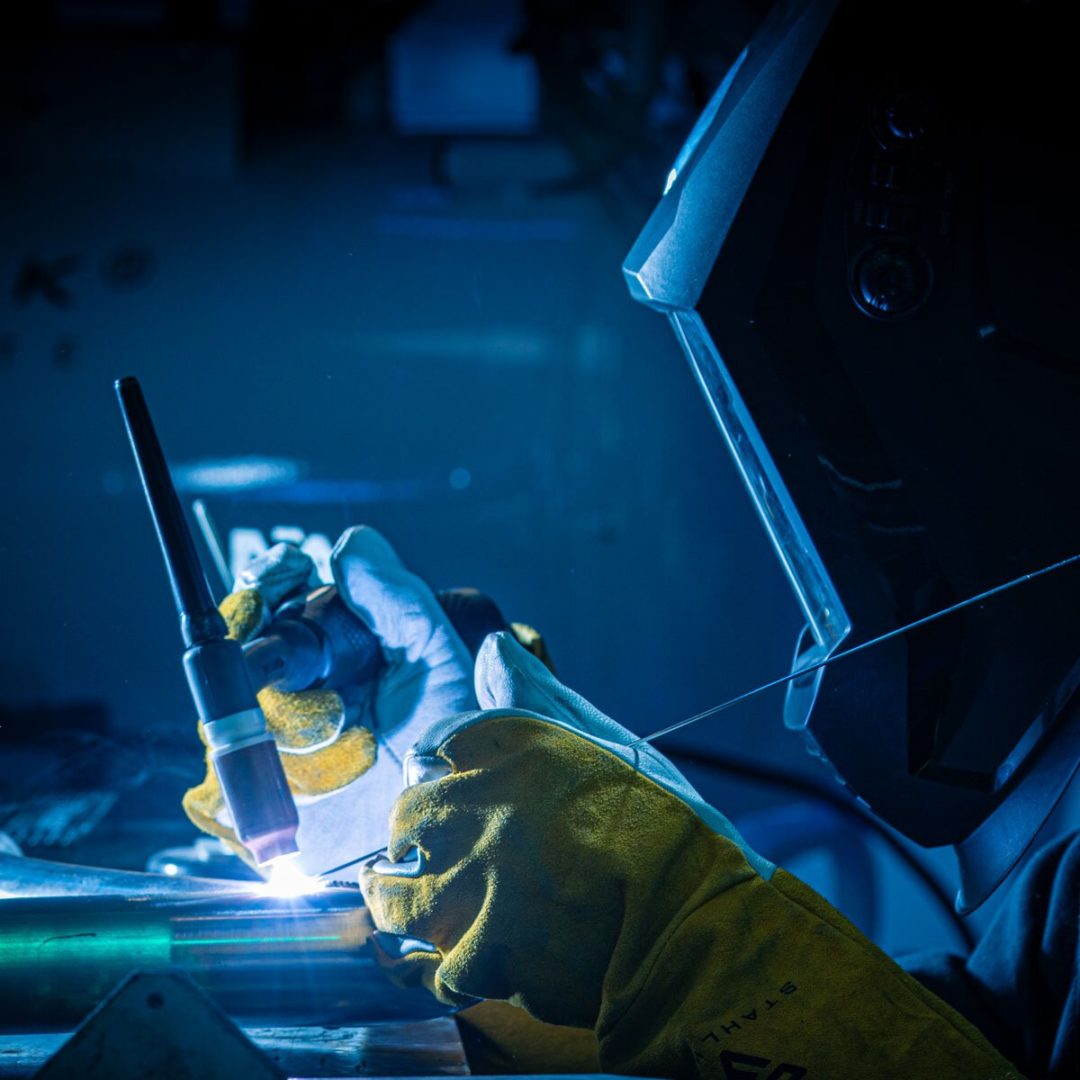
      Premium TIG Welder for Sale Ireland – New & Used | Welder’s Choice Your Number 1 Choice

      Discover top-quality TIG welders for sale Ireland at Welder’s Choice. Explore our range of new and used industrial AC/DC TIG welders. Ideal for precision welding tasks.

      High-Quality TIG Welder for sale Ireland – New and Used

      Welcome to Welder’s Choice, your premier destination for the finest TIG welder for sale Ireland. Whether you’re a professional looking for an industrial-grade TIG welder or a hobbyist in need of a reliable AC/DC TIG welder, we have a diverse selection to meet all your welding needs.

      tig welder for sale ireland

      Explore Our Range of TIG Welders

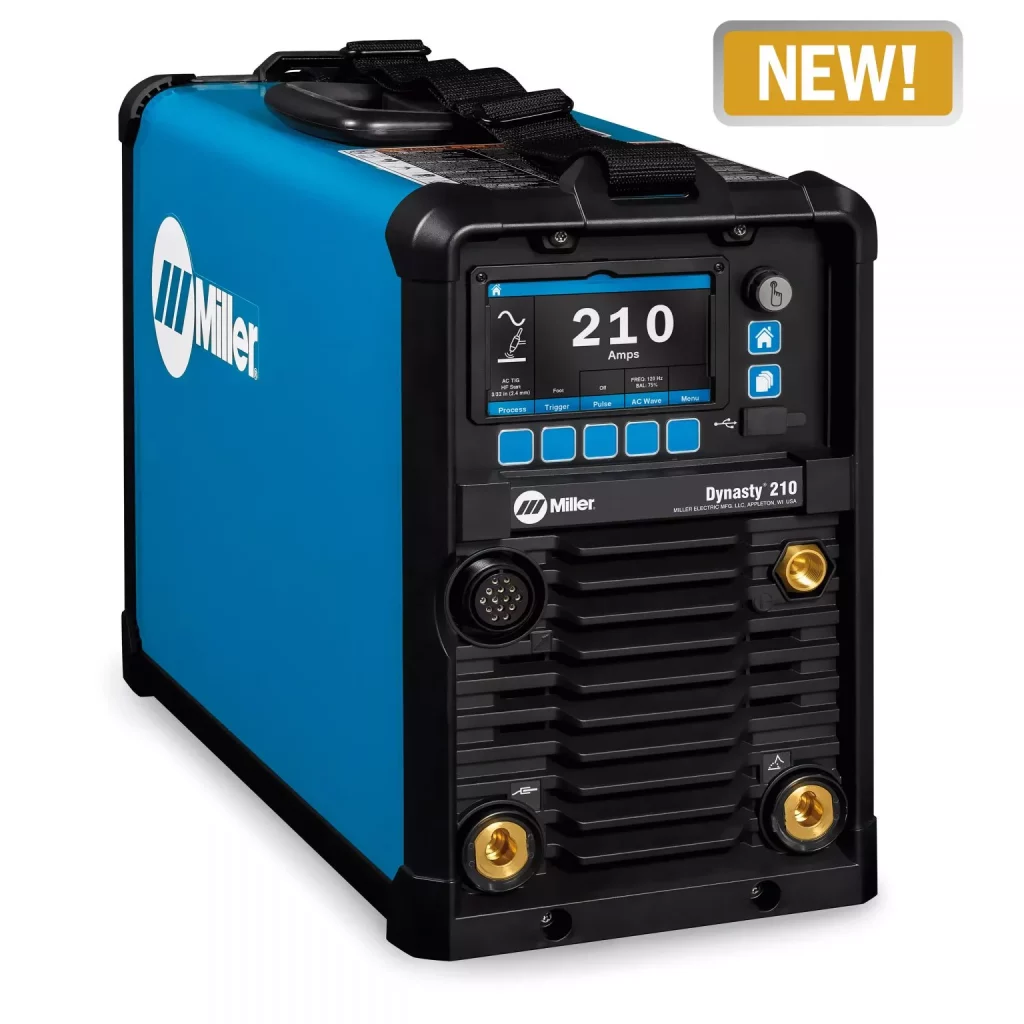
      At Welder’s Choice, we take pride in offering a diverse selection of TIG welders, catering to the varied needs of our customers in Ireland. Our range spans from compact, user-friendly models perfect for home and hobbyist use, to robust industrial TIG welders designed for heavy-duty applications. Brands like Miller Welding, Parweld, Stahlwerk and Helvi allow us to provide a solution for any welding requirement.

      Understanding the diverse requirements of our customers, we provide both AC and DC TIG welders, ensuring that whether you’re working with thinner materials like aluminum or tackling thicker, more resistant metals, we have the right tool for the job. Our industrial TIG welders stand out for their exceptional durability and efficiency, making them a go-to choice for larger scale projects and professional workshops. Each TIG welder in our collection is carefully selected to ensure it meets our high standards of performance and reliability, guaranteeing that no matter the task at hand, our equipment is up to the challenge. With Welder’s Choice, you’re not just purchasing a TIG welder; you’re investing in a solution that’s tailored to your specific welding needs, be it for precise, delicate work or demanding industrial environments.

      New TIG Welders for Sale Ireland

      Discover the latest advancements in TIG welding with our new range of TIG welders, where cutting-edge technology meets unmatched reliability and precision. These state-of-the-art machines are equipped with innovative features like micro-controlled inverters and pulse welding capabilities, ensuring superior control over the welding process. The integration of advanced technology not only enhances the precision of each weld but also contributes to significant energy efficiency, making these welders both powerful and cost-effective. With their robust construction and proven durability, our TIG welders promise long-term reliability, standing up to the rigors of both heavy-duty industrial work and intricate, precision-based projects. The user-friendly interfaces and programmable settings simplify the welding experience, making them accessible to both seasoned professionals and beginners. Whether tackling thin metals or working on complex welding tasks, the precision and versatility of our TIG welders make them an indispensable tool for achieving flawless, high-quality welds every time. Embrace the future of welding with our advanced TIG welders, designed to elevate your welding projects to new heights of excellence.

      Quality Used TIG Welders for Sale Ireland

      Opting for used TIG welders presents a smart, cost-effective solution for both professional welders and hobbyists. These machines offer a blend of affordability and tested reliability, making them an ideal choice for those seeking quality welding capabilities without the hefty price tag of new models.

      Each of our used TIG welders undergoes rigorous quality checks and thorough maintenance to ensure they meet high standards of performance and safety. This meticulous refurbishment process not only extends the life of the welders but also guarantees that they function as efficiently as their newer counterparts.

      By choosing a used TIG welder, you benefit from the proven durability and precision of established technology, along with the assurance of comprehensive post-purchase support. Whether you’re tackling intricate artistic projects or heavy-duty industrial tasks, our selection of used TIG welders offers the perfect balance of cost-effectiveness and reliable, high-quality welding performance, making them a prudent investment for any welding enthusiast. Contact us to check availability of used tig welders.

      Why Choose Our Industrial TIG Welders?

      Industrial TIG welders like the Miller Syncrowave 400 AC/DC stand as the backbone of heavy-duty welding, offering unparalleled robustness, efficiency, and the capability to handle larger, more complex tasks with ease. These welders are specifically designed to endure the rigorous demands of industrial environments, ensuring long-lasting performance under challenging conditions. Their robust construction not only promises durability but also guarantees consistent, high-quality welds, crucial for industrial applications.

      With advanced features like high amperage ranges, precise heat control, and versatile AC/DC capabilities, industrial TIG welders are adept at tackling a wide array of materials, from thick steel to delicate aluminum. The efficiency of these machines is evident in their swift welding speeds and reduced energy consumption, leading to increased productivity and cost savings. Moreover, the precision and control offered by industrial TIG welders make them ideal for complex welding tasks, where detail and accuracy are paramount. By integrating these powerful tools into your workflow, you elevate the quality, efficiency, and scope of your welding projects, ensuring results that meet the highest standards of the industry. Miller Welding offers a complete line of industrial tig welders with 3-Year Warranty. See the full range we offer at Miller Welds Europe.

      AC/DC TIG Welders: Versatility and Precision

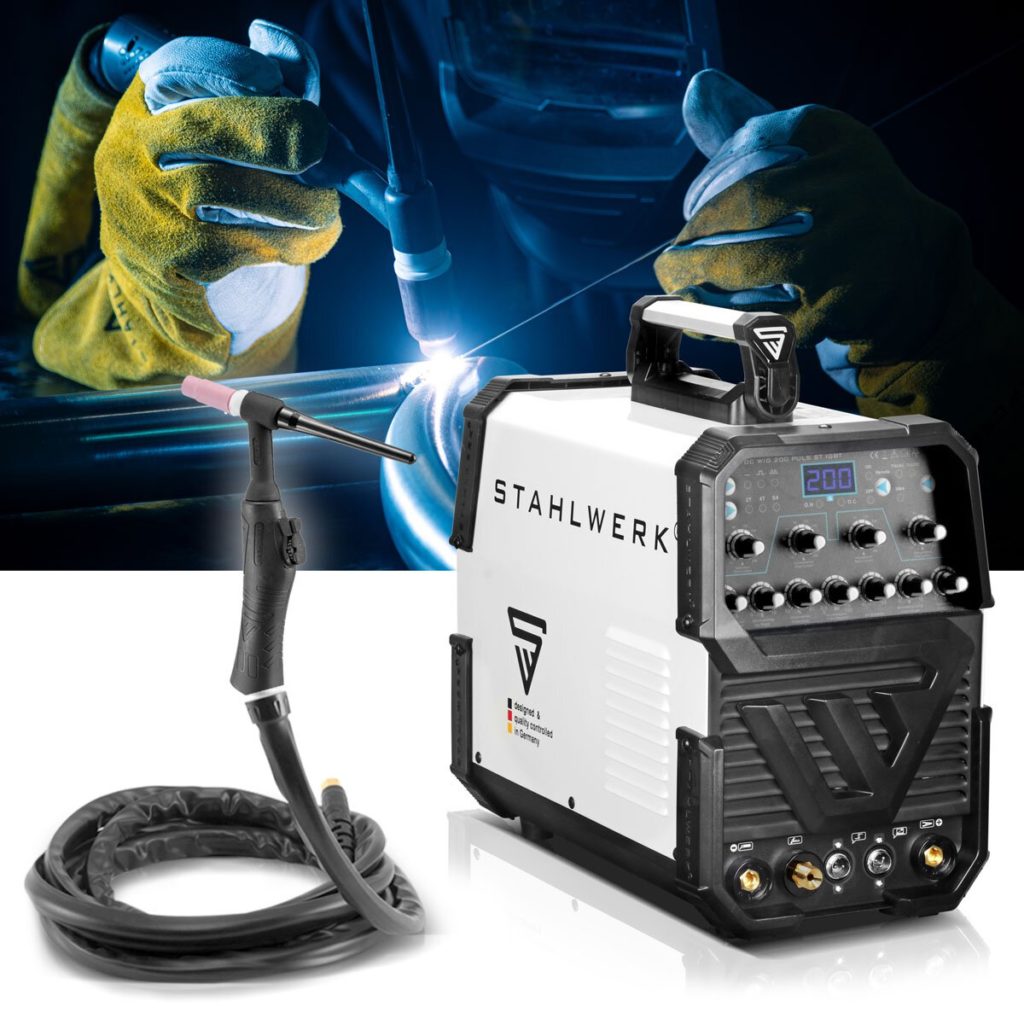
      stahlwerk tig welder

      AC/DC TIG welders are celebrated for their exceptional versatility and precision, making them a top choice for welders working across a diverse range of metals. These welders combine the benefits of both alternating current (AC) and direct current (DC) welding, providing the flexibility needed to tackle different welding projects with ease. The AC setting is ideal for welding softer metals like aluminum and magnesium, efficiently cleaning the oxidized layers for a stronger weld.

      On the other hand, the DC setting offers deep penetration for thicker and harder materials such as steel and stainless steel, ensuring robust and durable welds. This dual functionality not only broadens the scope of projects you can undertake but also enhances the quality of the welds. Additionally, AC/DC TIG welders often come with advanced features like pulse control, which helps in managing heat input and minimizing warping, especially beneficial when working with thin materials or intricate designs. Their precise control over the welding arc and stability in performance make these welders a preferred choice for both professional and hobbyist welders seeking to achieve clean, high-quality welds on a variety of metals. Whether you’re in an industrial setting or a small workshop, the adaptability and precision of AC/DC TIG welders can significantly elevate the efficiency and quality of your welding tasks.

      In Summary – Why Investing in a Tig Welder for Sale is a Smart Decision for Pros and Hobbyists

      Are you a professional welder or a hobbyist looking to enhance your welding skills? Investing in a Tig welder for sale could be one of the smartest decisions you’ll make. Tig welders are known for their precision, versatility, and superior welding capabilities, making them an ideal choice for both professionals and enthusiasts.

      With a Tig welder, you can weld a variety of metals, including stainless steel, aluminum, and copper, with exceptional control and accuracy. Whether you’re working on automotive repairs, fabricating artwork, or constructing industrial structures, a Tig welder will provide you with unmatched welding performance.

      Not only do Tig welders deliver high-quality welds, but they also provide a cleaner and more aesthetically pleasing finish compared to other welding methods. Their ability to create narrow and concentrated weld pools ensures minimal distortion and excellent weld penetration.

      Investing in a Tig welder can save you time, increase your productivity, and ultimately boost your welding expertise. With the right Tig welder for sale, you’ll have the tools needed to tackle any welding project with confidence and precision. Don’t miss out on the numerous advantages that come with owning a Tig welder – take your welding skills to the next level today.

      Understanding TIG welding: Definition and process

      TIG welding, also known as Gas Tungsten Arc Welding (GTAW), is a welding process that uses a non-consumable tungsten electrode to produce the weld. The electrode creates an arc that heats and melts the base metal and filler material, if used, forming a strong and durable bond. TIG welding is commonly used in applications that require high-quality welds, such as aerospace, automotive, and precision fabrication.

      The process of TIG welding involves several key steps. First, the welder prepares the materials by cleaning and prepping the surfaces to be welded. Next, the welder sets up the TIG welding machine, adjusting the current, gas flow, and other settings to achieve the desired weld characteristics. The welder then holds the torch at the correct angle and distance from the workpiece while carefully controlling the arc and adding filler material, if necessary. Finally, the welder ensures proper post-weld cleaning and inspection to ensure the integrity of the weld.

      TIG welding offers several advantages over other welding techniques, making it a preferred choice for professionals and hobbyists alike.

      Advantages of TIG welding over other welding techniques

      TIG welding offers numerous benefits that set it apart from other welding methods. Here are some of the key advantages of TIG welding:

      1. Precision and control: TIG welding allows for precise control over the welding process, making it ideal for intricate and detailed work. The ability to adjust the heat input, arc length, and filler material allows welders to achieve precise and accurate welds, even on thin and delicate materials.

      2. Versatility: TIG welding can be used to weld a wide range of metals, including stainless steel, aluminum, copper, nickel alloys, and more. This versatility makes TIG welding a valuable skill for welders working in various industries, from automotive and aerospace to jewelry making and art fabrication.

      3. Clean and aesthetic welds: TIG welding produces clean and aesthetically pleasing welds with minimal spatter and distortion. The precise control over the arc and filler material results in welds that require minimal post-weld cleanup, saving time and effort.

      4. Excellent weld quality: TIG welding produces high-quality welds with excellent penetration and fusion. The ability to create narrow and concentrated weld pools ensures strong and reliable welds, even in challenging positions and joint configurations.

      5. Low heat input: TIG welding generates less heat compared to other welding methods, reducing the risk of distortion and warping in the base metal. This makes TIG welding suitable for thin materials and heat-sensitive applications.

      The advantages of TIG welding make it an attractive option for professionals and hobbyists who value precision, versatility, and high-quality welds. To fully enjoy these benefits, it’s important to choose the right TIG welder that suits your specific needs and requirements.

      Factors to consider when buying a TIG welder

      When buying a TIG welder, there are several factors to consider to ensure you make the right choice. Here are some key factors to keep in mind:

      1. Power output: The power output of a TIG welder determines its welding capabilities. Higher power output allows for welding thicker materials and achieving deeper penetration. Consider the maximum power output required for your intended applications.

      2. AC/DC capability: TIG welders can be either AC or DC, or have both AC/DC capability. AC capability is necessary for welding aluminum, while DC capability is suitable for welding stainless steel, carbon steel, and other metals. If you plan to work with different types of metals, consider a TIG welder with AC/DC capability.

      3. Duty cycle: The duty cycle indicates the amount of time a welder can operate continuously before it needs to cool down. A higher duty cycle means the welder can handle longer welding sessions without overheating. Consider the duty cycle required for your welding projects.

      4. Control features: Look for TIG welders with adjustable settings for current, pulse frequency, balance control, and pre/post flow time. These features allow for greater control over the welding process, ensuring optimal weld quality.

      5. Portability: If you need to move your TIG welder frequently or work in different locations, consider the weight and size of the welder. Portable TIG welders are designed for easy transportation and are suitable for on-site welding projects.

      6. Price and warranty: Set a budget for your TIG welder purchase and consider the warranty offered by different manufacturers. While it’s important to find a TIG welder within your budget, prioritize quality and reliability over price alone.

      By carefully considering these factors, you can choose a TIG welder that meets your specific needs and provides the best value for your investment. There are various types of TIG welders available in the market, each with its own features and capabilities.

      Types of TIG welders available in the market

      TIG welders come in different types, each designed for specific applications and user requirements. Here are some common types of TIG welders available in the market:

      1. Inverter-based TIG welders: Inverter TIG welders use advanced electronic circuitry to convert the input voltage to a high-frequency AC or DC output. They are compact, lightweight, and offer greater control over the welding process. Inverter-based TIG welders are preferred for their portability and versatility.

      2. Multi-process TIG welders: These TIG welders are capable of performing multiple welding processes, including TIG, stick welding, and sometimes even MIG welding. Multi-process TIG welders are ideal for professionals who need a single machine for different welding applications.

      3. Water-cooled TIG welders: Water-cooled TIG welders use a water-cooling system to dissipate heat generated during the welding process. They are suitable for high-duty cycle applications or when welding thick materials that require extended welding sessions.

      Choose the type of TIG welder that best suits your specific welding needs and preferences. To help you make an informed decision, let’s explore how to choose the right TIG welder for your needs.

      How to choose the right TIG welder for your needs

      Choosing the right TIG welder can be a daunting task, given the wide range of options available in the market. To make the process easier, consider the following steps:

      1. Identify your welding requirements: Determine the types of materials you’ll be welding, the thickness of the materials, and the desired welding output. This will help you narrow down the specifications and features you need in a TIG welder.

      2. Research reputable brands: Look for reputable brands that are known for their quality and reliability in the welding industry. Research customer reviews and ratings to gauge the performance and customer satisfaction of different TIG welders.

      3. Compare features: Make a list of the features that are important to you, such as power output, AC/DC capability, duty cycle, control features, and portability. Compare different TIG welders based on these features to find the one that best aligns with your requirements.

      4. Consider your budget: Set a budget for your TIG welder purchase and look for options within that range. Keep in mind that investing in a high-quality TIG welder can save you money in the long run by reducing rework and ensuring efficient welding operations.

      5. Seek expert advice: If you’re unsure about which TIG welder to choose, seek advice from experienced welders or welding professionals. They can provide valuable insights and recommendations based on their firsthand experience with different TIG welders.

      By following these steps, you can make an informed decision and choose a TIG welder that meets your specific welding needs and budget. To help you get started, let’s explore some top brands and models of TIG welders for sale.

      Top brands and models of TIG welders for sale

      When it comes to TIG welders, several brands have established themselves as leaders in the industry. Here are some top brands and models of TIG welders for sale:

      1. Miller Electric: Miller Electric is renowned for its high-quality welding equipment, and its TIG welders are no exception. The Miller Syncrowave series, including models like the Syncrowave 300 and Syncrowave 400, offers excellent performance, versatility, and advanced features.

      2. Helvi is another trusted brand in the welding industry. Helvi is known for their precision, reliability, and user-friendly interface.

      3. Stahlwerk is known for its affordable yet reliable TIG welder, providing excellent value for money and are suitable for both professionals and hobbyists.

      These are just a few examples of top brands and models of TIG welders available in the market. Research and compare different options to find the best TIG welder for your specific needs.

      The cost of TIG welders and factors that affect pricing

      The cost of TIG welders can vary significantly depending on various factors. Here are some key factors that can affect the pricing of TIG welders:

      1. Brand and model: Established brands with a reputation for quality and reliability often command higher prices. Advanced models with additional features and capabilities also tend to be more expensive.

      2. Power output and capabilities: TIG welders with higher power output and advanced capabilities, such as AC/DC capability and pulse welding, are generally priced higher than basic models.

      3. Build quality and durability: TIG welders built with high-quality components and designed for durability often come with a higher price tag. These welders are built to withstand demanding welding environments and offer longer-lasting performance.

      4. Accessories and included features: Some TIG welders come with additional accessories, such as foot pedals, torches, and gas regulators. The inclusion of these accessories can impact the overall price of the TIG welder.

      5. Warranty: TIG welders with longer warranty periods often have a higher price due to the added value and peace of mind they provide.

      It’s important to weigh the features, quality, and reputation of a TIG welder against its price. Investing in a high-quality TIG welder may require a higher initial investment but can save you money in the long run through improved productivity and reduced maintenance costs.

      Conclusion: The long-term benefits of investing in a TIG welder

      Investing in a Tig welder for sale is undoubtedly a smart decision for professionals and hobbyists looking to enhance their welding skills. Tig welders offer precision, versatility, and superior welding capabilities that can take your welding expertise to new heights.

      By owning a Tig welder, you gain the ability to weld a variety of metals with exceptional control and accuracy. The clean and aesthetic finish produced by Tig welders ensures minimal distortion and excellent weld penetration, resulting in high-quality welds that meet industry standards.

      When buying a Tig welder, consider factors such as power output, AC/DC capability.

      Why Welder’s Choice is Your Best Option

      Welder’s Choice stands out in the welding industry with its exceptional blend of customer-centric services, expert product knowledge, and a commitment to quality that you can trust. Our unique selling points are deeply rooted in our years of experience, which enable us to provide not just products, but complete welding solutions tailored to your specific needs. Our customer service team is renowned for its responsiveness and expertise, ensuring that every interaction is informative and helpful. Post-purchase, we continue to support our customers with comprehensive after-sales services, including maintenance tips and troubleshooting assistance, ensuring your welding equipment performs optimally for years to come. Additionally, our warranty options offer peace of mind, safeguarding your investment against unforeseen issues.

      At Welder’s Choice, we pride ourselves on our extensive product knowledge, which is a direct result of our long-standing experience in the industry. This expertise allows us to guide customers in selecting the perfect welding tools and equipment from our range of quality brands, each trusted for their reliability and performance. Whether you’re a professional welder or a hobbyist, Welder’s Choice is your go-to source for all welding needs, combining quality products with unparalleled customer service and support.

      Contact Us – Tig Welder For Sale Ireland

      For any inquiries or assistance regarding our welding products and services, don’t hesitate to reach out to us at Welder’s Choice. We are committed to providing you with expert advice and support tailored to your specific welding needs. Whether you have questions about our product range, need guidance on selecting the right equipment, or require after-sales support, our knowledgeable team is here to help. Visit our contact page at Welder’s Choice Contact Us to find various ways to get in touch with us. You can fill out our online contact form, give us a call, or even drop by our office for a face-to-face consultation. At Welder’s Choice, your welding success is our priority, and we look forward to assisting you with all your welding requirements.


      Ready to elevate your welding experience? Explore the exceptional range of TIG welders for sale in Ireland from Welder’s Choice! Whether you’re a seasoned professional or just starting out, our collection has something to suit every skill level and requirement. Don’t miss the opportunity to discover the perfect welding solution for your projects. If you have any questions or need expert advice, our team at Welder’s Choice is always here to assist you. Feel free to contact us for more information a tig welder for sale Ireland, or better yet, visit our store to see our products firsthand and get a feel for the quality we offer. Don’t wait any longer – browse our selection today and take the first step towards a superior welding experience with Welder’s Choice!

      cropped Norsemen Welding Safety Logo
      Norsemen Welding Safety Logo
      CONTACT DETAILS
      OUR HOURS
      8 AM – 5 PM Monday – Thursday
      8 AM – 4 PM on Friday
      Safety Equipment
      Welding Equipment
      Find The Right Equipment Faster