MIG Welding vs TIG Welding: Types of welding
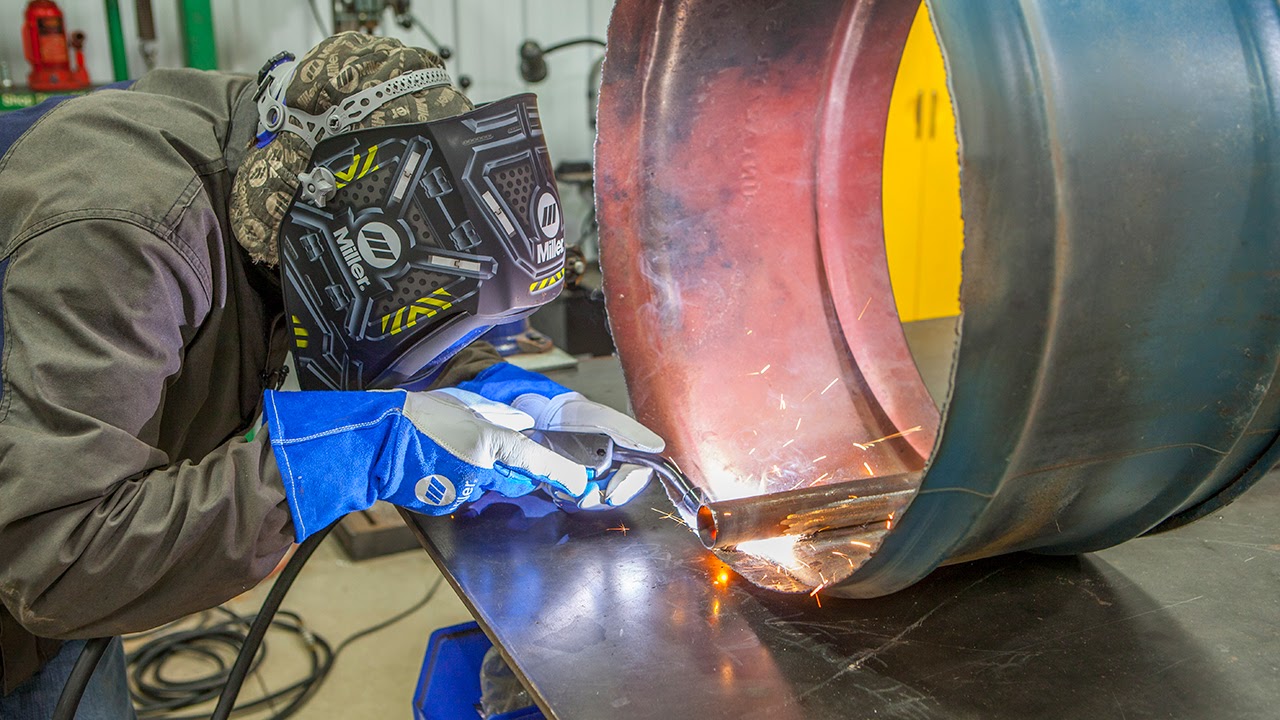
OOften, beginner welders are confused by the variety of types of welding and products out there, especially when it comes to mig vs tig welding. In particular, new welders have trouble understanding the different welding techniques used in MIG welding vs TIG welding.

Luckily though, this isn’t as complicated as it sounds.

Today, we’ll cover everything you need to know about both of the main types of welding. We’ll start with what each of these actually are, before moving on to when each of them is commonly used.

Finally, we’ll explore some common myths about MIG welding vs TIG welding to separate the truth from the lies.

Let’s jump right in.

What is the Difference Between MIG Welding vs TIG Welding?

To understand the basic differences between and MIG welding, it’s best to start with a clear definition of each:

  • MIG welding uses metal inert gas. This means using a metal feed wire, which creates the initial spark for your arc. This then melts, forming the weld itself. MIG welders can use either external shielding gas or self-shielding wire.
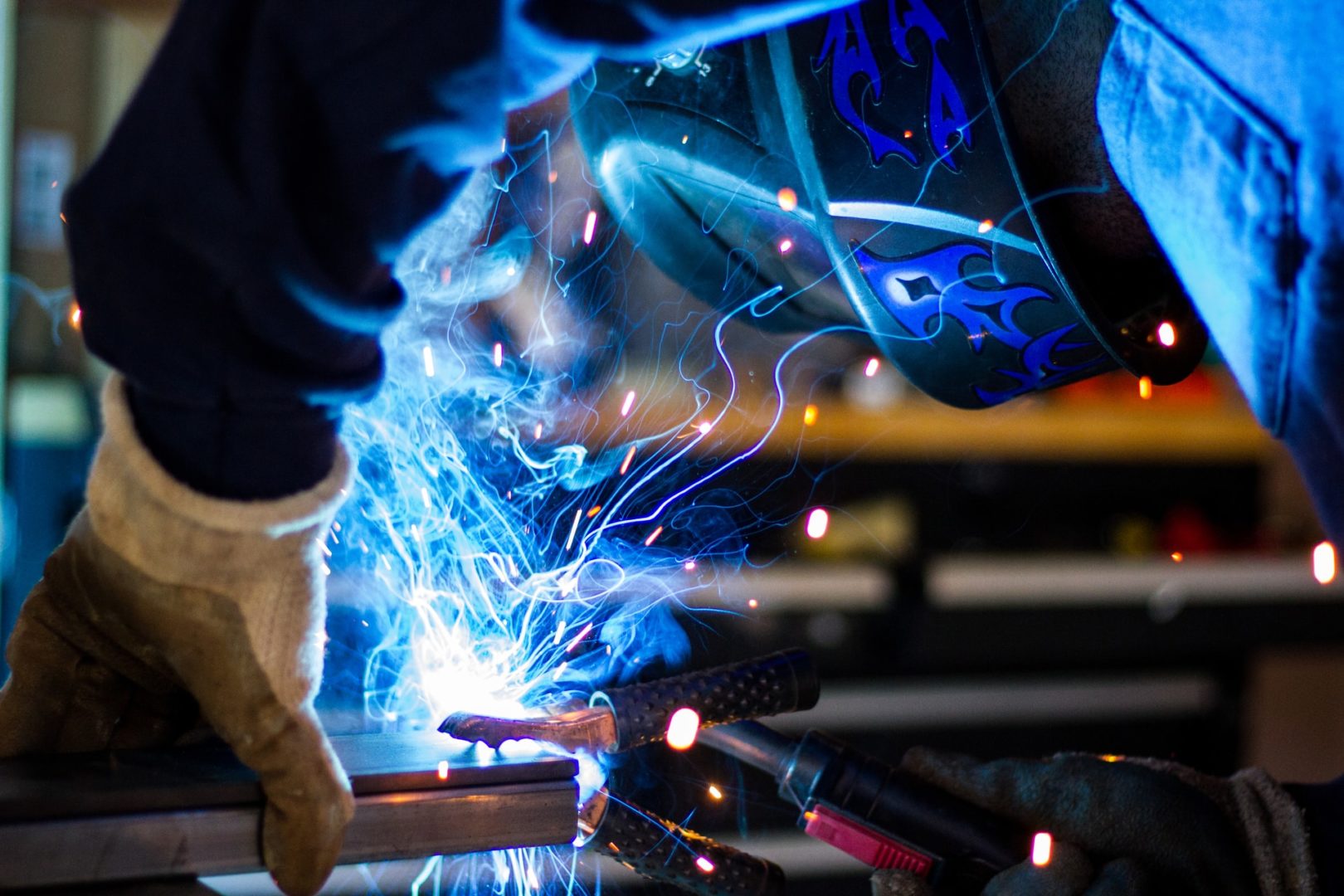
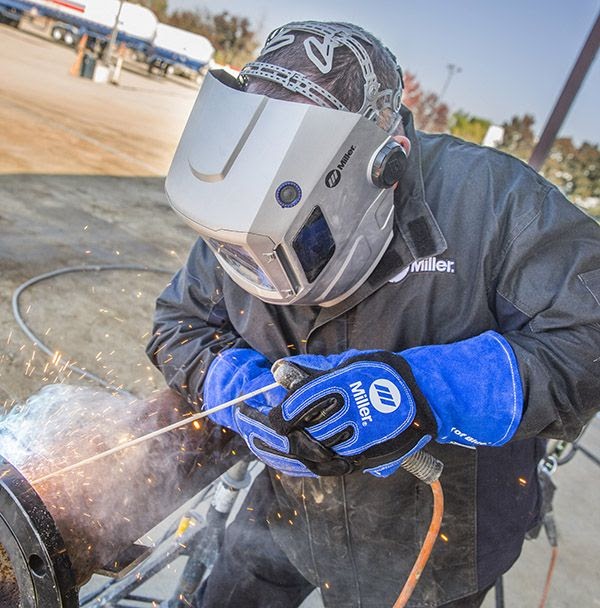
  • TIG welding also known as tungsten inert gas. Instead of a wire, TIG welders use a non-combustible electrode to create the arc. Where the arc meets the welding surface, a welding pool forms. The operator then feeds a thin filler wire into this pool to create the join. TIG welders always use an external shielding gas. Both MIG and TIG welding processes rely on a welding torch to control the electrode and shielding gas, with each type having its own specific design and cooling methods.

Beyond basic definitions, there are a few broad differences between the two types of welding, especially with regards to how and when they’re used. For example, MIG welding is generally a faster and cheaper process, making it great for high-volume production lines. One of the key advantages of MIG welding is its high welding speed.

By contrast, TIG welding is often preferred for high quality welding, such as aerospace, due to its focus on quality rather than quantity. It is ideal for thin sheet materials, especially nonferrous metals.

Of course, these aren’t hard and fast rules. Let’s take a look at when TIG and MIG welds are typically employed.

What is MIG Welding?

MIG (Metal Inert Gas) welding, also known as Gas Metal Arc Welding (GMAW), is a semi-automatic or automatic arc welding process that uses a continuous solid wire electrode to join two metal pieces. The process involves feeding a wire electrode through a welding gun, which is heated and melted to form a weld pool. This method enhances weld quality by ensuring consistent and strong welds. The weld pool is then shielded by an inert gas, such as argon or helium, to protect it from atmospheric gases and promote weld penetration.

Definition of MIG Welding

MIG welding is a type of arc welding process that uses a consumable wire electrode and a welding gun to produce a weld. The process is characterized by the use of a continuous wire feed, which allows for high-speed welding and increased productivity. MIG welding is commonly used in various industries, including automotive, construction, and manufacturing, due to its ease of use, high weld quality, and versatility.

How MIG Welding Works

The MIG welding process involves several key components, including the welding gun, wire electrode, and shielding gas. The welding gun is used to feed the wire electrode, which is heated and melted to form a weld pool. The shielding gas is used to protect the weld pool from atmospheric gases and promote weld penetration. The process can be performed in various positions, including flat, horizontal, vertical, and overhead. Welding positions are a key feature of MIG welding, enhancing its versatility. It can be used to weld a wide range of metals, including steel, aluminum, and stainless steel.

What is TIG Welding?

TIG (Tungsten Inert Gas) welding, also known as Gas Tungsten Arc Welding (GTAW), is a manual arc welding process that uses a non-consumable tungsten electrode to join two metal pieces. The process involves using a separate filler material, which is manually fed into the weld pool, to produce a weld. The weld pool is then shielded by an inert gas, such as argon or helium, to protect it from atmospheric gases and promote weld penetration.

Definition of TIG Welding

TIG welding is a type of arc welding process that uses a non-consumable tungsten electrode to produce a weld. The process is characterized by the use of a separate filler material, which is manually fed into the weld pool, and the use of an inert gas to shield the weld pool. TIG welding is commonly used in various industries, including aerospace, automotive, and construction, due to its high weld quality, precision, and versatility. One of the key benefits of TIG welding is its exceptional welding precision.

How TIG Welding Works

TIG (Tungsten Inert Gas) welding is a precise and versatile welding process that uses a non-consumable tungsten electrode to create the weld. The process begins with the tungsten electrode generating an electric arc, which heats and melts the metal to form a weld pool. This weld pool is then protected from atmospheric contamination by a shielding gas, typically argon or helium. Unlike MIG welding, TIG welding requires the welder to manually feed a separate filler material into the weld pool using a filler rod. This allows for greater control over the welding process, making it ideal for tasks that require high precision and clean welds. The combination of the tungsten inert gas, the weld pool, and the manually fed filler material ensures strong and high-quality joins, especially in applications where precision is paramount.

Key Differences

Electrode and Shielding Gas

One of the most significant differences between MIG and TIG welding lies in the type of electrode used. MIG welding employs a consumable wire electrode that continuously feeds through the welding gun, melting to form the weld. In contrast, TIG welding uses a non-consumable tungsten electrode, which does not melt during the welding process. This fundamental difference impacts the overall welding technique and the quality of the welds produced.

The shielding gas used in each process also varies. TIG welding typically utilizes pure argon or a blend of argon and helium to shield the weld pool from atmospheric gases. This ensures a clean and uncontaminated weld. On the other hand, MIG welding often uses a blend of argon and carbon dioxide, which can be more cost-effective but may not provide the same level of protection as the gases used in TIG welding.

Welding Torch and Power Source

The design of the welding torch is another key difference between MIG and TIG welding. TIG welding torches are engineered for precision and control, featuring a smaller nozzle and a more focused arc. This design allows for meticulous work on delicate and thin materials. In contrast, MIG welding torches are designed for speed and efficiency, making them suitable for high-volume production.

The power source used in TIG welding is typically a DC power source, which provides a stable and consistent arc. This is particularly important for achieving the high-quality welds that TIG welding is known for. MIG welding, however, can use both AC and DC power sources, offering more flexibility depending on the specific requirements of the welding task.

Uses

Welding applications encompass a wide variety of contexts, and while broad generalisations are possible, in reality, both types of welding are used in many different scenarios. Understanding the applications of each type can help you decide when a mig weld is the most practical solution for your project. To get a better grasp of how and when to use MIG and TIG welding, let’s take a look at each of their applications in turn.

When is the MIG Welding Process Used?

About 50% of all welding around the world is done using metal inert gas (MIG). This is a testament to the flexibility offered by MIG welding. Welding versatility is a key advantage of MIG welding. For similar reasons, MIG welding is also popular with non-specialists and hobbyists.

For instance, most mechanics, farmers and other occasional welders prefer MIG welding. Additionally, since MIG welders can also be used gaslessly, they are typically the top choice for those who need a portable welding solution.

However, without a gasless set-up, MIG welding outdoors can be a real challenge. This is because external shielding gas makes MIG welders highly susceptible to wind.
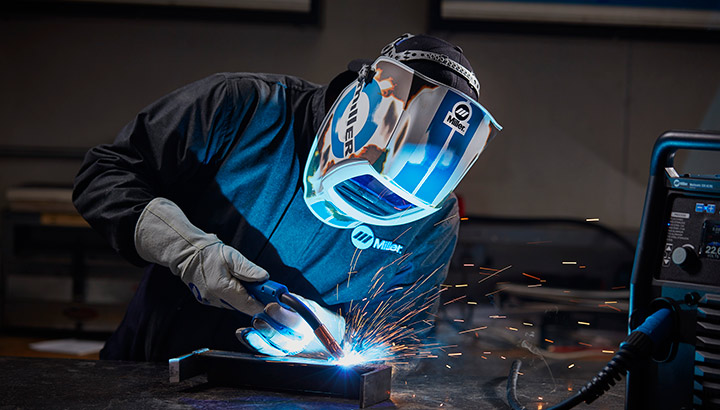
MIG vs TIG
MIG welders are more popular with non-specialists and hobbyists.

It can also be used with a variety of materials, including mild steel, aluminium and stainless steel, and is easy to use in tight environments.

When TIG Welding Requires Specific Conditions?

Tungsten inert gas (TIG) welding can be used for an even greater number of welding surfaces, including nickel alloys, brass and aluminium. A tig welder is often preferred for tasks requiring high precision and clean welds, despite the higher skill level and cost involved. The welding precision achieved with TIG welding is crucial for applications demanding exact and flawless joins. This makes it ideal for a range of structural and decorative applications.

It also gives a great combination of clean and strong joins, making it ideal for large-scale applications, where the join is likely to come under a lot of strain. Because of this, TIG welding is the preferred method for joining metals in the aerospace industry.

However, TIG welding also has a number of drawbacks. For one thing, most people would argue that it’s a much more difficult skill to learn. For another, it is a slower process which makes it inappropriate for some applications.

On top of all of that, TIG welding requires the operator to use both hands, as well as one of their feet. For this reason, it’s not much use when it comes to welding in the field, or performing quick repairs on the fly.
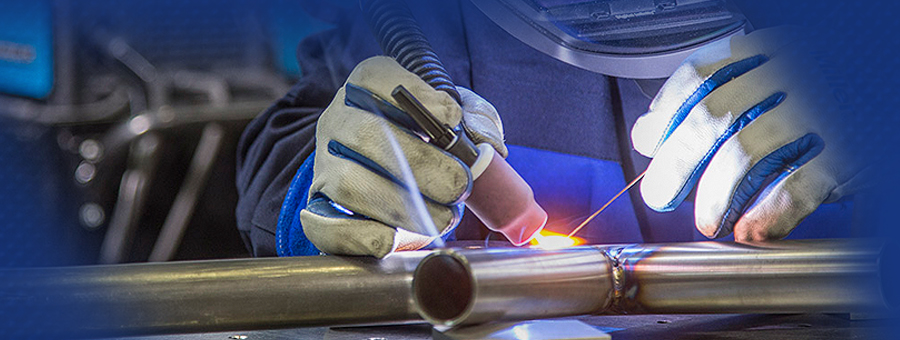
TIG Welding Process
TIG welding is generally preferred for high quality welds.

Materials and Applications

Suitable Materials and Industries

TIG welding is renowned for its versatility and precision, making it suitable for a wide range of materials, including stainless steel, aluminum, and copper. This welding process is commonly employed in industries such as aerospace, automotive, and construction, where high-quality and precise welds are essential. TIG welding is particularly advantageous for welding thin materials, as it allows for meticulous control over the weld pool, minimizing the risk of distortion. Additionally, TIG welding is often used for applications requiring high purity, such as in the aerospace industry, where even the slightest contamination can compromise the integrity of the weld.

In contrast, MIG welding is more commonly used for welding thicker materials, such as steel and aluminum. Its speed and efficiency make it a popular choice in industries like construction and manufacturing, where high-volume production is a priority. MIG welding’s ability to quickly produce strong welds makes it ideal for large-scale projects and applications where time is a critical factor.

Overall, the choice between MIG and TIG welding depends on the specific application and the type of material being welded. Both processes have their own strengths and weaknesses, and selecting the correct process is crucial for achieving high-quality welds. Whether you need the precision and purity of TIG welding or the speed and efficiency of MIG welding, understanding the unique advantages of each process will help you make the best decision for your welding needs.

Understanding the Different Types of Welding for Beginners

Most people would argue that MIG welding is the best option for beginners when it comes to learning welding techniques. There is certainly a lot of truth to this. For one thing, MIG welding is a much easier process to pick up. Some people even claim that MIG welding is as easy as using a glue gun.

MIG welding is also somewhat cheaper to get into. Remember we said that half of all welding joins are done using MIG welding. Because of this popularity, machines can be found at much lower price points than less common welding methods.

So it might be true that most beginners will have an easier time with MIG welding. However, every rule has its exceptions.

Say you’re a beginner welder who wants to learn to weld on exotic thin material, where TIG welding is more effective. In that case, TIG welding would still be the right option for you.

Is MIG Welding Always Easier than TIG Welding?

Similarly, the vast majority of the time, a MIG joint is easier to create than a TIG one. But once again, there are many exceptions to this. For instance, if you’re working with materials that a MIG welder can’t join, then it certainly won’t be easy.

For an experienced welder who does TIG welds every day, switching to a MIG welder would probably not be easier. It may be true that you can pick up MIG welding more quickly, but it remains a different skill.

Switching between the two types of welding techniques will therefore still require adjustment. An experienced operative will know to slow down to maintain welding safety. This is obviously the right thing to do, but it still slows projects down.

What is the difference between MIG welding and TIG welding?
MIG welding uses a consumable wire electrode and is generally faster, making it suitable for high-volume projects. TIG welding uses a non-consumable tungsten electrode and a separate filler material, providing greater precision and high-quality welds, especially for thinner materials.

FAQs

Which welding method is better for beginners?
MIG welding is typically easier for beginners due to its straightforward operation and continuous wire feed, which simplifies the welding process. TIG welding, while offering higher precision, requires more skill and control.

Can MIG and TIG welding be used on the same materials?
Yes, both MIG and TIG welding can be used on materials like steel, aluminum, and stainless steel. However, TIG welding is often chosen for thin materials and projects requiring clean, precise welds, while MIG welding is preferred for thicker materials and faster weld times.

Is TIG welding stronger than MIG welding?
While both welding methods can produce strong welds, TIG welding is known for producing higher-quality, cleaner welds with fewer defects. This makes it ideal for applications where precision and strength are critical, such as in aerospace.

Which process is faster, MIG or TIG welding?
MIG welding is generally faster because it uses a continuous wire feed, making it suitable for high-production environments. TIG welding, though slower, allows for more control, making it better for tasks that require attention to detail.
How to Use an Auto Darkening Welding Helmet

Welding helmets with auto darkening are more popular than ever. In fact, nowadays it’s actually quite rare for a professional welder to use a passive mask. The main reason for this is that auto darkening masks make it much easier to protect your vision.

Provided you use them correctly of course.

Today we’ll cover how to use your auto darkening helmet safely and effectively. After all, a welding mask is an investment. You want to make sure you’re getting the most out of it. With that in mind, let’s start with the basics. A wide variety of accessories is available for welding helmets with auto darkening, enhancing the user experience and providing comprehensive protection.

Why Do You Need a Welding Mask Auto Darkening?

As the name suggests, auto darkening welding masks respond to the light created by the arc when you are welding, to ensure that adequate vision protection is offered at all times. These masks offer superior performance in various welding conditions, unlike passive masks where the same protection is offered at all times, unless you change the lens.

This is helpful for a number of reasons.

For example, you might work in a range of different settings. If you’re a mobile welder, you don’t want to carry around two different welding masks for indoor and outdoor work. Similarly, some jobs require a stronger arc than others, creating more light.

Auto darkening masks ensure that you always have the appropriate protection for the job at hand. They also save you the effort of changing head gear or lenses between projects. These professional-quality helmets are sold by well-known brands like Miller, 3M Speedglas, and Jackson, emphasizing their reliability and availability.

With that in mind, let’s look at what you need to know about using an auto darkening welding helmet.

Benefits of Auto Darkening Welding Helmets

Auto darkening welding helmets offer numerous benefits to welders, making them an essential piece of equipment in the welding industry. One of the primary advantages is effortless protection, allowing welders to focus on their work without worrying about eye damage. These helmets automatically adjust to the brightness of the welding arc, providing consistent protection without the need to manually change lenses. This feature is particularly beneficial for welders who work in varying light conditions or switch between different types of welding.

Moreover, welding helmets with auto darkening come with a wide selection of features that enhance their functionality. For instance, many models offer variable shade ranges, allowing welders to customize the level of protection based on the specific welding task. Grind modes are another useful feature, enabling welders to switch to a lower shade for grinding and cutting operations without removing the helmet. Adjustable headgear ensures a comfortable and secure fit, reducing fatigue during long welding sessions.

These helmets are designed to work in various welding applications, making them a versatile choice for professionals and hobbyists alike. Whether you’re working on a high-intensity MIG welding project or a delicate TIG welding task, an auto darkening welding helmet provides the protection and convenience you need to perform your best.

Key Features of Auto Darkening Welding Helmets

Auto darkening welding helmets come with a range of key features that set them apart from traditional passive welding helmets. Some of the most notable features include:

  • Auto-darkening technology: This innovative feature adjusts the shade of the lens in response to the bright welding brightness, providing instant protection against harmful light and UV rays. This means you can start welding without having to flip your helmet down, saving time and effort.
  • Variable shade ranges: These helmets offer adjustable shade levels, typically ranging from 9 to 13. This allows welders to select the appropriate shade for different welding tasks, ensuring optimal visibility and protection.
  • Grind modes: Many welding helmets with auto darkening include a grind mode, which lowers the shade level for grinding and cutting operations. This eliminates the need to switch helmets or remove the helmet entirely, enhancing safety and efficiency.
  • Adjustable headgear: Comfort is crucial for welders who spend long hours on the job. Welding helmets with auto darkening feature adjustable headgear that provides a customizable fit, ensuring maximum comfort and reducing strain.
  • Advanced lens technology: Technologies like ClearLight Lens Technology offer superior visibility and clarity, allowing welders to see their work more clearly. This advanced lens technology enhances contrast and reduces eye strain, making it easier to achieve precise welds.

Lens Technology

The lens technology used in auto darkening welding helmets is a critical component of their functionality. At the heart of these helmets is the LCD (Liquid Crystal Display) component, which distorts the most harmful light waves emitted from the welding arc. This distortion protects the welder’s eyes from damage by filtering out intense light and UV rays.

Additionally, the lens adjusts the contrast of the light waves, ensuring that welders can see their work clearly without straining their eyes. Many welding helmets with auto darkening also feature polarized lenses, which work in unison with the distorting LCD to further disorient the light waves. This combination of technologies provides comprehensive protection against the intense light produced during welding, allowing welders to work safely and efficiently.

Durability and Comfort

Welding helmets with auto darkening are designed to be both durable and comfortable, ensuring that welders can wear them for extended periods without fatigue. Many helmets feature lightweight designs, which reduce the strain on the neck and shoulders during long welding sessions. Adjustable headgear provides a secure and customizable fit, allowing welders to find the perfect balance between comfort and stability.

Breathable materials are often used in the construction of these helmets, enhancing comfort by reducing heat buildup and allowing for better airflow. High-quality materials and robust construction ensure that welding helmets with auto darkening can withstand the rigors of regular use, providing reliable protection over the long term. Whether you’re working in a professional welding shop or tackling a DIY project at home, a durable and comfortable helmet is essential for maintaining productivity and safety.

Ensure your Welding Mask Fits Properly

With any welding helmet, your first priority is to achieve a good fit. There are two reasons for this. First, a poorly fitting helmet may block your vision, or fail to offer proper protection. Second, if your helmet is uncomfortable, you may be tempted not to wear it.

This is obviously not ideal. So how exactly do you ensure your auto darkening welding mask fits?

The first thing is to ensure your helmet fits tightly. If it is too loose, it may move and expose your neck to sparks. If tightening the welding mask causes discomfort, a welding hood can be used to cushion your head. Additionally, various accessories can enhance the fit and comfort of the welding helmet, making it more suitable for extended use.

Generally, if you’re in doubt you should lean towards using a tighter fit, as this is much safer.

Adjust the Light Sensitivity of your Welding Mask

There are generally three adjustments you can make to alter the way your mask responds to changes in light levels. The first and most important is light sensitivity. This is the amount of light which is required for the lens to darken.

To set this, first ensure that your lens is clean and that the batteries in your mask are properly installed.

For a powerful welding arc, you should use a high sensitivity setting, to ensure that your mask does not begin to darken at low light levels.

If you work with a less bright arc, for example during TIG welding, you should use a lower sensitivity setting, to ensure sufficient protection. Similarly, if you work around other welders, a low sensitivity setting is needed to ensure their torches don’t affect your mask. 

Set the Delay Time

The second main adjustment is delay time. This is the time it takes for your auto darkening welding helmet to adjust back to ambient light. This is important for a whole range of safety considerations.

Delay time should not be confused with response time. This is the time it takes for the lens to darken, and is obviously fixed at the shortest possible time. 

Choosing the perfect delay time is a combination of your personal preferences and the needs of the project at hand.

Beyond your own preferences, you should generally use a longer delay time when welding at a higher temperature or with higher amperages. The reason for this is that even though your torch may be out, the work surface may take longer to cool down.

Heated metal emits rays which can potentially damage your eyes, but a longer delay time protects against this.

The right delay on your auto darkening mask is crucial.

Choosing the right delay time is all about balancing preferences and safety.

Adjust your Mask’s Shade

The final adjustment on your auto darkening marks is the shade. Essentially, this is how dark your mask will get when in use. All welding shades use a numbering system. Most modern masks range from number 9 to number 13, with a higher number indicating a darker shade.

Obviously, the darkest welding shades offer the highest level of vision protection. As such, all else being equal, a darker shade is usually best, especially for beginners.

However, in reality, things are not so simple. In fact, there are many cases when a welding shade can be too dark, for instance when working in an otherwise poorly lit area. This then creates other risks, because you can’t properly see what you’re doing.

This can easily lead to burns, or any number of other accidents and incidents.

Therefore, the correct shade level requires a balance. The best way to achieve this is to choose the darkest level of shade which still allows you to clearly see what you’re working on.

Using a Welding Helmet with Additional Features

Some high end welding helmets come with additional features. The most important among these is memory. Basically, this allows you to create presets for different sensitivity, delay and shade settings.

Technology has brought new features to automatic welding helmets. The latest is  ClearLight Lens Technology. Miller Welding Helmets with this feature optimise contrast and clarity in various welding applications and lighting conditions.

These have a 1/1/1/2 optical clarity rating, offering you more light when not welding. This means you can keep your helmet down at all times, ensuring safety and more productivity.

It also saves time, as you don’t have to reconfigure your helmet each time you move to a different project. Just be careful that you don’t accidentally start working with the wrong preset, as this can create a number of risks.

It’s also important to choose the right helmet for your applications. Here’s a bonus welding tip – always choose a four sensor helmet for TIG Welding. There is a wide selection of welding helmets available, featuring various styles and functionalities suitable for different welding applications.

Choosing the Right Welding Helmet

Choosing the right welding helmet can be a daunting task, especially for beginners. However, by considering a few key factors, welders can select a helmet that meets their needs and provides optimal protection. Here are some important factors to consider:

  • Type of welding: Different welding processes, such as MIG, TIG, and ARC, have varying requirements for eye protection. Ensure that the helmet you choose is suitable for the specific type of welding you will be performing.
  • Level of protection: Look for helmets with variable shade ranges and grind modes to provide the appropriate level of protection for different tasks. This flexibility allows you to adjust the helmet to suit your needs, ensuring maximum safety.
  • Comfort and fit: Adjustable headgear and breathable materials are essential for long-term comfort. A well-fitting helmet reduces fatigue and allows you to focus on your work without distractions.
  • Budget and brand preferences: Consider your budget and any brand preferences you may have. Reputable brands like Miller, Lincoln, and Hobart offer high-quality helmets with a range of features to suit different needs and budgets.
  • Additional features: Some helmets come with extra features such as graphics, style options, and advanced performance technologies. These features can enhance the overall experience and make the helmet more appealing to use.

By considering these factors, welders can select an auto darkening welding helmet that provides the perfect combination of protection, comfort, and style. Whether you’re a professional welder or a hobbyist, the right helmet can make a significant difference in your welding experience.

How to Use an Auto Darkening Welding Helmet

A good auto darkening helmet is one of the best purchases any welder can make. Not only do they keep you safer than passive masks, they also improve your productivity and flexibility, by removing the need to change helmets or lenses. Additionally, these helmets combine aesthetics and functionality, offering a variety of styles to suit individual preferences.

However, this can only be achieved when the helmet is set up and used correctly.

As with any welding helmet, the first thing to do is ensure a tight and comfortable fit. This will allow you to remain safe, even during long and difficult projects. Then you can adjust the settings on the lens itself. These are sensitivity, delay time, and shade.

None of this is difficult. In fact, spending a few minutes making the right adjustments to your auto darkening helmet will allow you to enjoy years of happy and safe welding. Moreover, the variety of graphics available on welding helmets enhances their appeal, reflecting personal style and making them attractive to users.

FAQs

What is the Norsemen 20-3100V Sweatband made of?
The Norsemen 20-3100V Sweatband is made from flame-retardant materials with an air-cushioned SWEATSOpad for enhanced comfort and moisture absorption.

Will this sweatband fit all welding helmets?
Yes, the Norsemen 20-3100V Sweatband is designed with a universal fit, making it compatible with most welding helmets available on the market.

How do I attach the sweatband to my helmet?
The sweatband features a Velcro closure, allowing for quick and easy attachment to any welding helmet.

Can the sweatband be washed and reused?
Yes, the sweatband is washable and reusable, allowing you to maintain cleanliness and comfort over extended use.

How many sweatbands are included in a pack?
Each pack includes two Norsemen 20-3100V Sweatbands, providing an extra band for convenience.

Does the sweatband help prevent sweat from entering my eyes?
Yes, the air-cushioned design helps absorb moisture, keeping sweat out of your eyes to improve visibility during welding.

10 Welding Safety Tips for Beginners

10 Welding Safety Tips for Beginners

Welding Safety is essential because it should go without saying that welding is a hazardous activity. In fact, without the proper welding safety precautions, the risks to your health and safety are innumerable. This is especially true for beginners, who lack experience of welding safely.

As such, it’s essential to follow key safety advice when you take up welding for the first time. Failing to do so can easily lead to injury, ill health, or even death.

Some of the most obvious hazards faced by beginner welders include burns, electrical shocks, toxic fumes and explosions. However, new welders also face subtler hazards, like long term damage to their vision or hearing.

WIth that in mind, let’s look at 10 easy ways to keep safe as a beginner welder.

  1. Invest in Proper Welding PPE

These days, most people associate personal protective equipment (PPE) with hospital workers. However, welding specific PPE has been around for as long as welding itself. Wearing it is just as important as ever.

At a bare minimum, your welding PPE list should include:

  • A welder’s helmet – This provides protection for your vision, as well as your face and head, 
  • Flame proof cover-alls – These reduce the risk of burns and other fire related injuries,
  • Welding gloves – Gloves prevent injuries to your hands while welding, such as burns or abrasions, 
  • Protective footwear – Welding boots flameproof and provides protection from falling objects and chemical spills, 
  • Ear & eye protection – Welding presents a number of risks to your hearing and vision, so it’s crucial to take precautions to prevent these. 

It’s also crucial to wear your welding PPE properly. Many beginners overlook this. For example, you should never roll up your sleeves while welding, or tuck your trousers into your boots. This is to prevent sparks from getting trapped in the folds in your clothing.

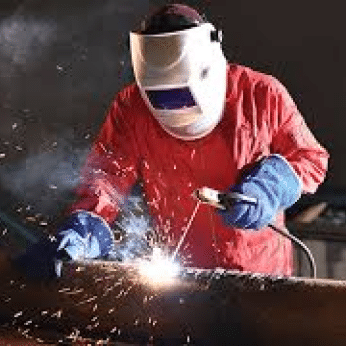
Welding PPE being used properly to protect the eyes of the welder in a busy factory
Proper welding PPE is an essential investment, even for beginners.

Similarly, it’s critical that your welding gloves fit properly. Gloves which are too large or too small may restrict movement, causing poor control over your torch. This can easily lead to accidents and incidents.

  1. Maximise Ventilation

Improper ventilation is one of the most common welding hazards. The welding process can emit a number of hazardous materials, including smoke, toxic fumes and harmful particulates.

Prolonged exposure to all of these can cause serious breathing problems. Inhaling large volumes of harmful material can also cause lung damage in the short term. In extreme cases, you may lose consciousness due to lack of oxygen.

All of these hazards can be avoided by using proper ventilation equipment.

Ventilation equipment for welding comes in two categories. The first is local exhaust ventilation (LEV). These are tools which are dedicated to ventilating your work area, such as extraction booths, or work benches with built-in ventilation.

The second is respiratory protective equipment (RPE), such as air fed welding helmets, or other wearable breathing apparatus.

  1. Declutter your Workspace for Welding Safety

Clutter can cause a range of accidents and incidents while welding. These range from common problems, like tripping, to more specific issues, such as cluttered workspaces becoming a fire hazard.

In either case, having a simple routine for cleaning and decluttering your welding area can easily save lives.

Easy ways to build a decluttering habit include setting aside time every day for tidying, and providing bins within easy reach of your workspace.

  1. Choose the Right Welding Machine for your Space

Different welding machines are best for different working environments. For instance, lightweight and portable machines are best for outdoor projects, or cramped spaces.

However, even in a traditional workshop, there are a range of safety considerations when choosing a welding machine. For instance, a workshop with a lot of workspace can easily use heavy duty welding equipment. 

If you have a small work space, you might choose a small machine for its smaller footprint. Many busy workshops prefer boom-mounted wire feeders to improve portability and reduce the risk of trips and falls.

  1. Avoid Repetitive Strain Injuries

Repetitive strain injuries (RSIs) are a risk in just about every activity. However, as welding presents so many other hazards, RSIs can easily be overlooked. This is problematic for a number of reasons.

For one thing, welding equipment is heavy. This increases the risk of developing an RSI while performing a repetitive movement.

RSIs can be prevented by using proper welding posture. You should also take regular breaks, and perform range of motion exercises to reduce the risk of a movement related injury.

  1. Use Vision Protection

When welding, you face a number of risks to your eyes and vision. Even in normal circumstances, prolonged exposure to the extreme light of a welding arc can cause vision problems.

When something goes wrong, additional problems can occur. These include excessive sparks, flying debris and even explosions. As such, one of the most important welding safety precautions is selecting the appropriate safety glasses.

Additionally, auto-darkening welding helmets are now affordable for even hobbyists. They’re also a fantastic investment, which will see you through years of happy and safe welding.

  1. Secure your Gas Cylinder

Gas cylinders are an accident waiting to happen. At the best of times, they can be a trip hazard. This is much worse when they aren’t secured in a safe and discreet location. Most gas cylinders will roll on the ground, which can cause serious accidents in the workshop.

A close up of secure gas cylinders
Secure Gas cylinders are a hazard because of both their shape and their contents.

Obviously, gas cylinders can also be highly flammable and welding workshops have open flames. When you combine these two facts, you can encounter some serious hazards if your gas cylinder is not properly secured in a safe location.

  1. Avoid Water and Clean up Spillages Immediately

Water is a great conductor of electricity. Because of this, it’s crucial that you only weld in a dry environment. This includes everything from mending your fence in the rain, to working near a glass of water.

Even a small amount of liquid in the wrong place can result in death by electrocution.

Many beginner welders don’t take this seriously, but the importance of cleaning up spills can’t be stressed enough. The more spill management precautions you take the better. If anything is spilled in your workspace, stop what you’re doing immediately and clean it up.

  1. Use Hearing Protection

Just like vision protection, it’s vital that you protect your hearing as a beginner welder. This is probably one of the most overlooked welding safety precautions.

Welding creates risks to your hearing in both the immediate term and over longer periods of time. The right hearing protection can prevent this.

Prolonged exposure to the moderately loud sounds of a welder can result in tinnitus. This is when you hear a constant ringing because of damage to your inner ear. Sudden loud noises can also cause immediate and permanent hearing loss.

  1. Take Fire Safety Precautions while Welding

Finally, welding presents a number of fire hazards. We’ve already discussed some of these. No matter the source of the blaze, your welding workshop should be kitted out with a number of fire safety features.

At a basic level, this includes accessible fire extinguishers and welding blankets. It’s also important to note that welding accidents can cause electrical, chemical and metal fires. As such, you need to have a plan in place for each of these.

If you follow all of the above tips and remain vigilant, you can safely enjoy years of happy and productive welding.


The 3 BEST Respiratory Products for Welding

Do Welders need to wear respirators?

The 3 Best Respiratory Products for welding are being suggested because in February 2019, the HSE strengthened its enforcement expectation for all welding fume protection methods, including mild steel welding because general ventilation does not achieve the necessary control. There is new scientific evidence from the International Agency for Research on Cancer that exposure to mild steel welding fume can cause lung cancer and possibly kidney cancer in humans. The Workplace Health Expert Committee has endorsed the reclassification of mild steel welding fume as a human carcinogen. More information can be seen at http://www.hse.gov.uk/safetybulletins/mild-steel-welding-fume.html.

The new fume control regulation was created to protect the welder and anyone else in the area that inhales welding fumes. The first requirement is to make sure exposure to any welding fume released is adequately controlled using engineering controls, typically LEV (Local Exhaust Ventilation). Where engineering controls alone cannot control exposure, then adequate and suitable RPE should be provided to control risk from any residual fume.

Putting the LEV Regulatory Compliance to the side for the moment, let’s look at how to protect the welder and the people in the welding area.

What The 3 BEST Respiratory Products for Welding Should I use?

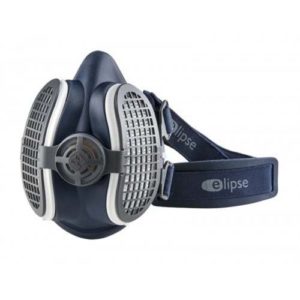
  1. The Elipse P3 Protective Respiratory Mask SPR501

Don’t want to throw away your trusty Welding Helmet? Consider the Elipse P3 Respirator. The Elipse P3 Respirator SPR501 is a high-quality half mask, perfect for both DIY & Commercial use. It can be used for a range of work, such as stonemasonry, metalworking & welding. It carries the highest classification for a particulate filter and achieves 99.98% at 0.3-micron efficiency.

The Elipse P3 R Nuisance Odour respirator combines a particulate filter with an activated carbon cloth to provide the ability to remove low level odours. It will protect against all of the contaminants listed above, plus the additional contaminants listed below. Typical applications would be in food processing, pharmaceutical production and laboratories. Replacement filters available.

You can buy this mask at: https://0d04d28e-72a4-47fa-b9bd-42897efedf67.cc12.conves.io/product/elipse-p3-respirator-mask/

The 3 BEST Respiratory Products for Welding

Pros:

  • Fits comfortably under most Welding Helmets
  • Cost Effective
  • Easy-to-replace Filters

Cons:

  • Requires Face Fit testing on an annual basis – this can be done through the supplier you purchase the product from
  • You must be clean shaven to safely use this product

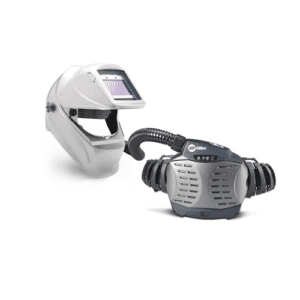
  1. The Miller PAPR w/Titanium 9400 Helmet

Need to Weld & Grind but haven’t got the patience for button fiddling on the side of your helmet? Take a look at the Miller PAPR Air fed Welding Helmet (Powered Air Respirator).

You can buy this helmet at: https://0d04d28e-72a4-47fa-b9bd-42897efedf67.cc12.conves.io/miller-papr-w-titanium-9400i-helmet.html

The 3 BEST Respiratory Products for Welding

Pros:

  • Lift-Up-Front makes Grinding easy while still protected from fumes
  • Lightweight 1.47kg Blower
  • 3-Year Warranty on Automatic Lenses (ADF) & 2 Year Warranty on the Battery
  • InfoTrack™ Miller Technology
  • Large Viewing Area
  • Comfortable Headband
  • No ‘Clean Shaven’ requirements for safe use

Cons:

  • Not as light as the other respiratory options
  • Higher price compared to other respiratory options
  • Only useful for Welders – not suitable for other applications requiring respiration

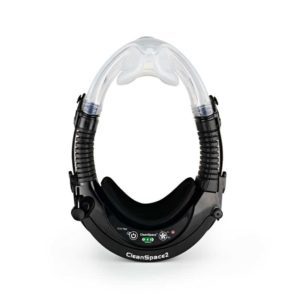
  1. TheClean Space Powered Air Respirator ‘The All Rounder’

Welding, Grinding or Working in & around Welding? The Clean Space (PAPR) Powered Air Respirator is the air fed mask for you!

You can buy this mask at: https://0d04d28e-72a4-47fa-b9bd-42897efedf67.cc12.conves.io/cleanspace-2-powered-respirator.html

The 3 BEST Respiratory Products for Welding

Pros:

  • Can be used as an Air Fed Welding mask, as it fits under most Welding Helmets
  • Single masks can be purchased to use on one Power Pack – this is great for shift workers
  • Lightweight & compact
  • No Hoses, Cables or Belt mounted battery packs
  • 8 Hours Run Time
  • No Servicing or Maintenance requirements
  • Suitable for Metal fabrication & Welding, Chemical or Biological material handling, Maintenance & Cleaning, Grain & Food Handling, High dust environments and Stone, Cement & Concrete handling.

Cons:

  • Face Fit testing required – this can be done by the supplier
  • Clean Shaven is required for safe use of the product

Blog written by Norsemen Safety & Welder’s Choice Ltd.

cropped Norsemen Welding Safety Logo
Norsemen Welding Safety Logo
CONTACT DETAILS
OUR HOURS
8 AM – 5 PM Monday – Thursday
8 AM – 4 PM on Friday
Safety Equipment
Welding Equipment
Find The Right Equipment Faster