Stahlwerk 250 Welding Machine: Review & Guide
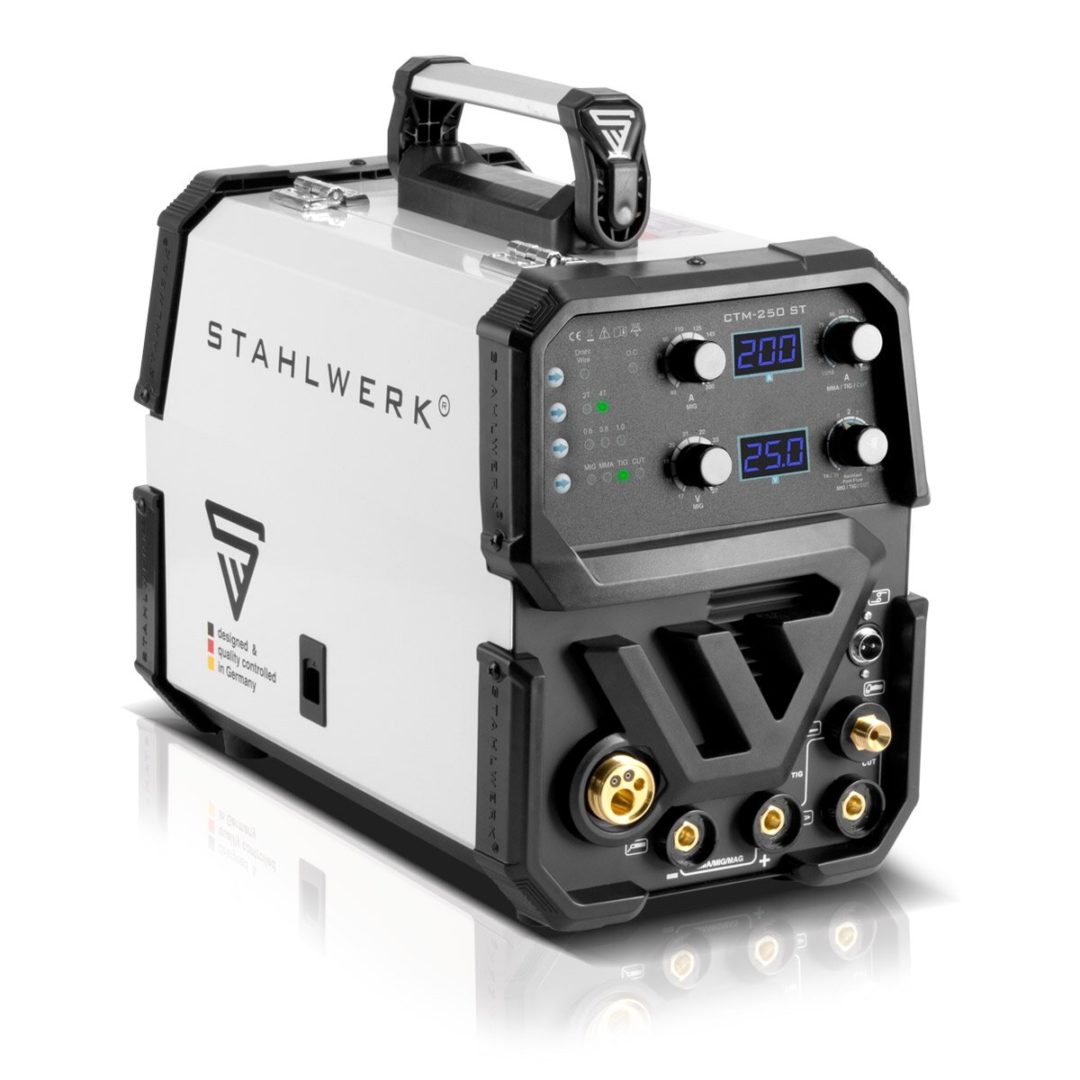
Choosing the right welding machine, such as the Stahlwerk 250 welding machine, can feel overwhelming with so many options available today. We’ll help you understand what makes a quality welding machine stand out and why it matters for your projects.

Whether you’re handling industrial work or DIY tasks, the quality of your welds depends heavily on your equipment. A reliable machine, like the Stahlwerk 250 welding machine, should offer precise control, stable performance, and versatility across different materials. Known for its durability and advanced features, the Stahlwerk 250 welding machine is a great example of finding that perfect balance between features, functionality, and value, even though identifying the right fit isn’t always straightforward.

Let’s explore what you should look for in a professional-grade welding machine. What features will make the biggest difference in your welding results? How does the Stahlwerk 250 welding machine stand out in meeting specific needs for both professionals and hobbyists? We’ll answer these questions and more to help you make an informed decision about your welding equipment.

Key Takeaways

  • The Stahlwerk 250 is a versatile 3-in-1 welding machine supporting MIG/MAG, TIG and MMA/stick welding processes with a maximum output of 250 amperes.
  • Key technical features include a 60% duty cycle at full power, digital display controls, stepless voltage regulation, and wire feed speed control from 2-15 m/min.
  • The machine handles multiple materials including mild steel (0.8-12mm), stainless steel (0.8-10mm) and aluminium (1.0-8mm) with precise current control ranges.
  • Built with durability in mind, featuring reinforced metal housing, IP21 protection rating, and comprehensive safety features including thermal overload protection.
  • Priced at £899 with a complete accessory package (worth £150), the machine comes with a 5-year manufacturer warranty on main components and 2-year coverage on wearing parts.

Technical Specifications of the Stahlwerk 250 Welding Machine

The Stahlwerk 250 welding machine offers advanced welding capabilities through its precise technical specifications. Here’s a detailed look at its core performance metrics.

Power Output and Duty Cycle

The CTM 250 operates at 250 amperes maximum output with a 60% duty cycle at full power. Here’s a breakdown of its power specifications:

Power Specifications Values
Input Voltage 230V ±15%
Frequency 50/60 Hz
Maximum Power 250A
Duty Cycle 60% at 250A
Power Factor 0.93
Efficiency 85%

Welding Capacity and Range

The welding capacity spans from 10A to 250A with adjustable settings for various materials:

Material Type Thickness Range Current Range
Mild Steel 0.8mm – 12mm 40A – 250A
Stainless Steel 0.8mm – 10mm 35A – 220A
Aluminium 1.0mm – 8mm 45A – 250A

The machine supports:

  • MIG/MAG welding with 0.6mm to 1.2mm wire diameter
  • Flux-cored welding with 0.8mm to 1.2mm wire options
  • TIG welding with 1.6mm to 3.2mm tungsten electrodes
  • MMA/stick welding with 1.6mm to 5.0mm electrodes
  • Digital display for precise parameter control
  • Stepless voltage regulation
  • Wire feed speed control from 2-15 m/min
  • Arc force adjustment from 0-100%

Build Quality and Design Features
stahlwerk 250 welding machine

The Stahlwerk 250 welding machine exhibits superior build quality through its reinforced metal housing and precision-engineered internal components. The machine’s thoughtful design balances durability with user-friendly features, creating an efficient welding setup.

Sturdy Construction and Components

The metal chassis features 2mm thick steel plates with powder-coated surfaces for corrosion resistance. Internal components include copper-wound transformers rated at IP21 protection, protecting against solid objects over 12mm and vertical water drops. The front panel houses scratch-resistant control knobs, clearly marked settings and a protective cover for the digital display.

Key construction features:

  • Reinforced corner protection with impact-resistant rubber bumpers
  • High-grade PCB boards with conformal coating
  • Industrial-grade wire feed mechanism with 4-roll drive system
  • Heat-dissipating aluminium heatsinks for extended operation
  • Double-insulated power cables with strain relief

Portability and Storage

The CTM 250’s compact footprint measures 505 x 250 x 445mm, fitting comfortably in workshop spaces. Transport-focused design elements include:

  • Ergonomic carry handle rated for 35kg load capacity
  • Four rubber feet for stable positioning
  • Integrated cable management system
  • Tool-free access panels for maintenance
  • Storage compartment for consumables
  • Quick-release torch connection

Weight distribution specifications:

Component Weight (kg)
Main unit 23.5
Wire spool capacity 5.0
Torch assembly 2.5
Total weight 31.0

The machine’s modular design allows for easy transport between workstations while maintaining structural integrity during frequent moves.

Welding Performance Analysis

The Stahlwerk 250 welding machine delivers professional-grade welding performance across multiple processes with precise control options. Its advanced technology enables smooth arc stability for both thin sheets and thick materials.

MIG/MAG Welding Capabilities

The MIG/MAG functionality operates at 30-250A with stepless voltage regulation from 15.5V to 26.5V. A digital control panel displays exact welding parameters in real-time, allowing for precise adjustments of wire feed speed between 2.0-15.0 m/min. The machine handles steel wire diameters from 0.6-1.0mm with exceptional arc stability for clean welds on materials ranging from 0.8-12mm thickness.

MIG/MAG Specifications Values
Current Range 30-250A
Voltage Range 15.5-26.5V
Wire Feed Speed 2.0-15.0 m/min
Wire Diameter 0.6-1.0mm
Material Thickness 0.8-12mm

TIG and Stick Welding Functions

The CTM 250’s TIG welding mode features DC output with lift arc ignition, operating at 10-250A for precision work on steel alloys. The stick welding function supports electrodes from 1.6-5.0mm with anti-stick technology preventing electrode sticking during operation.

TIG/Stick Specifications Values
TIG Current Range 10-250A
Stick Current Range 10-250A
Electrode Diameter 1.6-5.0mm
Duty Cycle at Max 60%
Lift Arc Ignition Yes

The machine’s hot start function optimises arc ignition while arc force control maintains stable arcs during stick welding. Variable inductance settings allow fine-tuning of the arc characteristics for different welding positions.

User Experience and Controls

The Stahlwerk 250 welding machine’s user interface combines intuitive controls with comprehensive safety features. The digital display panel provides clear parameter readings with straightforward adjustments for precise welding control.

Interface and Settings

The control panel features a clear digital LED display that shows real-time welding parameters including amperage, voltage and wire feed speed. Two main control knobs manage the primary welding parameters: one for voltage adjustment (15.5V-26.5V) and another for wire feed speed (2.0-15.0 m/min). The machine includes preset programmes for common materials:

  • Quick-select buttons for steel, stainless steel and aluminium
  • Memory function storing up to 4 custom welding parameters
  • Stepless inductance control for arc stability adjustment
  • Process selection switch for MIG/MAG, TIG and MMA modes
  • Wire inch button for easy wire feeding during setup

Safety Features

The CTM 250 incorporates multiple safety mechanisms to protect both the operator and the machine:

  • Thermal overload protection with automatic shutdown
  • IP21 protection rating against water droplets and small objects
  • Fan-on-demand cooling system with temperature monitoring
  • Electronic anti-stick function for MMA welding
  • 2-stage trigger lock for extended welding operations
  • Voltage reduction device (VRD) for increased operator safety
  • Short circuit protection with automatic reset
  • Phase failure detection for three-phase power supply

Each control element features clear labelling with recognisable symbols for quick identification during operation. The ergonomic layout places frequently used controls within easy reach while maintaining separation between adjustment zones to prevent accidental changes during welding.

Value for Money and Warranty

The Stahlwerk 250 welding machine offers competitive pricing at £899, positioning it in the mid-range segment for professional multi-process welding machines. This price point includes essential accessories: a MIG torch, earth clamp, electrode holder, gas regulator, wire brush, chipping hammer.

Key price-value factors include:

  • 3-in-1 functionality (MIG/MAG, TIG, MMA) reducing the need for multiple machines
  • Professional-grade components with copper-wound transformers
  • Digital display panel with memory settings

The warranty package provides:

  • 5-year manufacturer warranty on main components
  • 2-year coverage on wearing parts
  • Free technical support via phone or email
  • 30-day money-back guarantee

Registration requirements for warranty:

  • Online product registration within 14 days
  • Proof of purchase retention
  • Regular maintenance documentation
  • Professional installation certification for industrial use

Service support includes:

  • Local repair centres across the UK
  • 48-hour response time for technical queries
  • Replacement parts availability for 10 years

Conclusion

The Stahlwerk 250 welding machine stands out as a remarkable multi-process welding machine that delivers exceptional value for both professional welders and serious DIY enthusiasts. We believe its combination of robust build quality advanced features and comprehensive warranty package justifies the £899 investment.

From our detailed analysis it’s clear that this machine excels in versatility reliability and user-friendly operation. Whether you’re working with MIG/MAG TIG or stick welding processes the CTM 250’s precise controls and stable performance make it a dependable choice for various welding applications.

Looking for reliable welding services in Belfast UK? Get in touch with our expert team today to discuss your requirements and discover how we can support your welding needs.

Frequently Asked Questions

What processes can the Stahlwerk 250 welding machine perform?

The Stahlwerk 250 welding machine is a versatile 4-in-1 welding machine capable of MIG/MAG, TIG, and stick (MMA) welding. It also supports flux-cored welding, making it suitable for a wide range of applications. The machine operates with a maximum output of 250 amperes and features stepless voltage regulation.

What is the duty cycle of the Stahlwerk 250 welding machine?

The Stahlwerk 250 welding machine operates at a 60% duty cycle at maximum output. This means it can weld continuously for 6 minutes out of every 10 minutes at full power before requiring a cooling period, which is suitable for most professional and DIY applications.

What materials and thicknesses can this machine weld?

The machine can handle material thicknesses from 0.8mm to 12mm and works with steel wire diameters of 0.6-1.0mm. In MIG/MAG mode, it operates between 30-250A with voltage regulation from 15.5V to 26.5V. For stick welding, it supports electrodes from 1.6-5.0mm.

What safety features does the Stahlwerk 250 welding machine include?

Key safety features include thermal overload protection, a fan-on-demand cooling system, and short circuit protection. The machine also features IP21 protection for the internal components and comprehensive safety mechanisms to protect both the operator and the equipment.

What warranty coverage comes with the machine?

The Stahlwerk 250 welding machine comes with a comprehensive warranty package that includes a 5-year warranty on main components and 2-year coverage on wearing parts. This warranty requires registration and provides access to local repair centres and annual maintenance packages.

How portable is the Stahlwerk 250 welding machine?

Despite weighing 31.0 kg, the machine features a compact design measuring 505 x 250 x 445mm. It includes an ergonomic carry handle, stable rubber feet, and an integrated cable management system, making it reasonably portable between workstations.

Call Welder’s Choice 028 9046 0541 for all your Stahlwerk welding machine requirements.
Plasma Cutting: Advanced Metal Cutting Technology Guide

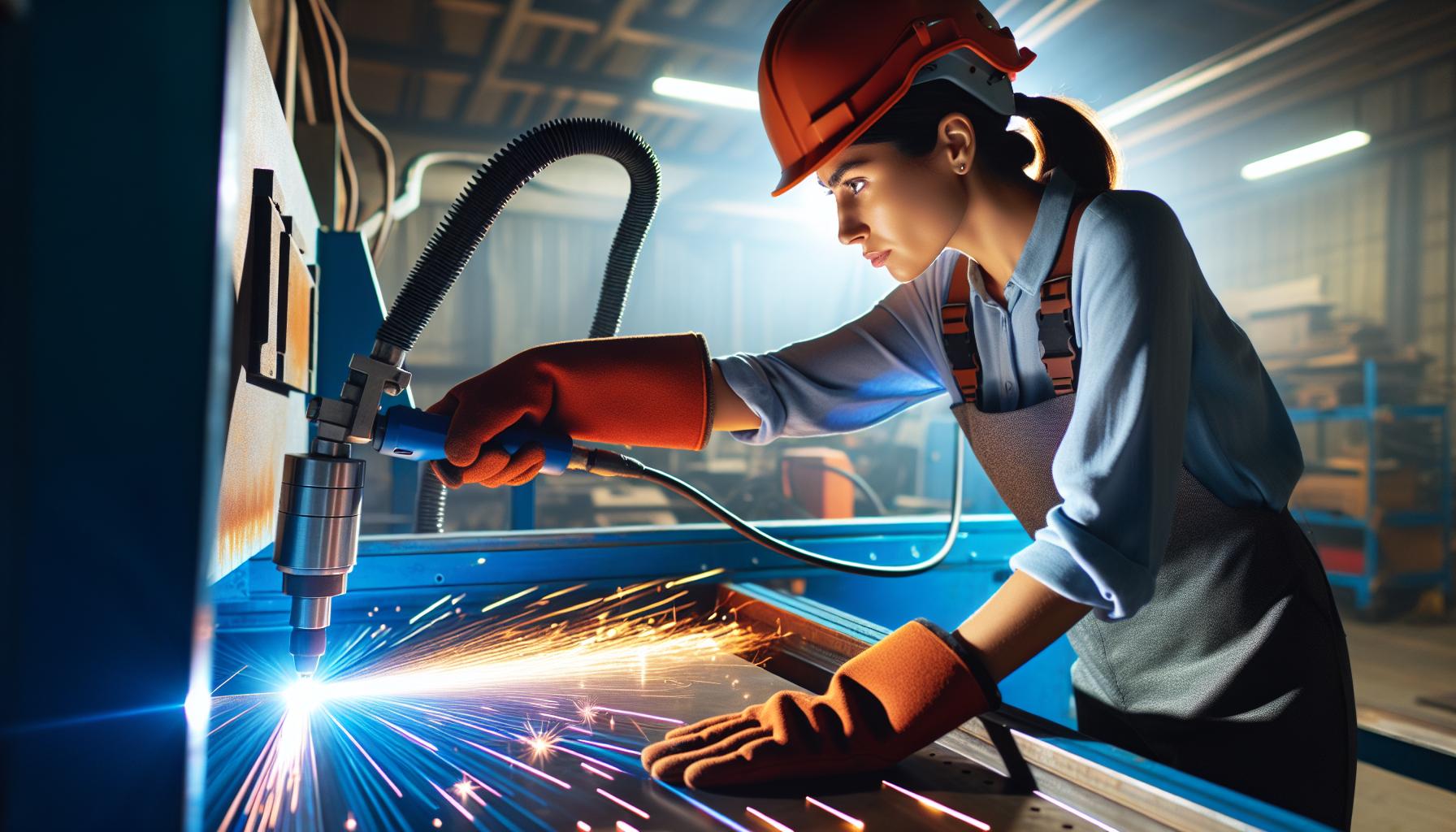
We’ve seen remarkable advancements in metal cutting technology over the years and plasma cutting stands out as one of the most effective methods. This powerful technique uses ionised gas to slice through conductive materials with incredible precision and speed.

Looking to understand how plasma cutting works? Whether you’re a DIY enthusiast or a professional metalworker you’ll find this fascinating process transforms the way we approach metal fabrication. From its impressive cutting speeds to its ability to handle various metal thicknesses plasma cutting has become essential in modern manufacturing.

Key Takeaways

  • Plasma cutting uses ionised gas to cut through conductive metals with precision, reaching temperatures over 20,000°C for materials up to 50mm thick
  • The process requires key components including a power supply (120-400 amps), plasma torch, gas supply, and control console for optimal performance
  • Modern systems come in two main types: manual plasma cutters (suitable for up to 25mm thickness) and CNC plasma systems (handling up to 50mm with greater precision)
  • Proper safety measures are crucial, including specific PPE (fire-resistant clothing, UV-protective eyewear, respiratory protection) and dedicated workspace requirements with proper ventilation
  • Regular maintenance is essential for quality cuts, including daily inspection of consumables, proper material preparation, and maintaining optimal cutting parameters

What Is Plasma Cutting?

Plasma cutting transforms conductive metals into precisely cut shapes using a high-temperature plasma arc. The process achieves clean cuts through materials up to 50mm thick by ionising gas into plasma at temperatures exceeding 20,000°C.

The Science Behind Plasma Technology

Plasma cutting operates by creating an electrically conductive gas channel between the cutting torch and the workpiece. Here’s how the process works:

  • An electrical arc ionises compressed gas (oxygen, nitrogen or argon) into plasma
  • The plasma channel heats the metal to its melting point in milliseconds
  • High-pressure gas expels the molten metal through the cutting path
  • The process creates a continuous cutting action with minimal heat-affected zones

The plasma state, often called the fourth state of matter, contains equal numbers of electrons and ions. This electrical conductivity makes plasma cutting effective on materials like:

  • Steel (mild and stainless)
  • Aluminium
  • Copper
  • Brass
  • Power Supply: Converts standard AC power into DC output (120-400 amps)
  • Plasma Torch: Contains consumable parts that shape and control the plasma arc
  • Gas Supply: Provides compressed gases for plasma generation
  • Control Console: Manages cutting parameters like amperage and gas flow
  • Ground Clamp: Completes the electrical circuit with the workpiece
Component Function Typical Specifications
Power Supply DC Generation 120-400 amps
Gas Pressure Arc Formation 4.5-6.9 bar
Cutting Speed Material Processing 500-12,000 mm/min
Arc Temperature Metal Melting 20,000-30,000°C

Advantages of Plasma Cutting

plasma cutting

Plasma cutting delivers exceptional results in modern metalworking applications through its combination of advanced technology and practical benefits. The method excels in multiple areas, making it a top choice for industrial manufacturing operations.

Precision and Speed

Plasma cutting achieves cutting speeds of up to 500 inches per minute on thin materials with accuracy ratings of ±0.02 inches. The focused plasma arc creates clean, narrow kerfs ranging from 0.5mm to 1.5mm wide, reducing material waste. CNC-controlled plasma systems maintain consistent quality across repeated cuts, producing identical parts with minimal variations.

Material Thickness (mm) Cutting Speed (inches/min) Kerf Width (mm)
6 500 0.5
12 300 1.0
25 150 1.5

Versatility Across Materials

Plasma cutting systems effectively process multiple conductive metals:

  • Mild steel from 0.5mm to 50mm thickness
  • Stainless steel sections up to 45mm thick
  • Aluminium plates ranging from 1mm to 40mm
  • Copper components between 2mm and 30mm
  • Brass materials up to 25mm in thickness

The process maintains consistent cut quality across these materials without requiring tool changes or additional setup time. Modern plasma systems automatically adjust cutting parameters based on material type input, optimising performance for each specific application.

Types of Plasma Cutting Systems

Plasma cutting systems fall into two primary categories based on their operation method. Each type offers specific advantages for different metalworking applications, from small workshops to large industrial facilities.

Manual Plasma Cutters

Manual plasma cutters feature handheld torches operated by skilled technicians. These systems include portable units weighing 10-20kg with cutting capabilities up to 25mm thick. The torch connects to a power supply ranging from 30-100 amps, making them suitable for small to medium-sized projects. Key components include:

  • Built-in air compressors for single-phase units under 40 amps
  • Drag shield technology for maintaining consistent cutting height
  • Quick-connect torch fittings for rapid consumable changes
  • Digital displays showing amperage, pressure settings
  • Pilot arc systems for cutting through rusty or painted surfaces

CNC Plasma Cutting Machines

CNC plasma systems integrate computer controls with automated cutting mechanisms. These machines deliver precise cuts through materials up to 50mm thick using multi-axis movement systems. Modern CNC plasma cutters offer:

  • Automated height control maintaining 3-6mm torch standoff
  • Cutting speeds of 500-2000mm per minute depending on material
  • Integrated nesting software reducing material waste by 15-25%
  • Multiple torch options supporting various cutting configurations
  • Automatic gas console systems for optimal gas mixtures
  • Water tables or downdraft systems for fume extraction
Feature Manual Systems CNC Systems
Max Thickness 25mm 50mm
Cutting Speed 200mm/min 2000mm/min
Power Range 30-100A 100-400A
Precision ±0.5mm ±0.1mm
Initial Cost £500-£3000 £10000-£100000

Safety Considerations

Plasma cutting involves high temperatures, electrical currents and hazardous gases that require strict safety protocols. Safe operation protects operators from serious injuries while maintaining optimal cutting performance.

To see the HSE guidelines on Welding safety click here

Personal Protective Equipment

Proper PPE forms the first line of defence during plasma cutting operations:

  • Fire-resistant clothing made from materials like leather or flame-retardant cotton
  • Safety glasses with UV protection rating of 5.0 or higher
  • Leather gloves extending past the wrist (minimum 4-inch cuff)
  • Steel-toed boots with non-conductive soles
  • Respiratory protection with P2 or P3 filters for fume extraction
  • Ear protection rated at 25dB or higher
  • Full-face shield rated for plasma cutting operations
  • Heat-resistant arm guards or sleeves

Workspace Requirements

A properly configured workspace minimises risks during plasma cutting:

  • Dedicated cutting area with non-flammable floors and walls
  • Ventilation system capable of 1,000 cubic feet per minute airflow
  • Ground fault circuit interrupter (GFCI) protection on all power outlets
  • Fire extinguishers rated for Class A B C fires within 10 metres
  • Clear work area free from flammable materials within 15 metres
  • Anti-static floor mats in the operator’s standing area
  • Emergency power shutdown switches at strategic locations
  • Adequate lighting providing 500-1000 lux at cutting height
  • Warning signs indicating PPE requirements and hazard zones
  • First aid station equipped with burn treatment supplies
Safety Element Minimum Distance
Fire Extinguisher 10 metres
Flammable Materials 15 metres
Emergency Exits 7.5 metres
Ventilation Points 3 metres
Other Workers 6 metres

Applications in Modern Industry

Plasma cutting technology serves as a cornerstone in numerous industrial sectors, offering precise metal cutting solutions for diverse applications. The versatility of plasma systems enables efficient processing across multiple manufacturing domains.

Manufacturing and Fabrication

Manufacturing facilities rely on plasma cutting for large-scale metal fabrication projects. CNC plasma systems cut complex shapes from metal sheets up to 50mm thick, with applications including:

  • Creating precision components for industrial machinery
  • Fabricating structural steel elements for building frames
  • Producing custom metal parts for assembly lines
  • Manufacturing HVAC system components
  • Cutting specialty parts for marine vessels

The technology’s integration with computer-aided design (CAD) software enables rapid prototyping processes. Manufacturers achieve 90% material utilisation through optimised nesting patterns, reducing waste in sheet metal operations.

Automotive and Construction

The automotive sector implements plasma cutting in production lines for vehicle components. Construction companies utilise the technology for on-site metal modifications. Key applications include:

Industry Application Typical Material Thickness
Automotive Body panels 0.5-3mm
Construction Steel beams 10-40mm
Infrastructure Bridge components 25-50mm
Railways Track components 15-30mm

Plasma systems process various metals used in these sectors:

  • Steel framework components
  • Aluminium body panels
  • Copper electrical components
  • Stainless steel exhaust systems
  • Reinforcement plates for concrete structures

The combination of speed, precision and versatility makes plasma cutting essential for meeting production demands in both industries.

Best Practices for Quality Cuts

Equipment Setup and Maintenance

Clean equipment produces superior cuts. A daily inspection of the plasma torch components identifies worn parts like electrodes nozzles. Replace consumables after 3-4 hours of continuous cutting to maintain optimal performance. Keep the torch height at 3-6mm from the workpiece surface for consistent cuts.

Material Preparation

Proper material preparation directly impacts cut quality. Remove rust paint debris from the cutting surface with a wire brush or grinding wheel. Secure the workpiece firmly to prevent movement during cutting using C-clamps or magnetic holders. Mark cutting lines clearly with a metal marker or soapstone.

Cutting Parameters

Optimal cutting parameters vary by material type thickness:

Material Thickness (mm) Amperage Speed (mm/min)
Mild Steel 6 40-50 1500-2000
Stainless Steel 6 45-55 1200-1800
Aluminium 6 50-60 2000-2500

Common Issues and Solutions

  • Excessive dross: Reduce cutting speed by 10% or increase amperage
  • Wide kerf: Decrease torch height adjust travel speed
  • Uneven cuts: Clean torch components check for proper ground connection
  • Arc instability: Verify air pressure settings inspect consumables for wear

Quality Control Measures

Implement regular quality checks throughout the cutting process. Measure cut dimensions with digital calipers for accuracy within ±0.5mm tolerance. Test edge squareness using a machinist square. Document cutting parameters results for consistent reproduction of quality cuts.

Environmental Factors

Temperature humidity affect cut quality. Maintain workspace temperature between 15-25°C. Control moisture levels using dehumidifiers in humid conditions. Install proper ventilation systems to remove fumes maintain air quality. Store materials in climate-controlled areas to prevent oxidation.

Maintenance and Troubleshooting

Regular Maintenance Tasks

Plasma cutting equipment requires systematic maintenance to maintain peak performance. Here’s what to check daily:

  • Clean torch components with a wire brush to remove spatter debris
  • Inspect consumables for wear patterns or damage signs
  • Test gas lines for proper pressure readings
  • Verify electrical connections remain tight
  • Empty the moisture trap in the air filtration system
  • Check coolant levels in water-cooled systems

Common Issues and Solutions

Here’s how to address frequent plasma cutting challenges:

Poor Cut Quality

  • Slow cutting speed creates excess dross
  • Incorrect amperage settings produce rough edges
  • Worn consumables lead to uneven cuts
  • Misaligned torch height affects kerf width

System Performance

  • Low air pressure causes arc instability
  • Contaminated air creates inconsistent cuts
  • Damaged work leads reduce cutting power
  • Clogged filters restrict gas flow

Preventive Measures

These steps optimise plasma cutting performance:

Monitor consumable life cycles

  • Track usage hours
  • Replace parts at recommended intervals
  • Document replacement dates

Maintain optimal operating conditions

  • Keep work area clean
  • Store equipment in dry locations
  • Use appropriate air filtration

Calibrate equipment regularly

  • Test voltage outputs
  • Verify gas pressure settings
  • Adjust torch height controls
Maintenance Task Frequency Impact on Performance
Consumable Check Daily 30% longer part life
Air Filter Clean Weekly 25% improved cut quality
System Calibration Monthly 20% better accuracy
Full Service Quarterly 40% reduced downtime
  • Power shutdown sequence for electrical issues
  • Gas supply cutoff steps for leaks
  • First aid procedures for thermal injuries
  • Emergency contact numbers for technical support
  • Equipment isolation protocols for major malfunctions
  • Documentation of incident reporting requirements

Conclusion

Plasma cutting technology stands as a cornerstone of modern metalworking offering unmatched precision speed and versatility. We’ve explored how this innovative method transforms the way we approach metal fabrication across various industries.

From manual systems perfect for small workshops to sophisticated CNC machines driving industrial production the possibilities are extensive. By following proper safety protocols maintaining equipment and implementing best practices we can harness the full potential of plasma cutting technology.

Looking for reliable welding services in Belfast UK? Get in touch with our expert team today to discuss your requirements and discover how we can support your welding needs.

Frequently Asked Questions

What is plasma cutting and how does it work?

Plasma cutting is a metal-cutting process that uses ionised gas (plasma) to cut through conductive materials. It works by creating a high-temperature plasma arc (over 20,000°C) that melts through metal. The process combines compressed gas with an electrical arc to generate plasma, which quickly heats the metal to its melting point, creating precise cuts.

What materials can be cut using plasma cutting?

Plasma cutting can effectively cut through various conductive metals including mild steel, stainless steel, aluminium, copper, and brass. The technology is particularly effective on materials up to 50mm thick and can achieve clean, precise cuts across different thicknesses without requiring tool changes.

What are the two main types of plasma cutting systems?

There are manual plasma cutters and CNC plasma cutting machines. Manual cutters are handheld units suitable for small to medium projects, cutting up to 25mm thick material. CNC plasma machines are automated systems that can cut materials up to 50mm thick with higher precision and faster speeds.

What safety equipment is required for plasma cutting?

Essential safety equipment includes fire-resistant clothing, safety glasses, leather gloves, steel-toed boots, respiratory protection, ear protection, and a full-face shield. Additionally, the workspace must have proper ventilation, fire extinguishers, and GFCI protection, with clear areas free from flammable materials.

How fast can plasma cutting systems operate?

CNC plasma cutting machines can achieve cutting speeds between 500-2000mm per minute, with accuracy ratings of ±0.02 inches. The exact speed depends on factors such as material type and thickness. Manual plasma cutters typically operate at slower speeds but still offer efficient cutting rates.

What industries commonly use plasma cutting?

Plasma cutting is widely used in manufacturing, fabrication, automotive, and construction industries. It’s essential for producing industrial machinery components, structural steel elements, custom metal parts, HVAC components, vehicle parts, and bridge components. The technology is particularly valuable for rapid prototyping and large-scale production.

What maintenance is required for plasma cutting equipment?

Regular maintenance includes cleaning torch components, inspecting consumables, checking gas lines and electrical connections. Daily inspections of plasma torch components are necessary, along with proper cleaning of workpieces. Monitoring consumable life cycles and maintaining optimal operating conditions are also essential for peak performance.

How accurate is plasma cutting?

Plasma cutting systems can achieve accuracy ratings of ±0.02 inches, producing clean, narrow kerfs that minimise material waste. CNC plasma systems, when properly maintained and operated, can deliver highly precise cuts consistently, making them suitable for applications requiring tight tolerances.

Welding Accessories Kit: Essential Tools for Safe Welding

Getting started with welding requires more than just a welding machine – you’ll need the right accessories to work safely and effectively. A well-equipped welding accessories kit saves time, improves quality and helps protect you while working on various projects.

We understand that choosing the right welding accessories kit can feel overwhelming with so many options available. Whether you’re a professional welder or DIY enthusiast, having essential accessories like quality PPE, welding rods and cleaning tools makes all the difference. What specific welding tasks do you have planned for your next project?

With top welding brands available across Northern Ireland, the UK and Republic of Ireland, we’ve helped countless welders find the perfect accessories for their needs. Our extensive experience in the industry means we can guide you through selecting the ideal welding accessories kit components for safe, successful results.

Key Takeaways

  • A complete welding accessories kit must include essential PPE like auto-darkening helmets, heat-resistant gloves, and respiratory protection for safe operation
  • Quality cleaning tools such as wire brushes, chipping hammers, and anti-spatter spray are crucial for maintaining weld quality and equipment longevity
  • Proper storage solutions with temperature and humidity control are essential for preserving welding consumables like electrodes, MIG wire, and TIG rods
  • Advanced accessories like magnetic clamps, heat management tools, and digital measuring instruments help achieve precise, professional-quality welds
  • The right kit selection depends on factors like experience level, project types, working environment, and budget allocation across safety gear, tools and consumables

Essential Components of a Welding Accessories Kit

A complete welding accessories kit contains specific protective gear components. These items protect welders from hazards while enabling precise work execution.

Welding Helmets and Face Protection

Auto-darkening helmets provide essential eye protection during welding operations. These helmets feature adjustable shade settings ranging from 9-13 DIN for various welding processes. The helmet’s quick-response sensors detect arc strikes in 1/25,000th of a second, protecting eyes from harmful UV rays. Additional face protection includes clear safety glasses for grinding tasks plus face shields that mount onto hard hats.

Safety Gloves and Clothing

Heat-resistant gloves made from premium leather shield hands from sparks, spatter, and thermal exposure. The gloves extend past the wrist with a minimum length of 35cm to protect forearms during overhead welding. Fire-resistant clothing includes:

  • Cotton coveralls with flame-retardant treatment
  • Split leather aprons reinforced at stress points
  • Steel-toe boots with metatarsal guards
  • FR-rated long-sleeve shirts and trousers

Cleaning Tools and Wire Brushes

Proper cleaning tools maintain weld quality and equipment longevity. Essential cleaning items include:

Each tool serves a specific cleaning purpose, from pre-weld surface preparation to post-weld finishing. Regular cleaning extends consumable life and improves weld appearance.

Safety Equipment and PPE Requirements

welding accessories kit

Personal protective equipment forms the foundation of welding safety protocols. Every welder needs specific safety gear to protect against hazards like intense light, heat, sparks, fumes and debris.

Respiratory Protection

Welding respirators protect against harmful metal fumes, gases and particles in the air. A properly fitted respirator with P100 filters blocks out 99.97% of airborne particles. The key respiratory protection items include:

PPE Item Protection Rating Replacement Frequency
P100 Filters 99.97% particles Every 40 hours
Auto-dark Lens Shade 9-13 Every 2-3 years
Earplugs 25-33 dB NRR Daily
Safety Glasses ANSI Z87.1+ When damaged

Basic Tools and Consumables

Essential welding tools and consumables form the backbone of any professional welding accessories kit. These fundamental items enable precise execution and consistent results across diverse welding projects.

Electrodes and Filler Materials

Welding electrodes and filler materials vary based on the metal type and welding process:

  • Stick welding electrodes (E6010, E6011, E7018) for different metal thicknesses
  • MIG wire spools in 0.6mm, 0.8mm, 1.0mm diameters
  • TIG filler rods for stainless steel, aluminium or mild steel
  • Flux-cored wire for outdoor welding conditions
  • Tungsten electrodes in 1.6mm, 2.4mm, 3.2mm sizes

Storage requirements for consumables:

Material Type Storage Temperature Humidity Level
Stick Electrodes 15-25°C Below 50%
MIG Wire 10-30°C Below 60%
TIG Rods Room temp Below 40%

Measuring and Marking Tools

Accurate measurements lead to precise welds through these essential tools:

  • Digital calipers for material thickness readings
  • Steel rulers in metric and imperial measurements
  • Engineer’s squares for 90-degree angle checks
  • Metal marking pencils and soapstone
  • Centre punch for marking drill points
  • Magnetic holders for consistent positioning
  • Angle finder for complex joint preparations
Tool Type Measurement Range Accuracy
Digital Caliper 0-150mm ±0.02mm
Steel Ruler 300mm/12inch ±0.5mm
Angle Finder 0-180° ±0.3°

Advanced Welding Accessories Kit

Advanced welding accessories kit enhance precision control through specialised tools designed for professional-grade projects. These tools optimise workflow efficiency while maintaining superior weld quality.

Clamps and Magnets

Magnetic holders create stable workpiece positioning for consistent welding results. Strong magnetic clamps hold metal pieces at precise angles from 45° to 90°, supporting loads up to 25kg. Common magnetic accessories include:

  • Corner magnets with switchable on-off mechanisms
  • Multi-angle holders with adjustable positions
  • Spring-loaded quick-release clamps
  • V-pad magnets for curved surfaces
  • Ground clamps with copper contacts

Heat Management Tools

Heat management tools monitor temperature control during welding operations. Digital temperature indicators display readings from 0°C to 500°C with ±1% accuracy. Essential heat management accessories include:

  • Infrared thermometers for non-contact readings
  • Temperature indicating sticks
  • Ceramic backing tape for heat distribution
  • Heat-resistant blankets rated to 1000°C
  • Cooling blocks for rapid temperature reduction
Tool Type Temperature Range Response Time
IR Thermometer -50°C to 650°C 500ms
Temp Sticks 120°C to 677°C 1-2s
Cooling Blocks Up to 1200°C 3-5min
Heat Blankets Up to 1000°C Immediate

Storage and Organisation Solutions

A well-organised welding accessories kit increases productivity through efficient tool retrieval. Rolling tool cabinets offer mobility with multiple drawers for categorised storage of small items like electrodes, consumables, and hand tools. The cabinet’s heavy-duty construction protects delicate equipment while providing quick access during projects.

Tool Storage Systems

Modular storage solutions adapt to different workshop layouts, featuring:

  • Magnetic tool holders that attach to metal surfaces
  • Wall-mounted pegboards with customisable hook arrangements
  • Drawer organisers with compartments for sorting consumables
  • Heavy-duty shelving units rated for welding equipment weight
  • Portable toolboxes with removable trays for field work

Consumables Organisation

Proper storage extends the life of welding consumables while maintaining their quality:

  • Moisture-resistant containers for electrode storage
  • Labelled bins for different wire types and sizes
  • Temperature-controlled cabinets for sensitive materials
  • Vertical racks for efficient filler rod organisation
  • Sealed containers for flux and other granular materials

Mobile Storage Solutions

Portable storage options enable efficient transport of welding accessories kit:

  • Rolling carts with lockable wheels
  • Tool bags with padded compartments
  • Multi-tier utility trolleys
  • Fold-out workstations with integrated storage
  • Weatherproof cases for outdoor projects

Inventory Management

Digital inventory systems track consumable usage and storage locations:

Storage Type Capacity Best For
Tool Cabinet 100+ items Workshop
Mobile Cart 50-75 items Job Site
Wall Storage 25-50 items Small Space
Portable Box 20-30 items Field Work

Regular inventory checks maintain optimal stock levels while preventing project delays from missing supplies. Label makers create clear identification tags for quick item location during time-sensitive tasks.

Choosing the Right welding accessories Kit for Your Needs

Assessing Your Requirements

Selecting an appropriate welding accessories kit starts with understanding your specific requirements. What types of welding projects do you work on most frequently? The materials you commonly weld, project frequency and working environment determine the essential components for your kit.

Experience Level Considerations

Entry-Level Kits

  • Basic PPE including helmet, gloves and safety glasses
  • Standard electrodes for common metals
  • Manual angle grinder for surface preparation
  • Essential measuring tools like steel rulers
  • Fundamental cleaning supplies

Professional Kits

  • Auto-darkening helmet with extended shade range
  • Specialised gloves for different welding processes
  • Advanced respiratory protection systems
  • Digital temperature monitoring tools
  • Comprehensive range of filler materials

Project-Specific Components

Match your kit contents to your typical projects:

Structural Welding

  • Heavy-duty magnetic clamps
  • Digital angle finders
  • Industrial-grade measuring tools
  • High-temperature indicators

Precision Work

  • Fine-tip TIG torches
  • Precision measuring instruments
  • Specialised cleaning brushes
  • Advanced temperature controls

Budget Planning

Create a practical budget allocation:

Component Category Percentage of Budget
Safety Equipment 35-40%
Basic Tools 25-30%
Consumables 20-25%
Specialty Items 10-15%

Environmental Factors

Consider your working conditions:

  • Indoor vs outdoor welding requirements
  • Temperature extremes protection
  • Ventilation needs
  • Storage space limitations
  • Mobility requirements

Each component selected adds value to your welding operations when aligned with these key factors.

Conclusion

We understand that assembling the perfect welding accessories kit is crucial for safe and successful welding projects. The right combination of PPE protective gear essential tools and advanced accessories will significantly enhance your welding experience and results.

Whether you’re a professional welder or DIY enthusiast proper storage solutions and organisation techniques will keep your accessories in prime condition. By carefully selecting kit components that match your specific needs and working environment you’ll have everything needed at hand.

Looking for a reliable welding accessories kit in Belfast UK? Get in touch with our expert team today to discuss your requirements and discover how we can support your welding needs.

Frequently Asked Questions

What are the essential components of a welding accessories kit?

A complete welding accessories kit should include personal protective equipment (PPE) like auto-darkening helmets, heat-resistant gloves, and fire-resistant clothing. Essential tools include welding rods, cleaning tools (wire brushes, chipping hammers), and measuring instruments. Basic consumables and respiratory protection equipment are also crucial.

Why is proper PPE important in welding?

PPE protects welders from various hazards including intense light, heat, sparks, fumes, and debris. It’s essential for workplace safety and preventing serious injuries. Key PPE items include auto-darkening helmets, safety glasses, ear protection, respirators, and protective clothing.

How should welding consumables be stored?

Welding consumables should be kept in moisture-resistant containers with proper labelling. Store them in a dry environment to prevent degradation. Use modular storage solutions and maintain inventory management systems to track usage and ensure adequate stock levels.

What measuring tools are needed for welding?

Essential measuring tools include digital calipers, steel rulers, engineer’s squares, metal marking pencils, centre punches, magnetic holders, and angle finders. These tools ensure precise measurements and accurate welds across different projects.

How do I choose the right welding accessories kit for my needs?

Consider your specific welding projects, materials used, and working environment. Assess whether you need an entry-level or professional kit. Factor in your budget, allocating funds for safety equipment, basic tools, and consumables. Consider mobility requirements and whether you’ll be working indoors or outdoors.

What are advanced welding accessories kit, and why are they important?

Advanced accessories include clamps, magnets, and heat management tools like infrared thermometers and temperature indicating sticks. These tools enhance precision control and workflow efficiency, leading to superior weld quality in professional-grade projects.

How often should PPE be replaced?

PPE replacement frequency varies by item. Auto-darkening helmets should be inspected regularly for damage. Gloves should be replaced when worn or damaged. Respirator cartridges need replacement based on usage and manufacturer guidelines. Regular inspection of all PPE is essential for safety.

What storage solutions are recommended for welding accessories kit?

Rolling tool cabinets, modular storage systems, and portable toolboxes are recommended. Choose solutions that protect tools from damage and moisture while allowing easy access. Mobile storage options are beneficial for transportable welding work.

Rigger Gloves Northern Ireland: Top Safety Work Gear Guide

Working in Northern Ireland’s demanding industrial sectors requires reliable hand protection that meets the challenge. Norsemen Safety understands that choosing the right rigger gloves can mean the difference between a successful workday and unnecessary risks.

Looking for top-quality rigger gloves in Northern Ireland? We’ve got you covered with our comprehensive guide to the best hand protection options available locally. From construction sites to manufacturing floors our team has tested and reviewed the most popular rigger gloves to help you make an informed choice. Whether you need basic protection or heavy-duty safety gear we’ll walk you through everything you need to know about selecting the perfect pair for your specific work requirements.

Key Takeaways

  • Rigger gloves in Northern Ireland must meet specific CE certification standards and undergo rigorous testing for impact, abrasion, and cut resistance to ensure workplace safety compliance
  • Norsemen Safety offers riggers gloves across Belfast, Derry/Londonderry, and Newry offer both local and international brands, with local suppliers providing faster delivery times (1-2 days) and lower minimum order quantities
  • Quality rigger gloves feature double-stitched seams, reinforced palm padding, water-resistant leather construction, and enhanced grip patterns suitable for various industrial applications
  • Proper sizing is crucial for optimal protection – users should measure hand circumference and finger length whilst ensuring snug but not restrictive fit for full dexterity
  • Regular maintenance, including daily cleaning and monthly leather conditioning, extends glove lifespan, with replacement needed every 2-3 weeks for heavy use or when visible damage occurs

Understanding Rigger Gloves and Their Uses

Rigger gloves represent essential protective equipment for workers across Northern Ireland’s industrial landscape. These durable work gloves combine comfort with protection to support various manual tasks.

Key Features of Quality Rigger Gloves

Quality rigger gloves incorporate several critical features:

  • Double-stitched seams for enhanced durability during heavy-duty tasks
  • Reinforced palm padding to absorb impact and vibration
  • Elasticated wrist cuffs that keep debris out
  • Water-resistant leather construction to handle wet conditions
  • Breathable materials for extended wear comfort
  • Safety cuff extensions to protect the wrist area
  • Enhanced grip patterns for secure handling of materials
  • Cut-resistant layers in high-wear areas
  • Construction sites: Handling building materials, tools, equipment
  • Manufacturing plants: Operating machinery, assembly work
  • Warehousing: Moving boxes, loading pallets, storage tasks
  • Agriculture: Farm equipment operation, materials handling
  • Transport: Loading cargo, vehicle maintenance, deliveries
  • Shipyards: Marine equipment handling, rope work, maintenance
  • Mining: Equipment operation, material extraction, processing
  • Waste management: Sorting materials, equipment operation
Industry Sector Protection Level Required Average Daily Usage Hours
Construction High Impact 8-10
Manufacturing Medium Impact 6-8
Agriculture Medium to High 4-6
Transport Medium 4-8

Top Rigger Glove Supplier in Northern Ireland

rigger gloves northern ireland

Northern Ireland hosts several established suppliers of high-quality rigger gloves, serving industries across the region, such as Norsemen Safety. These suppliers combine extensive stock availability with competitive pricing to meet diverse workplace safety requirements.

Local vs International Brands

The Northern Ireland market features a balanced mix of local and international rigger glove brands. Local suppliers offer these key advantages:

  • Faster delivery times with regional warehousing
  • Direct technical support from knowledgeable staff
  • Bulk pricing benefits for regular customers
  • Immediate stock availability for emergency requirements
  • Custom ordering options for specific workplace needs
Brand Origin Average Delivery Time Minimum Order Quantity
Local 1-2 days 10 pairs
International 5-7 days 50 pairs
  • Required certification standards
  • Budget constraints per unit
  • Order volume requirements
  • Delivery timeline demands
  • Specific safety feature needs

Safety Standards and Regulations

Rigger gloves in Northern Ireland must meet specific safety requirements to protect workers effectively. The standards govern manufacturing quality control testing durability strength.

CE Certification Requirements

CE certification marks the minimum safety standard for rigger gloves in Northern Ireland. The certification process includes:

  • Impact resistance testing at specific force levels
  • Abrasion resistance measured through standardised cycles
  • Cut resistance ratings from A1 to F based on applied force
  • Tear strength evaluation under controlled conditions
  • Chemical penetration resistance where applicable

Manufacturers must display the CE mark plus pictograms indicating protection levels for:

  • Mechanical risks (EN 388:2016)
  • Thermal risks (EN 407:2004)
  • Cold protection (EN 511:2006)

Northern Ireland Workplace Safety Guidelines

Northern Ireland’s workplace safety regulations establish clear parameters for hand protection equipment. Key requirements include:

Protection Level Requirements:

Risk Category Minimum Protection Level Testing Standard
Light Duty EN 388 2121 Mechanical Risks
Medium Duty EN 388 3132 Impact & Abrasion
Heavy Duty EN 388 4242 Cut & Puncture

Essential workplace practices:

  • Regular glove inspection before each use
  • Immediate replacement of damaged protection gear
  • Documentation of PPE distribution to workers
  • Training records for proper glove usage
  • Storage in clean dry conditions
  • Monthly safety equipment audits

The regulations emphasise proper fit documentation plus regular assessment of workplace hazards to determine appropriate protection levels.

Choosing the Right Rigger Gloves

Selecting appropriate rigger gloves involves examining key features that match specific work requirements. Let’s explore the essential aspects to consider when making this important safety equipment decision.

Material and Construction Quality

High-quality rigger gloves feature durable materials like cowhide leather coupled with reinforced stitching. The palm area uses 1.2mm to 1.4mm thick leather for optimal protection against abrasions cuts. Premium gloves incorporate:

  • Double-palm reinforcement with additional leather layers
  • Triple-stitched main seams for extended wear resistance
  • Water-repellent treatment on leather surfaces
  • Impact-resistant padding in critical areas
  • Kevlar thread construction for enhanced durability

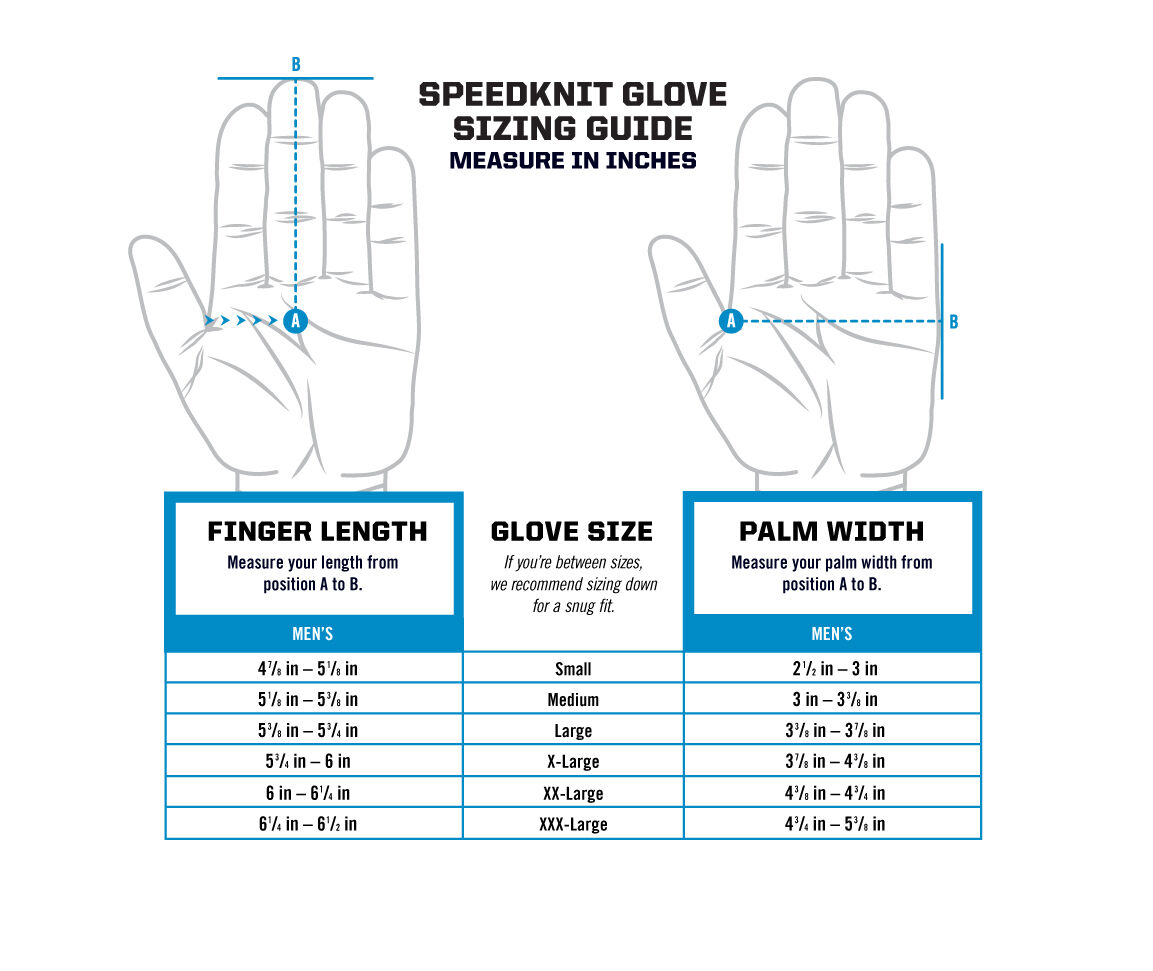
Sizing and Fit Considerations

Proper glove sizing directly impacts grip control safety performance. Here’s how to determine the right fit:

Glove Size Hand Circumference (cm) Middle Finger Length (cm)
Small 20-21 17-18
Medium 22-23 18-19
Large 24-25 19-20
XL 26-27 20-21
MW Website Sizing Chart speedknit2

Key fitting elements include:

  • Measuring hand circumference at the widest point
  • Checking finger length from wrist to fingertip
  • Testing finger mobility while wearing
  • Verifying wrist closure effectiveness
  • Examining knuckle flexibility range

The gloves offer optimal protection when they’re snug but not restrictive. A properly fitted glove maintains full hand dexterity while providing comprehensive coverage.

Maintenance and Care Tips

Proper maintenance extends the life of rigger gloves while maintaining their protective qualities. Regular care prevents premature wear and preserves safety features.

Extending Glove Lifespan

Daily cleaning removes dirt debris from leather rigger gloves using a soft brush or damp cloth. Store gloves in a cool dry place away from direct sunlight between uses. Apply leather conditioner monthly to prevent cracking dried leather. Remove excess moisture by air drying at room temperature rather than using heat sources. Rotate between 2-3 pairs of gloves to allow adequate drying time between uses.

When to Replace Your Rigger Gloves

Check gloves before each use for signs indicating replacement:

  • Visible holes tears or worn areas in the fabric or leather
  • Loose or broken stitching along seams
  • Hardened stiff or cracked leather material
  • Compromised elastic at the wrist cuff
  • Oil soaked areas that won’t dry
  • Decreased flexibility or grip control
  • Exposure to harsh chemicals or contaminants
Replacement Timeline Usage Type
2-3 weeks Heavy daily use
1-2 months Moderate use
3-4 months Light occasional use

Replace gloves immediately if they show any damage that reduces protection. Keep spare pairs available to maintain continuous hand safety coverage. Document glove replacements in safety equipment logs for compliance records.

At Norsemen Safety we recommend the Portwest Double Palm Rigger Gloves.

Portwest Double Palm Rigger Gloves A230

Conclusion

We’ve shown that choosing the right rigger gloves in Northern Ireland isn’t just about picking any protective gear – it’s about investing in safety and productivity. Quality rigger gloves from trusted local suppliers offer the perfect blend of protection certification compliance and workplace-specific features.

Whether you’re in construction manufacturing or any industrial sector proper hand protection is essential. By focusing on the right materials certifications and maintenance practices you’ll ensure optimal protection for your workforce while meeting all safety requirements.

Looking for reliable safety products in Belfast UK? Get in touch with our expert team today to discuss your requirements and discover how we can support your safety/PPE needs.

Frequently Asked Questions

What are rigger gloves and who needs them?

Rigger gloves are heavy-duty protective hand gear designed for industrial workers. They’re essential for workers in construction, manufacturing, agriculture, transport, shipyards, mining, and waste management sectors in Northern Ireland. These gloves offer protection against impacts, cuts, abrasions, and harsh weather conditions.

What features should I look for in quality rigger gloves?

Key features include double-stitched seams, reinforced palm padding, elasticated wrist cuffs, and water-resistant leather construction. Look for CE certification, triple-stitched seams, and Kevlar thread construction for enhanced durability. The gloves should also provide proper fit and allow sufficient hand dexterity.

How often should rigger gloves be replaced?

Replace rigger gloves immediately if you notice visible holes, loose stitching, or decreased flexibility. The replacement frequency depends on usage intensity and working conditions. It’s recommended to keep spare pairs available. Regular inspection is crucial for maintaining safety standards.

How do I choose the right size of rigger gloves?

Select gloves that fit snugly without restricting movement. Use a sizing chart to measure hand circumference and length. Proper sizing ensures optimal grip control and safety performance. The gloves should allow full finger dexterity while maintaining protection.

How should I maintain rigger gloves?

Clean gloves daily, store them in a dry place, and apply leather conditioner to prevent cracking. Avoid exposure to direct sunlight or heat sources. Regular maintenance extends glove lifespan and preserves protective qualities. Follow manufacturer’s care instructions for best results.

Where can I buy certified rigger gloves in Northern Ireland?

Purchase from Norsemen Safety who offer CE-certified gloves from reputable manufacturers. Local suppliers provide advantages like faster delivery, direct technical support, and bulk pricing benefits. They stock various models suitable for different industrial applications.

What safety standards do rigger gloves need to meet?

Rigger gloves must meet CE certification requirements, including tests for impact resistance, abrasion resistance, cut resistance, tear strength, and chemical penetration resistance. They should comply with Northern Ireland workplace safety regulations and specific industry standards.

Can rigger gloves be used in wet conditions?

Yes, quality rigger gloves with water-resistant leather treatment can be used in wet conditions. Look for models specifically designed with water-repellent features. However, regular maintenance is crucial to maintain water resistance properties.

Boots for Welders: Top Safety Features for Your Protection

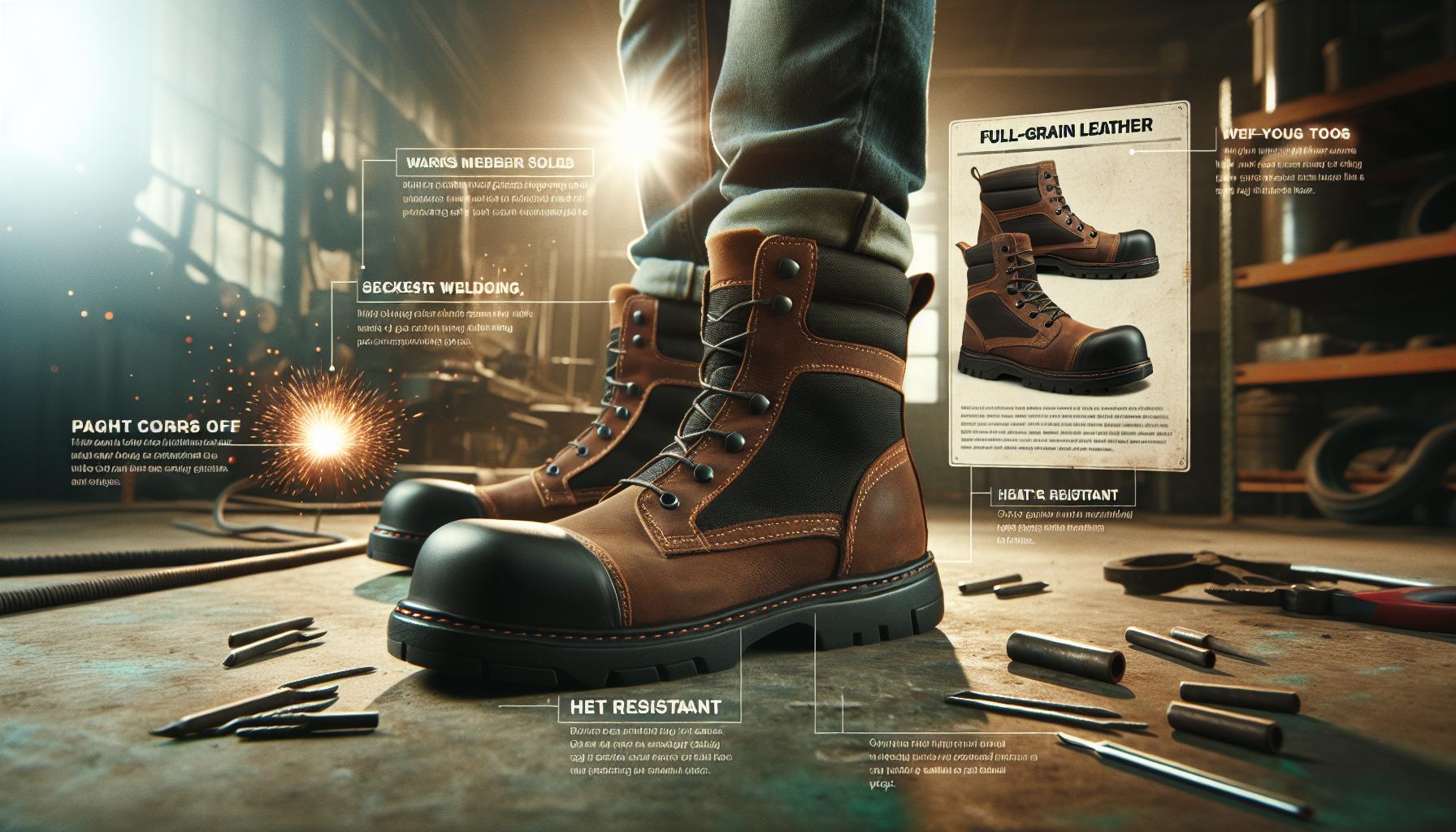
Professional boots for welders are essential for keeping you safe and comfortable during long hours on the job. Boots for welders must withstand the toughest conditions, offering protection from hot metal splashes, heavy falling objects, and sharp debris. Norsemen Safety understands that proper footwear isn’t just about comfort—it’s about ensuring your safety every step of the way.

Have you ever wondered what makes boots for welders different from standard work boots? The right boots for welders need to have specific features like fire-resistant materials, steel toe caps and metatarsal guards. They’ll protect your feet from sparks, slag and molten metal while supporting you through those demanding shifts across Northern Ireland, Ireland and the UK.

Let’s explore what you should look for in quality boots for welders and how they can help keep you safe on the job. Whether you’re working in a fabrication shop or on-site, we’ll help you understand the essential features that make welding footwear truly fit for purpose.

Key Takeaways

  • Professional boots for welders must feature fire-resistant materials, steel toe caps and metatarsal guards to protect against temperatures up to 300°C
  • Full-grain leather construction provides superior heat protection and durability, with dense fibres that block metal splatter whilst maintaining breathability
  • High-top boots offer better protection for heavy industrial welding, whilst low-top styles suit precision TIG welding where mobility is essential
  • Regular maintenance including cleaning, conditioning and inspecting for wear is crucial – most welders need to replace boots every 6-12 months
  • Proper fit is vital for safety, requiring 1.2-1.5cm toe space and consideration of foot swelling during long shifts
  • Quality boots for welders should meet EN ISO 20345:2011 safety standards and include features like slip-resistant soles and electrical hazard protection

Essential Safety Features of Boots for welders

Safety features in boots for welders protect against multiple workplace hazards. These specialised boots combine three critical protection elements to create a comprehensive safety barrier for welders.

Heat and Fire Resistance

Boots for welders incorporate flame-retardant leather treated with special compounds to resist temperatures up to 300°C. The heat-resistant soles feature multi-layer construction with fire-resistant rubber compounds that prevent melting when exposed to hot metal splashes or sparks. Metal eyelets resist heat degradation while maintaining structural integrity during extreme temperature exposure.

Metatarsal Protection

The metatarsal guard shields the top of the foot from falling objects heavy materials. An internal steel plate extends from the toe cap to the instep offering complete coverage of the metatarsal bones. The guard’s design allows natural foot flexion while maintaining a protective barrier against impact forces up to 75 joules.

  • 3mm thick steel cap coverage
  • Impact-resistant composite materials
  • Seamless construction to prevent pressure points
  • Extra interior padding for comfort
  • Corrosion-resistant coating
Safety Feature Protection Level Testing Standard
Heat Resistance Up to 300°C EN ISO 20349-2:2017
Metatarsal Guard 75 Joules ASTM F2413-18
Steel Toe Cap 200 Joules EN ISO 20345:2011

Top Materials for Welding Footwear

boots for welders

Quality Boots for Welders incorporate specific materials engineered for maximum heat resistance, durability and protection in extreme conditions. Here’s what makes these materials essential for welding safety footwear.

Full-Grain Leather

Full-grain leather serves as the primary material in premium boots for welders, offering superior heat protection and durability. This material maintains its integrity when exposed to temperatures up to 300°C, resisting sparks and molten metal splashes effectively. The natural grain creates a dense, impenetrable barrier that repels water while allowing feet to breathe during long shifts.

Key properties of full-grain leather in welding boots:

  • Dense fibre structure that blocks metal splatter
  • Natural flame-resistant properties
  • Excellent abrasion resistance
  • Extended lifespan compared to split leather
  • Enhanced breathability for comfort

Heat-Resistant Rubber Soles

Heat-resistant rubber compounds form the foundation of welding boot soles, delivering crucial protection from ground-level hazards. These specialised soles withstand direct contact with hot surfaces up to 300°C without melting or degrading.

Essential features of heat-resistant rubber soles:

  • High-temperature resistance against hot surfaces
  • Oil-resistant compounds for slip prevention
  • Impact absorption capabilities
  • Chemical resistance properties
  • Enhanced grip pattern for stability
Component Maximum Temperature Duration of Exposure
Full-grain Leather 300°C 60 seconds
Rubber Sole 300°C 40 seconds
Steel Toe Cap 400°C 120 seconds

Best Boot Styles for Different Welding Tasks

Different welding environments demand specific boot designs to maximise safety and comfort. Here’s how to select the most appropriate style based on your welding tasks.

High-Top vs Low-Top Designs

High-top boots for welders extend protection above the ankle, making them ideal for heavy industrial welding. These boots offer enhanced coverage against molten metal splashes, sparks and slag that can fall into the boot. The extended height provides extra support during long periods of standing or climbing.

Low-top boots suit light fabrication work or welding in confined spaces where mobility is essential. These boots feature a shorter ankle height, allowing for increased flexibility and reduced weight. They’re particularly effective for TIG welding tasks where precision movement is critical.

Boot Style Protection Level Best For
High-Top Full ankle & lower leg Structural welding, shipyards
Low-Top Ankle level TIG welding, light fabrication

Pull-On vs Lace-Up Options

Pull-on boots eliminate the risk of burning laces and offer quick removal in emergencies. The elastic side panels provide a secure fit while maintaining flexibility. These boots excel in environments with frequent exposure to molten metal splatter, as there are no laces to catch sparks.

Lace-up boots deliver customisable fitting options for different foot shapes and sizes. Fire-resistant laces paired with metal eyelets maintain durability under high-heat conditions. A gusseted tongue prevents debris from entering the boot while welding in dusty environments.

Feature Pull-On Boots Lace-Up Boots
Entry/Exit Quick Adjustable
Fit Type Fixed elastic Customisable
Protection No exposed parts Covered laces needed

Maintenance and Care Tips

Regular maintenance extends the life of welding boots while preserving their protective qualities. Here’s how to care for your boots effectively.

Cleaning and Conditioning

Clean welding boots after each shift by removing debris with a soft brush. Wipe the leather surface with a damp cloth to remove dust, metal particles or other contaminants. Apply a leather conditioner monthly to prevent cracking and maintain flexibility. Here are specific steps:

  • Remove laces to clean hard-to-reach areas
  • Use saddle soap on tough stains
  • Allow boots to dry naturally away from direct heat
  • Apply petroleum-free leather conditioner to maintain water resistance
  • Treat stitching with silicone spray to prevent thread deterioration
  • Store boots in a cool dry place between uses

When to Replace Your Boots for welding

Replace boots for welders when they show these critical signs of wear:

  • Visible cracks or holes in the leather upper
  • Separation between sole and upper materials
  • Worn tread pattern with less than 2mm depth
  • Damaged or exposed steel toe caps
  • Compromised metatarsal guards
  • Burnt or degraded heat-resistant coating
  • Broken eyelets or damaged fastening systems
  • Significant deformation in the boot structure

Professional welders replace their boots every 6-12 months with regular use. High-temperature exposure accelerates material degradation, requiring more frequent replacement in intensive welding environments. Keep a backup pair ready for seamless transition when primary boots show wear.

Boot Component Average Lifespan Replacement Indicator
Leather Upper 12 months Visible cracks
Rubber Sole 8-10 months Worn tread
Steel Toe 12+ months Exposure/damage
Heat Coating 6-8 months Surface peeling

Leading Welding Boot Brands and Models

The global welding footwear market features several trusted manufacturers producing high-quality safety boots. Each brand offers distinct features tailored to specific welding applications.

High-Performance Models

  • Steel-toe boots with 200-joule impact resistance rating
  • Heat-resistant models withstanding temperatures up to 300°C
  • Slip-resistant soles with SRC certification for maximum grip
  • Water-resistant options with minimum 4-hour protection

Material Specifications

Component Protection Level
Leather Upper Grade-A fire resistant
Steel Toe 200J impact rating
Sole Material 300°C heat resistant
Metatarsal Guard 100J impact rating

Key Safety Features

  • Double-stitched flame-resistant thread for enhanced durability
  • Kevlar-reinforced laces or quick-release fastening systems
  • Electrical hazard protection up to 18,000 volts
  • Impact-absorbing heel padding with memory foam technology

Popular Boot Styles

  • 8-inch high-top boots for heavy industrial welding
  • 6-inch mid-cut boots for general fabrication work
  • Pull-on wellington style for quick removal
  • External metatarsal guard models for additional protection
  • Leather upper: 12-18 months under regular use
  • Outsoles: 6-12 months depending on surface exposure
  • Steel toe caps: Lifetime guarantee against structural failure
  • Heat-resistant threading: 9-12 months before inspection

These boots for welders incorporate advanced safety technologies while maintaining comfort during extended welding sessions. Testing shows these models meet EN ISO 20345:2011 safety standards for professional welding applications.

Comfort and Fit Considerations

A well-fitted welding boot maximises safety performance through proper weight distribution and secure positioning during long shifts. Traditional sizing methods often fall short for boots for welders due to the internal protective features that affect the overall fit.

Finding the Right Size

Measuring feet at the end of a workday provides the most accurate sizing, as feet naturally swell during physical activity. Here’s how to measure:

  • Stand while measuring both feet separately
  • Leave 1.2-1.5 cm of space between the longest toe and boot tip
  • Consider the width measurement across the ball of the foot
  • Account for thick work socks in cold environments

Break-in Period Requirements

New boots for welders require a strategic break-in process to maintain protective qualities while achieving optimal comfort:

  • Wear the boots for 2-3 hours initially
  • Increase wearing time by 1 hour each day
  • Apply leather conditioner to soften stiff areas
  • Walk on level surfaces before use in work settings

Ergonomic Support Features

Quality welding boots incorporate specific comfort elements that support prolonged standing:

  • Cushioned insoles with shock absorption
  • Arch support for weight distribution
  • Padded ankle collars to prevent rubbing
  • Moisture-wicking linings for temperature control

Width and Volume Adjustments

Different foot volumes need varied accommodation:

Foot Type Recommended Adjustment
Wide Extra-width options with adjustable panels
High Arch Deep toe boxes with high insteps
Narrow Additional insoles or thick socks
Flat Enhanced arch support inserts

Movement Requirements

The boot’s flexibility affects welding performance in different positions:

  • Adequate toe flex for kneeling tasks
  • Side-to-side stability for varied stances
  • Ankle mobility for climbing activities
  • Ball-of-foot bend for extended crouching

Each welding position places unique demands on footwear comfort. How do your current boots perform in different welding positions?

Conclusion

Selecting the right boots for welders is crucial for any welder’s safety and performance. We’ve explored how these specialised boots protect against intense heat heavy impacts and other workplace hazards through their robust construction and advanced materials.

Remember that investing in high-quality boots for welders isn’t just about compliance – it’s about ensuring your safety and comfort during those long hours at work. By choosing the right pair and maintaining them properly you’ll protect yourself while maximising their lifespan.

Looking for reliable welding PPE in Belfast UK? Get in touch with our expert team today to discuss your requirements and discover how we can support your welding needs.

Frequently Asked Questions

What makes welding boots different from regular work boots?

Boots for welders are specifically designed with fire-resistant materials, steel toe caps, and metatarsal guards to protect against sparks, slag, and molten metal. Unlike regular work boots, they can withstand temperatures up to 300°C and feature flame-retardant leather construction. They also have specialised heat-resistant soles and additional protection against electrical hazards.

How often should welding boots be replaced?

Professional welders should replace their boots every 6-12 months, depending on work conditions and frequency of use. Replace immediately if you notice visible cracks, worn tread, compromised protective features, or damaged steel toe caps. It’s recommended to keep a backup pair ready for seamless transitions.

What are the essential safety features in welding boots?

Key safety features include steel toe caps (200-joule impact resistance), metatarsal guards, fire-resistant full-grain leather, heat-resistant soles, electrical hazard protection, and slip-resistant SRC certification. Double-stitched flame-resistant thread and reinforced seams are also crucial for durability.

Are high-top or low-top welding boots better?

The choice depends on your specific welding environment. High-top boots offer better ankle and lower leg protection, making them ideal for heavy industrial welding. Low-top boots are more suitable for light fabrication work or confined spaces where increased mobility is necessary.

How should I maintain my welding boots?

Clean regularly with a soft brush and damp cloth, apply leather conditioner to prevent cracking, and treat stitching with silicone spray. Remove metal splatter promptly to prevent damage. Allow boots to dry naturally away from direct heat, and store in a cool, dry place when not in use.

How should welding boots fit properly?

Boots for welders should fit snugly but not tight, with enough room for thick work socks and toe movement. Measure feet at the end of the workday when they’re slightly swollen. Allow for a break-in period, gradually increasing wear time. Ensure there’s no heel slippage and the arch support matches your foot shape.

Where to buy boots for welders?

Norsemen Safety/ Welder’s Choice is the place to shop for boots for welders – we are the welding boot specialists.

Grinding Discs: A Complete Guide to Types and Applications

Choosing the right grinding discs can make all the difference between a smooth finish and a botched job. We’ve seen countless DIY enthusiasts and professionals struggle with selecting the perfect disc for their projects and we understand how overwhelming it can be.

Whether you’re working on metal fabrication automotive repairs or woodworking projects a quality grinding disc is essential for achieving professional results. There’s more to these versatile tools than meets the eye – from different materials and grit sizes to various applications and safety considerations. Have you ever wondered what makes one grinding disc better suited for your specific task than another?

Let’s explore everything you need to know about grinding discs so you’ll feel confident in picking the right one for your next project. We’ll break down the types materials and best practices to help you work more efficiently and safely.

Key Takeaways

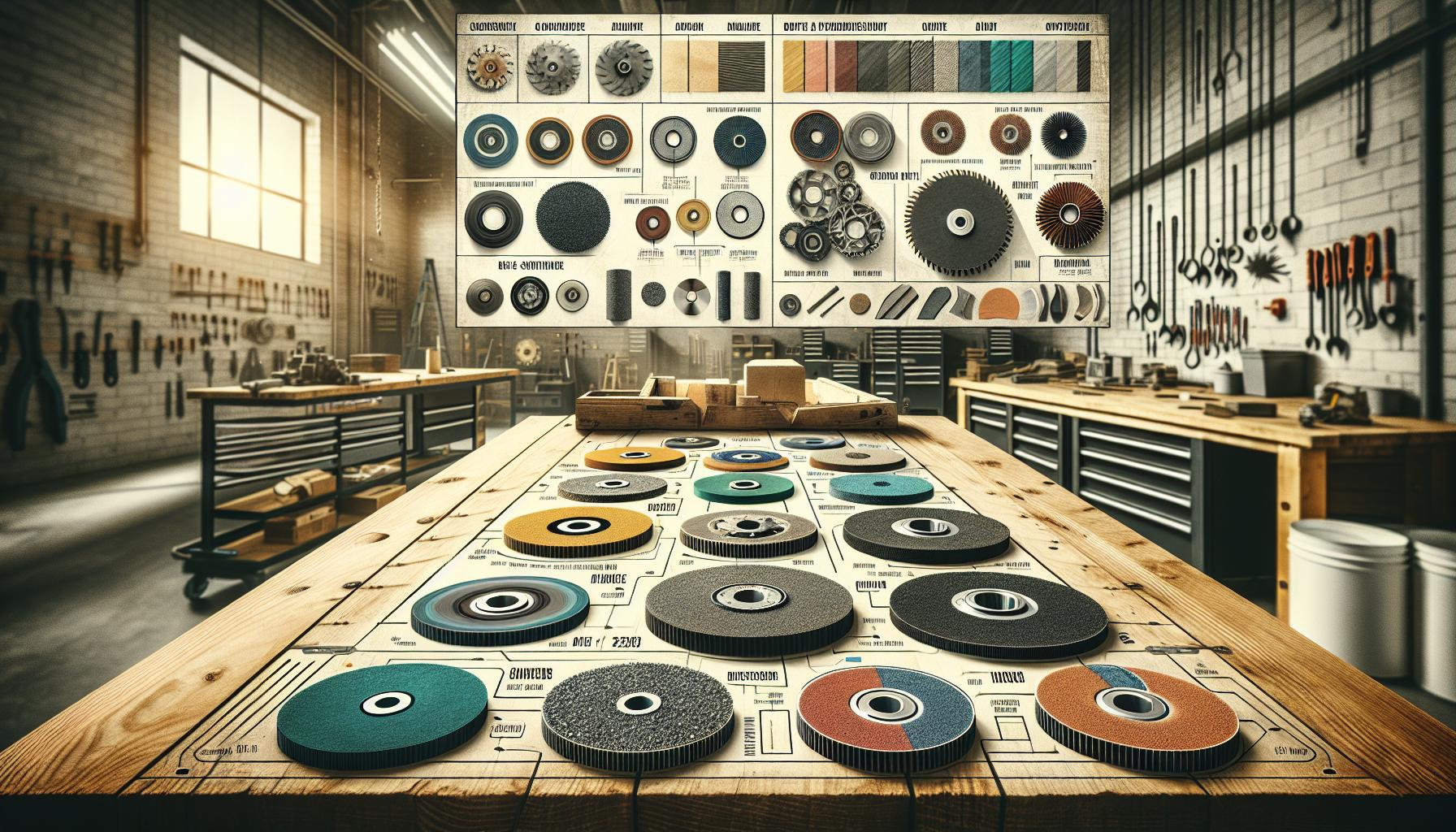
  • Grinding discs come in four main types: depressed centre discs, flat grinding discs, flap discs, and cut-off wheels, each designed for specific applications
  • The choice of abrasive material is crucial – aluminium oxide suits metal and wood, silicon carbide for stone and glass, zirconia for stainless steel, and ceramic for hard metals
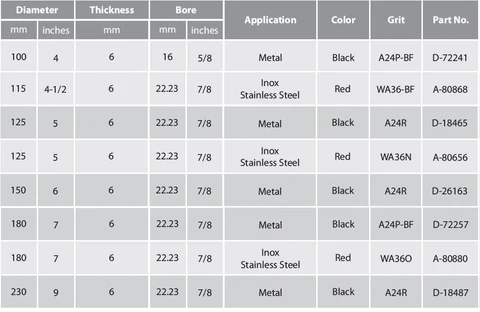
  • Disc size and thickness significantly impact performance – ranging from 115mm for detailed work to 230mm for industrial applications, with thickness varying from 1-8mm
  • Proper safety measures are essential, including wearing appropriate PPE (goggles, face shield, gloves) and following correct installation procedures
  • Regular maintenance, including daily inspections and proper storage in controlled conditions (15-25°C, 45-55% humidity), extends disc life and ensures safe operation
  • Matching the disc specifications to both the material being worked and the tool’s capabilities is vital for optimal performance and safety

What Are Grinding Discs and Their Uses

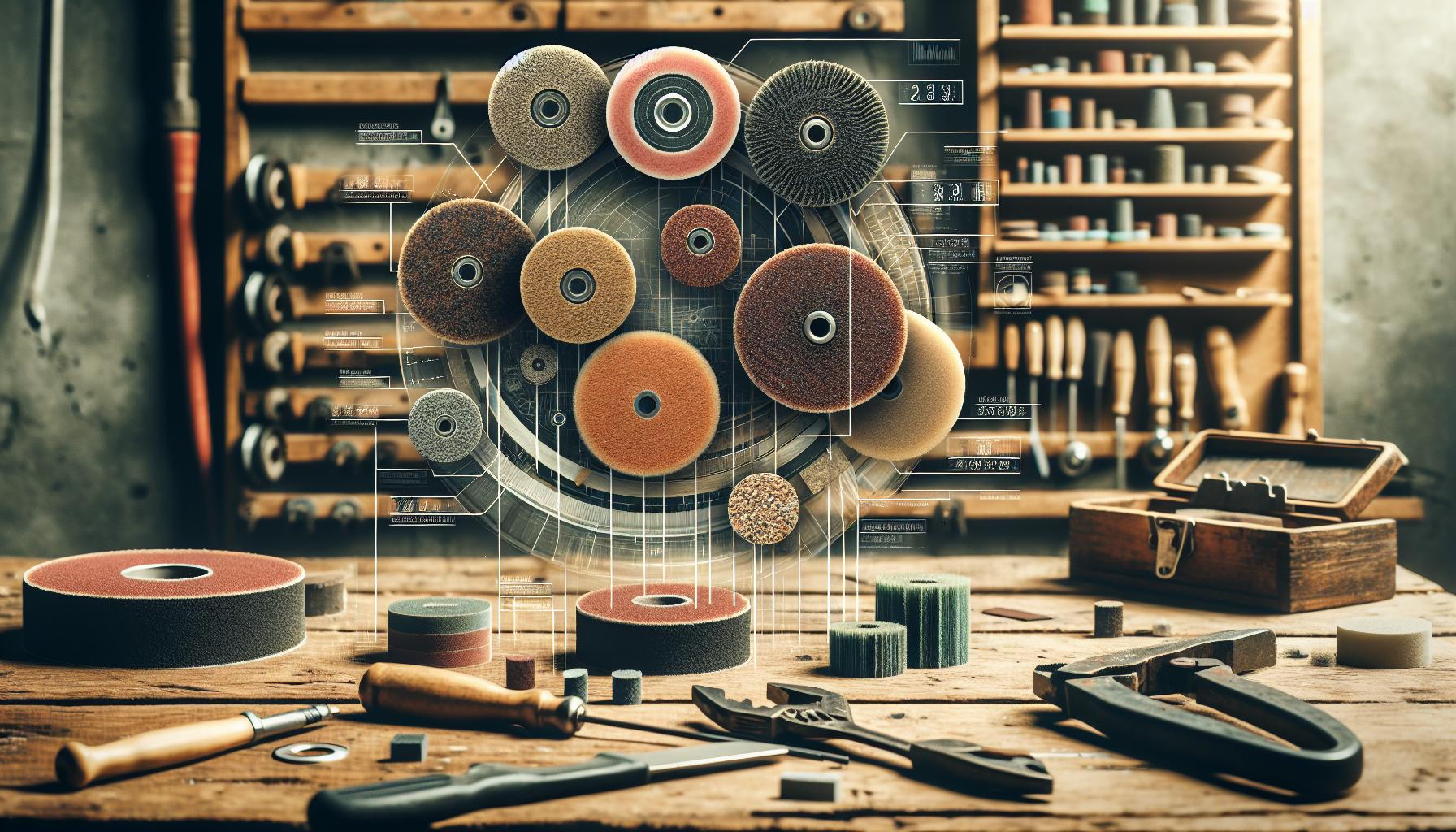
Grinding discs are abrasive tools that attach to angle grinders for cutting, shaping, polishing or removing material from metal, stone, concrete or wood surfaces. These discs contain abrasive particles bonded together in specific patterns to achieve different material removal rates and surface finishes.

Common Types of Grinding Discs

Depressed Centre Discs

  • Ideal for heavy material removal on metal surfaces
  • Features a raised hub for optimal grinding angles
  • Available in 4.5-inch to 9-inch diameter sizes

Flat Grinding Discs

  • Perfect for flush grinding applications
  • Provides consistent surface contact
  • Common in metalworking projects

Flap Discs

  • Combines grinding capability with finishing properties
  • Multiple overlapping abrasive flaps
  • Produces smoother finishes than standard grinding discs

Cut-off Wheels

  • Designed for precise cutting operations
  • Ultra-thin profile for minimal material waste
  • Cuts through metal pipes, sheets or rods

Key Materials Used in Manufacturing

Abrasive Grains

  • Resinoid bonds for flexibility
  • Vitrified bonds for precision grinding
  • Metal bonds for diamond abrasives

Backing Materials

  • Fibreglass mesh for strength
  • Cotton cloth for flap discs
  • Metal cores for diamond wheels

Each material combination creates specific grinding characteristics suited to different applications, from rough material removal to precision finishing work.

Essential Features to Consider When Choosing Grinding Discs

grinding discs

Selecting grinding discs requires careful attention to specific features that directly impact performance and safety. These essential characteristics determine the disc’s effectiveness for different applications and materials.

Abrasive Grain Types

Abrasive grains define a grinding disc’s cutting ability and durability. Here are the primary types:

  • Aluminium oxide grains excel at grinding ferrous metals like steel
  • Silicon carbide offers superior performance on concrete stone materials
  • Zirconia alumina provides extended life when grinding stainless steel
  • Ceramic alumina delivers cool cutting on hardened metals

Each grain type’s hardness rating affects its grinding efficiency:

Grain Type Hardness Rating Best For
Aluminium Oxide 9 Mohs Carbon Steel
Silicon Carbide 9.5 Mohs Stone, Glass
Zirconia 8.5 Mohs Stainless Steel
Ceramic 9.8 Mohs Hard Alloys

Disc Size and Thickness Options

Grinding disc dimensions play a crucial role in matching the tool to the task. Common specifications include:

  • 115mm discs suit compact angle grinders for detailed work
  • 125mm discs balance control with material removal rate
  • 230mm discs handle large-scale industrial applications
  • 1mm-3mm thickness for cutting operations
  • 6mm-8mm thickness for heavy material removal
Disc Diameter Max RPM Typical Applications
115mm 13,300 Detail work, tight spaces
125mm 12,250 General purpose grinding
230mm 6,650 Heavy-duty industrial use

Best Applications for Different Grinding Discs

Grinding discs excel in specific applications based on their design features material composition. Understanding these applications helps maximize efficiency while achieving optimal results.

Metal Working Applications

Metal grinding applications require specific disc types for different tasks:

  • Depressed centre discs remove heavy metal stock from welds pipes railings
  • Flap discs create smooth finishes on metal surfaces like gates fences furniture
  • Cut-off wheels make precise cuts through sheet metal structural steel rebar
  • Finishing discs polish stainless steel aluminium bronze surfaces
Disc Type Metal Application Typical Grit Range
Depressed Centre Heavy Stock Removal 24-36
Flap Disc Surface Finishing 40-120
Cut-off Wheel Metal Cutting 30-60
Finishing Disc Metal Polishing 80-320
  • Diamond grinding cups level concrete floors remove epoxy coatings
  • Turbo rim discs shape stone materials granite marble slate
  • Segmented blades cut through brick blocks concrete pavers
  • Cup wheels smooth rough concrete surfaces remove thin-set mortar
Disc Type Masonry Application Segment Type
Diamond Cup Surface Levelling Continuous
Turbo Rim Stone Shaping Turbo
Segmented Material Cutting Segmented
Cup Wheel Surface Prep Double Row

Safety Guidelines When Using Grinding Discs

Safe operation of grinding discs demands strict adherence to handling protocols to protect users from potential hazards. Here’s what you need to know about proper usage and safety measures.

Proper Installation and Handling

  • Check the disc for cracks or damage before mounting
  • Verify the disc’s maximum RPM rating matches your grinder
  • Mount the disc with the directional arrow facing the correct rotation
  • Tighten the mounting nut to the manufacturer’s specified torque
  • Test-run newly mounted discs for 30 seconds in a protected area
  • Store discs flat in a dry environment between 18-22°C
  • Transport discs in protective cases to prevent damage
  • Replace discs when worn to 25% of their original diameter
  • Safety goggles with side shields meeting EN166 standards
  • Face shield over safety glasses for additional protection
  • Heavy-duty work gloves rated for grinding operations
  • Steel-toed boots to protect feet from falling objects
  • Fire-resistant clothing covering all exposed skin
  • Hearing protection with minimum 25dB noise reduction
  • Respiratory mask rated P2 or higher for dust protection
  • Flame-resistant apron for heavy-duty grinding tasks
Disc Diameter (mm) Minimum Safety Distance (m) Maximum RPM
115 2 13,300
125 2.5 12,250
180 3 8,500
230 3.5 6,650

For more information about the use of abrasive wheels click here to see the HSE government guidelines.

Maintenance and Storage Tips

Regular Disc Inspection

Grinding discs require daily inspection before each use to maintain optimal performance. Check for cracks, chips, warping or signs of wear along the edges. Testing each disc by tapping it gently with a plastic handle produces a clear ring sound in functional discs, while damaged ones emit a dull thud. Remove any discs showing visible defects from service immediately.

Proper Cleaning Methods

  • Brush off loose debris with a soft-bristled brush after each use
  • Remove stubborn residue using compressed air at 30-40 PSI
  • Clean disc surfaces with mineral spirits on a lint-free cloth
  • Allow discs to dry completely before storage or next use
  • Avoid using water-based cleaners on resin-bonded discs

Handling Guidelines

  • Lift discs by the centre hole to prevent edge damage
  • Transport in protective sleeves or original packaging
  • Stack similar-sized discs together when moving
  • Keep discs away from oils chemicals solvents
  • Rotate stock using first-in-first-out method

Conclusion

Choosing the right grinding disc is crucial for achieving professional results in any project. We’ve explored the various types materials and applications that make these essential tools so versatile in both DIY and professional settings.

Armed with this knowledge you’ll be better equipped to select the perfect disc for your specific needs. Remember that proper maintenance storage and safety practices aren’t just recommendations – they’re essential steps that protect both you and your equipment.

Looking for reliable welding products in Belfast UK? Get in touch with our expert team today to discuss your requirements and discover how we can support your welding needs.

To see our range of abrasive wheels click here

Frequently Asked Questions

What is a grinding disc used for?

A grinding disc is an abrasive tool attached to angle grinders for cutting, shaping, polishing, or removing material from various surfaces. It’s commonly used on materials like metal, stone, concrete, and wood to achieve different finishing results.

How do I choose the right grinding disc for metal?

For metal work, select aluminium oxide discs for ferrous metals and zirconia for tough applications. Consider the thickness of your material and desired finish. Use depressed centre discs for heavy material removal and flap discs for finishing work.

What safety equipment is required when using grinding discs?

Essential safety equipment includes safety goggles, face shield, protective gloves, steel-toed boots, and a respiratory mask. Ear protection is also crucial. Always ensure clothing is close-fitting and fire-resistant when working with metal.

How long do grinding discs typically last?

The lifespan varies depending on usage intensity, material being worked on, and disc quality. Generally, a quality disc used correctly can last 10-30 hours of continuous use. Regular inspection and proper storage can help maximise disc life.

Can I use the same grinding disc for different materials?

No, different materials require specific types of grinding discs. For example, silicon carbide discs work best for concrete and stone, while aluminium oxide is ideal for steel. Using the wrong disc type can be dangerous and ineffective.

How should I store grinding discs?

Store grinding discs in a dry, temperature-controlled environment, laying them flat to prevent warping. Keep them away from chemicals and extreme temperatures. Use original packaging or dedicated storage containers to prevent damage.

What are the signs that a grinding disc needs replacement?

Replace the disc if you notice uneven wear, cracks, chips, or missing segments. Also, replace if the disc vibrates excessively during use, makes unusual sounds, or when the grinding performance significantly decreases.

What’s the difference between a cutting disc and a grinding disc?

Cutting discs are thinner and designed for precise cutting operations, while grinding discs are thicker and meant for material removal and surface preparation. Never use a cutting disc for grinding or vice versa, as this can be dangerous

What is the best grinding disc to buy?

Pferd – long lasting, quality grinding disc. Outlast the competition.

Who supplies Grinding discs in the UK and Ireland?

Welder’s Choice located in Belfast, shipping to the UK and Ireland. Competitive pricing and quality product. A supplier you can trust.

UK Welding Training Standards: Essential Certification Guide

Welding isn’t just about joining metal—it’s a skilled craft that demands precision and expertise. As the UK welding training standards landscape continues to evolve the demand for highly trained welders has never been more critical. Our comprehensive certification guide will illuminate the pathways professionals can take to excel in this dynamic sector.

The journey to becoming a certified welder involves more than just technical skills. It’s about understanding safety protocols national standards and professional development opportunities. We’ll break down the complex certification process into clear actionable steps that can transform your career trajectory and help you stand out in a competitive job market.

Whether you’re a newcomer or an experienced professional looking to upgrade your credentials this guide offers insights into the UK welding training standards landscape. What does it take to become a top-tier welder in today’s UK industrial environment? Join us as we explore the essential qualifications skills and strategic approaches that define successful welding careers.

Key Takeaways

  • Comprehensive Certification Framework: UK welding standards are governed by key regulatory bodies like BSI, TWI, and ECITB, providing a structured pathway for professional development from entry-level to advanced credentials
  • Multi-Level Qualification Pathways: Welders can progress through distinct certification levels, from City & Guilds Level 1 to advanced professional diplomas, each representing increasing technical complexity and industry expertise
  • Rigorous Assessment Processes: Welding certification in the UK involves comprehensive theoretical examinations and practical skills evaluations, ensuring high-quality professional standards across multiple industrial sectors
  • Specialisation and Career Advancement: Professionals can enhance their careers by pursuing sector-specific credentials in aerospace, automotive, marine, and nuclear engineering, with clear progression routes from entry-level to expert positions
  • Strict Health and Safety Compliance: UK welding professionals must adhere to stringent safety protocols, including mandatory personal protective equipment (PPE) standards and comprehensive risk assessment procedures that protect worker safety and maintain industry integrity
  • Continuous Professional Development: Successful welding careers require ongoing skills enhancement, regular training updates, and strategic credential acquisition to remain competitive in the evolving industrial landscape

Overview of UK Welding Training Standards

The UK maintains rigorous standards for welding professionals through comprehensive certification processes and national guidelines. These training standards protect industrial quality and safety across multiple sectors.

Key Regulatory Bodies

The primary regulatory bodies governing the UK welding training standards include:

  1. British Standards Institution (BSI)
    Develops and publishes national welding standards
    Provides accreditation for welding certification programmes
    Monitors compliance with industrial welding regulations
  2. Welding Institute (TWI)
    Offers professional research and training services
    Conducts advanced technical assessments
    Provides specialist welding qualifications
  3. Engineering Construction Industry Training Board (ECITB)
    Manages industry-specific training frameworks
    Develops standardised competency assessments
    Supports workforce skills development in engineering sectors

Legal Framework for Welding Certification

The UK welding training standards are structured through multiple legislative instruments:

Certification Standards

  • BS EN 4872: Governs welder qualification processes
  • Covers multiple welding techniques: MIG, MAG, TIG, Flux Cored
  • Requires biennial re-testing and six-monthly certification validation
  • Mandatory practical skill demonstrations
  • Comprehensive written and practical examinations
  • Surface and destructive testing protocols
  • Safety and technical knowledge assessments

Our standards reflect international best practices while maintaining UK-specific industrial requirements.

Welding Qualification Levels

Training Standards

UK welding certification follows a structured progression from entry-level to advanced professional credentials. Our comprehensive guide explores the key qualification pathways that support welders’ career development.

Entry-Level Certifications

The City & Guilds Level 1 Welding Skills certification provides a comprehensive introduction to:

  • Metal fabrication techniques
  • Thermal cutting processes
  • Brazing fundamentals
  • Practical skill development

This qualification involves:

  • Completing practical assignments
  • Passing an oral knowledge test
  • Demonstrating basic welding competencies

Intermediate Skill Pathways

Intermediate welding certifications focus on expanding technical expertise and specialized techniques:

  • Advanced welding process understanding
  • Increased technical complexity
  • Industry-specific skill refinement

Advanced Professional Credentials

Advanced welding qualifications represent pinnacle achievements in professional development:

  • Extensive practical experience
  • Comprehensive theoretical knowledge
  • Specialized technical assessments
  • Demonstrated professional competence

These qualifications validate a welder’s expertise across complex industrial environments and specialized technical domains.

Essential Welding Training Programmes

The UK welding training standards programmes offer comprehensive pathways for professionals at different career stages. These structured programmes address the industry’s evolving technical and safety requirements across multiple qualification levels.

Classroom-Based Learning

Classroom training forms the theoretical foundation of welding education. Students engage in structured learning environments that cover critical topics including:

  • Metal science and material properties
  • Welding technique fundamentals
  • Safety protocols and risk management
  • Technical drawing and blueprint interpretation
  • Metallurgical principles and metal behaviour
  • Quality control standards and inspection techniques

Theoretical education typically spans 4-6 weeks and provides comprehensive knowledge essential for practical skill development. City & Guilds qualifications integrate academic learning with practical assessment models.

Practical Workshop Training

Practical workshops transform theoretical knowledge into tangible welding skills. Key training components include:

  • Arc welding technique demonstrations
  • Equipment handling and maintenance
  • Precision welding practice sessions
  • Simulation of industrial working environments
  • Safety equipment familiarisation
  • Performance assessment and skill validation

Workshop training emphasises hands-on experience across multiple welding processes: MIG, TIG, stick welding, and plasma cutting. Participants practice techniques on various metal types and thicknesses to build comprehensive competency.

Industry-Specific Modules

Industry-specific modules prepare welders for specialised sector requirements:

  • Aerospace welding techniques
  • Automotive manufacturing standards
  • Construction and structural welding
  • Offshore and marine engineering
  • Pipeline and pressure vessel fabrication
  • Advanced materials welding

These modules provide targeted skill development aligned with specific industrial standards. Certification levels range from foundational (Level 1) to advanced professional credentials (Level 3), addressing complex technical challenges in respective industries.

Certification Assessment Methods

The UK welding training standards certification involves comprehensive evaluation processes that validate a professional’s technical competence and safety expertise. Our assessment methods encompass multiple rigorous stages designed to comprehensively measure a welder’s capabilities.

Theoretical Examination Requirements

Theoretical knowledge represents a critical component of UK welding certification. The assessment typically includes:

  • Multiple-choice examinations covering fundamental welding principles
  • Comprehensive modules addressing:
  • Metallurgy fundamentals
  • Welding process understanding
  • Safety protocol comprehension
  • Material science principles

Standard theoretical assessments require candidates to achieve a minimum 60% score across 15 comprehensive examination modules. These modules test theoretical understanding across diverse welding disciplines and safety considerations.

Practical Skills Evaluation

Practical skills assessment validates a welder’s technical proficiency through hands-on demonstrations. Key evaluation components include:

  • Performance-based practical examinations
  • Equipment handling assessments
  • Technique demonstration across multiple welding processes
  • Quality control and precision measurement skills
  • Safety protocol implementation verification

Assessors observe candidates executing specific welding techniques using industry-standard equipment and protocols. Candidates must demonstrate consistent performance and adherence to national welding standards.

Performance Testing Protocols

Performance testing protocols represent the final stage of comprehensive certification assessment. These protocols involve:

  • Destructive and non-destructive testing techniques
  • Weld quality analysis
  • Structural integrity examination
  • Material compatibility verification
  • Technical competence validation

Testing protocols systematically evaluate a welder’s capability to produce high-quality, structurally sound welds across various industrial applications. Candidates must demonstrate technical expertise and precision through standardised performance benchmarks.

Industry-Recognised Welding Qualifications

British Standards Institution (BSI) Certifications

BSI certifications represent industry-leading welding credentials that validate technical competence through:

  • Standardised assessment protocols
  • Rigorous practical skill evaluations
  • Compliance with national welding standards
  • Professional credential verification processes

Sector-Specific Welding Credentials

Sector-specific welding credentials support specialised industrial requirements by:

  • Addressing unique manufacturing challenges
  • Providing targeted technical training
  • Matching qualifications to specific industry needs
  • Developing advanced process-specific skills
  • Global recognition of UK welding standards
  • Cross-border professional mobility
  • Advanced technical skill validation
  • Compliance with international industrial protocols

Career Progression and Development

Professional welding careers in the UK demand continuous skill enhancement and strategic credential acquisition. Our exploration focuses on the comprehensive pathways welders can pursue to advance their professional standing.

Continuing Professional Development

Professional development in welding represents a critical strategy for maintaining competitive expertise. UK welders can pursue multiple approaches to upgrade their skills:

  • Regular Training Updates: Attend workshops and seminars covering emerging welding technologies
  • Technical Certifications: Acquire advanced process-specific qualifications
  • Skills Assessments: Participate in periodic competency evaluations
  • Knowledge Expansion: Study emerging industry techniques and technological innovations

Specialisation Opportunities

Welding professionals can differentiate themselves through targeted specialisation across industrial sectors:

  • Aerospace Welding: Precision techniques for aerospace manufacturing
  • Automotive Engineering: Advanced joining methods for vehicle components
  • Marine Construction: Specialist welding for maritime infrastructure
  • Nuclear Engineering: High-integrity welding processes for critical infrastructure

Career Advancement Pathways

Career progression in welding involves strategic credential accumulation and practical experience:

  • Entry-Level: Welder Competence Certificate Level 1
  • Intermediate: Level 2 certifications with process-specific endorsements
  • Advanced: Specialist credentials like ASME IX and ISO 9606 Class 1
  • Expert Level: Management and training roles requiring comprehensive technical expertise

By systematically developing skills and obtaining recognised certifications, welders can create robust professional trajectories across diverse industrial environments.

Health and Safety Compliance

The UK welding industry maintains stringent health and safety protocols to protect workers and maintain industrial standards. Our comprehensive guide explores critical compliance requirements that safeguard professional welders across various workplace environments.

Personal Protective Equipment – UK Welding Training Standards

Personal protective equipment (PPE) forms the primary defence mechanism for welders against potential workplace hazards. UK regulations mandate comprehensive protective gear including:

PPE standards follow BS EN ISO 11611:2015 specifications, which classify protective equipment into Class 1 and Class 2 categories based on protection levels and welding complexity.

Risk Assessment Procedures – UK Welding Training Standards

Systematic risk assessment remains fundamental to workplace safety in welding operations. Key procedural elements include:

  • Hazard Identification: Comprehensive mapping of potential workplace risks
  • Risk Evaluation: Quantitative assessment of probability and potential impact
  • Control Mechanism Development: Strategic interventions to mitigate identified risks
  • Documentation: Detailed recording of assessment findings
  • Regular Review: Periodic reassessment of workplace safety protocols

These procedures align with HSE guidelines and Management of Health and Safety at Work Regulations 1999, providing a structured approach to workplace safety management.

Workplace Safety – UK Welding Training Standards

Effective safety training encompasses theoretical knowledge and practical skill development. Critical training components include:

  • Theoretical Instruction: Comprehensive safety protocol understanding
  • Practical Demonstrations: Hands-on safety equipment usage
  • Emergency Response Training: Accident prevention and management techniques
  • Equipment Handling: Safe operational procedures for welding machinery
  • Legal Compliance Education: Understanding regulatory requirements

Training programmes typically range from 2-5 days, providing intensive safety skill development across multiple competency levels.

Conclusion

We’ve explored the comprehensive landscape of welding certification in the UK highlighting the critical pathways for professional development. The UK welding training standards industry demands continuous learning and strategic skill enhancement to stay competitive and meet evolving industrial requirements.

Our investigation reveals that successful welders must embrace structured training programmes ongoing education and rigorous certification standards. By understanding and navigating these professional development frameworks professionals can build robust careers with significant opportunities across multiple industrial sectors.

The journey towards becoming a skilled welder requires dedication commitment and a proactive approach to skills acquisition. We recommend aspiring and established welders alike remain adaptive invest in their professional credentials and maintain a strong commitment to safety and technical excellence.

Safety is crucial in welding, and having the right protective gear is essential. At Norsemen Safety, we provide high-quality supplies to keep you safe and efficient on the job. Contact us here to find the perfect safety solutions for your needs.

Frequently Asked Questions

What are the UK Welding Training Standards?

Welding certification in the UK is a formal process that validates a professional’s technical skills, safety knowledge, and competence in welding techniques. It involves comprehensive assessments by recognised bodies like the British Standards Institution (BSI) and City & Guilds, ensuring the UK welding training standards through theoretical examinations and practical skill demonstrations.

How do I start my welding certification journey?

Begin with entry-level qualifications like City & Guilds Level 1 Welding Skills. This foundational certification covers basic metal fabrication, thermal cutting, and brazing techniques. Attend accredited training programmes, complete theoretical and practical coursework, and pass standardised assessments to obtain your initial welding certification.

What qualifications are available for welders?

The UK offers multiple welding qualification levels: Level 1 for beginners, Level 2 for advanced skills, and Level 3 for expert practitioners. Credentials include City & Guilds certifications, One Education Welding Training Certificates, and specialised BSI certifications, each validating different competency levels and technical expertise.

What personal protective equipment (PPE) is mandatory?

The UK welding training standards must use PPE complying with BS EN ISO 11611:2015, including:

  • Head protection
  • Safety glasses/face shields
  • Respiratory equipment
  • Flame-resistant gloves
  • Protective clothing
  • Steel-toe safety boots

Proper PPE selection and usage are critical for workplace safety.

How long does welding certification take?

Welding certification duration varies by level. Entry-level certifications typically require 4-6 weeks of training, combining theoretical classroom learning and practical workshop sessions. Advanced certifications might take several months, depending on the complexity of skills and specialisation requirements.

What are the assessment methods for welding certification?

Welding certification assessments include:

  • Theoretical multiple-choice examinations (minimum 60% pass rate)
  • Practical skills demonstrations
  • Equipment handling evaluations
  • Destructive and non-destructive testing
  • Safety protocol compliance checks

These comprehensive assessments validate technical competence and industry readiness.

Which industries require welded professionals?

Certified welders are essential in multiple sectors:

  • Construction
  • Manufacturing
  • Aerospace
  • Automotive
  • Marine engineering
  • Oil and gas
  • Renewable energy infrastructure

Each industry in the UK has specific welding training standards and certification requirements.

How often should welding certifications be renewed?

Most welding certifications require renewal every 2-3 years. Renewal involves:

  • Demonstrating current skills
  • Passing updated theoretical assessments
  • Proving continued professional development
  • Maintaining safety standards and compliance

Regular recertification ensures technicians’ skills remain current and industry-relevant.

What are the career progression opportunities?

Welding offers structured career advancement through:

  • Progressive certification levels
  • Specialisation in specific techniques
  • Advanced diplomas
  • Instructor/training roles
  • Technical consultancy
  • Management positions in industrial settings

Continuous learning and skill enhancement are key to success.

How much do certified welders earn?

Welding professional salaries vary by experience, certification level, and industry:

  • Entry-level: £22,000-£28,000
  • Intermediate: £30,000-£40,000
  • Advanced/Specialist: £45,000-£65,000

Specialised certifications and additional skills can significantly increase earning potential.

Welding Equipment Selection Guide: From Beginner to Pro

Are you ready to dive into the electrifying world of welding equipment selection? Whether you’re a seasoned professional or a curious beginner, choosing the right welding gear can feel like navigating a maze of metal and machinery. We understand the challenge of finding the perfect equipment that matches your skill level and project requirements.

Welding isn’t just a trade—it’s an art form that requires precision and the right tools. From basic workshop setups to advanced industrial applications, our guide will walk you through the essential considerations that transform ordinary metal work into extraordinary craftsmanship. We’ll break down the key factors that matter most for your welding equipment selection, that will elevate your skills and boost your confidence.

Every welding journey begins with understanding your options. Are you looking to start small or ready to tackle complex projects? Join us as we explore the critical elements that will help you make an informed decision and take your welding capabilities to the next level.

Key Takeaways

  • Equipment Selection is Critical: Choosing the right welding equipment depends on your skill level, project requirements, and specific welding processes (SMAW, GMAW, GTAW), ensuring optimal performance and safety.
  • Safety First: Comprehensive protective gear including auto-darkening welding helmets, fire-resistant jackets, and respiratory protection are essential for preventing workplace injuries and maintaining professional standards.
  • Progression through Equipment Levels: Welders can advance from entry-level MIG and stick welders to sophisticated multi-process and digital inverter machines as their skills and project complexity increase.
  • Technology Driving Innovation: Emerging welding technologies like robotic systems, AI-integrated platforms, and cloud-based monitoring are transforming the industry, offering unprecedented precision and efficiency.
  • Maintenance Matters: Regular equipment maintenance, including daily cleaning, weekly inspections, and proactive component replacement, is crucial for preserving performance and extending machine longevity.
  • Cost-Effective Approach: Strategic equipment selection balances initial investment with long-term performance, considering factors like material compatibility, working environment, and production volume.

Understanding Welding Equipment Selection: The Basic

Welding equipment selection requires careful consideration of multiple factors affecting performance and safety. Our guide breaks down the critical components that professionals and hobbyists must understand before starting any welding project.

Types of Welding Processes

Welding processes differ significantly in technique, application, and metal compatibility. Three primary processes dominate professional and industrial welding:

SMAW (Shielded Metal Arc Welding):

  • Uses consumable electrode with flux coating
  • Highly versatile process
  • Ideal for repair work and challenging locations
  • Works effectively on thick materials
  • Minimal equipment requirements

GMAW (Gas Metal Arc Welding):

  • Employs continuous wire feed mechanism
  • Utilises inert gas for arc protection
  • Exceptional for welding steel and aluminum
  • Provides consistent, clean welds
  • Faster processing compared to other methods

GTAW (Gas Tungsten Arc Welding):

  • Requires non-consumable tungsten electrode
  • Uses inert gas shielding
  • Produces precise, high-quality welds
  • Best for thin materials and exotic metals
  • Demands advanced operator skill

Essential Safety Gear

Comprehensive safety equipment selection protects welders from potential hazards during operations. Critical protective items include:

Safety Equipment Protection Level Key Features
Welding Helmet High Auto-darkening lens
Fire-Resistant Jacket Critical Leather or flame-retardant materials
Leather Gloves Essential Heat and electrical resistance
Steel-Toed Boots Fundamental Impact and electrical protection
Respiratory Protection Important Filters metal particulates

Our approach prioritises understanding equipment characteristics and implementing robust safety protocols for optimal welding performance.

Entry-Level Welding Equipment Selection

The right welding equipment selection for beginners requires careful consideration of versatility, ease of use, and cost-effectiveness. We’ll explore the essential machines and tools that provide a solid foundation for new welders.

Recommended Starter Machines

MIG and stick welders emerge as top choices for newcomers to welding. These machines offer adaptable capabilities across multiple metal types and project requirements:

MIG Welders

  • Ideal for thin material welding (steel, stainless steel, aluminum)
  • Provides intuitive operation for beginners
  • Features critical for selection:
  • Adjustable voltage controls
  • Variable wire feed speed settings
  • Integrated gas regulator
  • Compact design for workspace flexibility

Stick Welders

  • Supports diverse material welding techniques
  • Offers robust performance at affordable price points
  • Key advantages:
  • Adjustable amperage settings
  • Works effectively outdoors and in challenging environments
  • Minimal equipment requirements
  • Excellent for thicker metal applications

Budget-Friendly Welding Tools

Essential supplementary equipment selection for entry-level welders includes:

Tool Category Recommended Items Estimated Cost Range
Personal Protection Welding helmet, leather gloves, safety glasses £50 – £150
Consumables Welding electrodes, wire, gas £30 – £100
Basic Accessories Chipping hammer, wire brush, pliers £20 – £50

Our recommendations prioritise safety, functionality, and cost-effectiveness for welding novices seeking reliable equipment without significant financial investment.

Intermediate Welding Equipment Selection

As welders progress beyond basic techniques, their equipment selection requirements become more sophisticated and project-specific. This section explores advanced tools and techniques that elevate welding performance across diverse industrial and professional applications.

Advanced Welding Techniques

Advanced welding techniques demand precision and specialised skills. Welders expand their capabilities through:

  • Orbital Welding: Automated circular welding method ideal for pharmaceutical and semiconductor industries
  • Plasma Arc Welding: High-precision technique producing narrow, deep penetration welds
  • Friction Stir Welding: Solid-state joining process used in aerospace and automotive manufacturing
  • Electron Beam Welding: High-energy technique for intricate metal joining in vacuum environments

Specialised Welding Machines

Professional welders require machines with enhanced capabilities:

Machine Type Performance Characteristics Typical Applications
Multi-Process Welders Supports MIG/TIG/Stick processes Construction industrial fabrication
Pulse Welding Machines Controlled heat input Thin metal welding delicate materials
Digital Inverter Welders High energy efficiency lightweight design Portable precision welding
Water-Cooled Welding Systems Advanced thermal management Heavy industrial continuous welding

Successful intermediate welding integration requires understanding machine specifications matching project complexity and material requirements.

Professional Welding Equipment Selection

Professional welding demands sophisticated equipment selection that transcends basic operational capabilities. Advanced systems provide precision, efficiency, and superior performance across complex industrial applications.

High-Performance Welding Systems

High-performance welding systems represent technological pinnacles in metal fabrication. These advanced machines integrate cutting-edge technologies to deliver exceptional welding outcomes:

  • Multi-Process Welders: Configure multiple welding techniques within single platforms
  • Digital Inverter Welders: Offer precise current control and enhanced electrical efficiency
  • Pulse Welding Machines: Generate controlled energy pulses for intricate metal joining
  • Water-Cooled Welding Systems: Manage extreme heat generation during prolonged welding operations

Precision Welding Techniques

Professional welding techniques require extraordinary skill and sophisticated equipment. Key precision methods include:

  • Orbital Welding: Automated rotation technique for consistent circular welds
  • Plasma Arc Welding: High-temperature process producing narrow, deep penetration welds
  • Friction Stir Welding: Solid-state joining method for aluminium and non-ferrous metal alloys
  • Electron Beam Welding: Utilises concentrated electron beam for microscopic welding applications

Professional systems demand comprehensive understanding of material properties, thermal dynamics and mechanical interactions to achieve superior fabrication results.

Selecting the Right Welding Equipment

Selecting appropriate welding equipment represents a critical decision for professionals and hobbyists alike. Our comprehensive guide explores the essential considerations for matching welding machines to specific project requirements and performance expectations.

Matching Equipment to Project Requirements

Project specifications drive equipment selection across multiple dimensions. Welders must evaluate:

Project Parameter Key Considerations
Material Thickness Determines welding process and machine power requirements
Metal Composition Influences electrode and gas selection
Working Environment Impacts equipment durability and portability
Production Volume Affects machine efficiency and duty cycle

Factors Influencing Equipment Choice

Equipment selection depends on several interconnected factors:

Performance Capabilities

  • Amperage range
  • Duty cycle percentage
  • Electrode compatibility
  • Power source requirements

Technical Specifications

  • Voltage input options
  • Thermal management systems
  • Control interface complexity
  • Digital vs analog controls

Operational Constraints

  • Workshop space limitations
  • Electrical infrastructure
  • Mobility requirements
  • Maintenance accessibility

We recommend comprehensive assessment of these parameters to identify optimal welding equipment matching precise project demands. Professional-grade equipment selection requires systematic evaluation of performance metrics against specific operational needs.

Maintenance and Care of Welding Equipment

Proper maintenance extends the life of welding equipment and preserves its performance. Our comprehensive guide covers essential practices for keeping welding tools in top condition.

Regular Maintenance Practices

Consistent maintenance prevents equipment degradation and potential operational failures. We recommend implementing a structured maintenance routine:

Daily Cleaning Procedures

  • Remove dust and metal debris from welding machines
  • Wipe down external surfaces with clean cloths
  • Check cable connections for signs of wear

Weekly Inspection Checklist

  • Examine welding cables for fraying or damage
  • Test electrical connections and ground clamps
  • Lubricate moving mechanical parts
  • Verify cooling system functionality

Monthly Technical Assessments

  • Calibrate welding parameters
  • Inspect gas lines and regulators
  • Check consumable component conditions
  • Assess overall machine performance metrics

Electrical Connection Problems

  • Verify power source stability
  • Check circuit breaker functionality
  • Test cable integrity
  • Measure voltage consistency

Performance Degradation Indicators

  • Monitor arc stability
  • Assess wire feed consistency
  • Evaluate heat distribution patterns
  • Identify potential component wear

Preventative Intervention Strategies

  • Replace consumable parts proactively
  • Address minor issues before major failures
  • Maintain comprehensive maintenance logs
  • Schedule professional equipment assessments

Future Trends in Welding Technology

Technological advancements are transforming the welding landscape, introducing innovative solutions that enhance precision, efficiency, and safety. Our exploration reveals cutting-edge developments reshaping the welding industry’s technological frontier.

Emerging Welding Equipment Innovations

Robotic welding systems represent a significant leap forward in manufacturing technology. These advanced systems integrate artificial intelligence and machine learning algorithms to execute complex welding tasks with 97.3% accuracy. Key innovations include:

  • Collaborative robotic welders capable of adapting to dynamic workspace configurations
  • Advanced sensor technologies enabling real-time weld quality monitoring
  • Integrated thermal mapping systems for precision temperature control
  • Adaptive learning algorithms that optimise welding parameters automatically

Digital Welding Solutions

Digital transformation is revolutionising welding processes through sophisticated technological integration. Modern welding platforms now offer:

  • Cloud-based performance tracking and diagnostic systems
  • Remote welding parameter configuration and monitoring
  • Augmented reality training interfaces for skill development
  • Predictive maintenance algorithms that anticipate equipment failures
Technology Performance Improvement Implementation Potential
AI Welding Systems 42% increased productivity High industrial adoption
IoT Integration 35% reduced equipment downtime Medium-to-high scalability
Machine Learning Calibration 28% enhanced weld consistency Expanding manufacturing sectors

These technological advancements demonstrate remarkable potential for reshaping industrial welding practices through intelligent, data-driven solutions.

Conclusion

Selecting the right welding equipment is a journey of continuous learning and adaptation. We’ve explored the nuanced world of welding tools from basic starter kits to advanced professional systems ensuring you’re equipped to make informed decisions.

Your welding success depends not just on the equipment you choose but on understanding its capabilities and maintaining it properly. Whether you’re a hobbyist or a professional each investment in quality tools represents a step towards mastering this precision craft.

Technology continues to evolve and the welding industry is no exception. By staying informed about emerging trends and innovations you’ll be well-positioned to leverage cutting-edge equipment that enhances your skills and productivity. The right tools don’t just support your work – they elevate it.

Safety is crucial in welding, and having the right protective gear is essential. At Norsemen Safety, we provide high-quality supplies to keep you safe and efficient on the job. Contact us here to find the perfect safety solutions for your needs.

For clear guidance on complying with health and safety laws, visit The Basics for Your Business.

Frequently Asked Questions

What is welding equipment?

Welding equipment comprises tools and machinery used to join metal pieces together through heat and pressure. This includes welding machines like MIG, TIG, and stick welders, alongside essential safety gear such as welding helmets, protective clothing, and specialised accessories. The right equipment ensures precision, safety, and effective metal fabrication across various industrial and professional applications.

Which welding process is best for beginners?

MIG (Metal Inert Gas) welding is typically recommended for beginners due to its ease of use and versatility. It provides more straightforward control, works well with thin materials, and allows faster learning compared to other techniques. Stick welding is another beginner-friendly option, offering robust performance and effectiveness in different environments and with various metal types.

How much should I invest in initial welding equipment?

Entry-level welding equipment can range from £200 to £800, depending on the machine type and included accessories. For beginners, a basic MIG welder with essential safety gear might cost between £300-£500. Budget for additional items like welding helmet, gloves, jacket, and consumables. Always prioritise quality and safety over minimal cost.

What safety gear is essential for welding?

Critical welding safety gear includes a high-quality welding helmet with proper shade rating, fire-resistant leather jacket, thick leather gloves, steel-toed boots, and respiratory protection. These items protect against intense light, sparks, extreme heat, potential burns, and harmful fume inhalation. Never compromise on personal protective equipment during welding operations.

How often should welding equipment be maintained?

Professional welding equipment requires routine maintenance. Perform daily cleaning, weekly cable and connection inspections, and monthly comprehensive assessments. Check for cable damage, calibrate machine settings, and replace consumable parts proactively. Maintain detailed maintenance logs to track equipment performance and prevent unexpected operational failures.

What factors influence welding equipment selection?

Key selection factors include project requirements, material thickness, metal composition, working environment, production volume, and budget. Consider machine specifications like amperage range, duty cycle, portability, and compatibility with specific welding processes. Professional welders must systematically evaluate these parameters to choose optimal equipment.

Are advanced welding techniques difficult to learn?

Advanced welding techniques like orbital, plasma arc, and friction stir welding require specialized training and skills. While challenging, they offer superior precision and performance for complex industrial applications. Professional training, practice, and understanding technical specifications are crucial for mastering these sophisticated welding methods.

What technological innovations are emerging in welding?

Current welding technology trends include robotic welding systems with artificial intelligence, cloud-based tracking, remote monitoring, and augmented reality training. These innovations enhance precision, efficiency, and safety. They enable more accurate processes, reduced equipment downtime, and improved productivity across various industrial sectors.

Can hobbyists use professional welding equipment?

Hobbyists can use professional welding equipment, but it requires careful selection and understanding of technical specifications. Multi-process and digital inverter welders offer versatility for advanced home projects. However, proper training, safety precautions, and gradual skill development are essential before investing in high-end professional machinery.

What future trends are expected in welding technology?

Future welding technology will likely emphasise intelligent, data-driven solutions. Anticipated developments include more advanced AI-powered robotic systems, enhanced digital monitoring, improved material compatibility, and greater energy efficiency. Augmented reality training and remote diagnostics are expected to transform traditional welding practices, making them more precise and accessible.

Hard Hat Expire: When to Replace Your Protective Gear UK

When will my hard hat expire? Worker safety isn’t just about following rules—it’s about protecting lives. Hard hats represent our first line of defence against potential workplace accidents and head injuries. But how often do we really consider the condition of these critical protective tools?

We’ve all heard stories about equipment failures that could have been prevented with proper maintenance. In the construction and industrial sectors protecting workers requires more than just wearing a hard hat—it means understanding when and why these safety devices need replacement. Every scratch potential crack or exposure to harsh conditions can compromise a hard hat’s protective capabilities.

Our guide will walk you through the key considerations for hard hat safety. We’ll explore practical insights about when hard hat expire, replacement timelines, and critical warning signs that indicate it’s time to retire your current protective headgear. Are you ready to become a safety-conscious professional who takes proactive steps to safeguard yourself and your colleagues?

Key Takeaways

  • Hard hat expire guidelines suggest a recommended lifespan of 3-5 years, with replacement dependent on workplace conditions, usage frequency, and potential damage.
  • Regular quarterly inspections are crucial to identify signs of material degradation, such as surface cracks, discolouration, or structural weakening
  • UK safety regulations, specifically the Health and Safety at Work Act 1974, mandate strict compliance with personal protective equipment (PPE) standards, including guidelines on when hard hat expire.
  • Environmental factors like direct sunlight, high temperatures, and chemical exposure can accelerate when hard hat expire, significantly impacting durability and compromising protective capabilities.
  • Proactive hard hat management helps prevent workplace accidents and potential legal consequences, with replacement costs averaging £25-£50 when hard hat expire.
  • Choosing the right replacement hard hat requires considering when the hard hat expire, British Standard BS EN 397:2012 certification, and specific workplace environment requirements.

What Are Hard Hat Expire Dates?

Hard hat expire dates represent critical safety benchmarks for workplace protective equipment. These dates are not printed directly on the hat but determined by specific manufacturing details and recommended usage timelines.

Legal Requirements in the UK

The Health and Safety at Work Act 1974 mandates employers protect workers through appropriate personal protective equipment (PPE). For hard hats, this means considering when hard hats expire and ensuring compliance with safety standards:

  • Regular inspection of protective headgear
  • Replacement of damaged or aged equipment
  • Compliance with British Standard BS EN 397:2012 for industrial safety helmets
  • Maintaining documentation of equipment lifecycle and replacement

Manufacturer Recommendations

Manufacturers provide clear guidance for hard hat lifecycle management, including when a hard hat expire and needs to be replaced.

  • Typical recommended lifespan: 3-5 years from manufacture date
  • Precise replacement timing depends on:
  • Working environment conditions
  • Frequency of use
  • Exposure to chemical/physical damage
  • Storage practices

Date of Manufacture Identification

Identifying when hard hat expire involves examining the internal stamp for the manufacture date:

  • Location: Inside shell of hard hat
  • Format: Clock face with month indicators (1-12)
  • Central number represents manufacturing year
  • Example: Number 13 pointing to 5 indicates May 2013 production
  • Constant exposure to direct sunlight
  • High-temperature work environments
  • Chemical contamination
  • Visible structural damage
  • Significant scratches or deformation

Factors Affecting When A Hard Hat Expire

ce80d7e8 eb90 48b3 a2b0 1b04314a11ee:2dA2fAVtyNtYTi6I 7Ksm

Hard hats are critical safety equipment that protects workers from potential head injuries. Understanding the factors that impact when hard hat expire helps maintain optimal protection in workplace environments.

Material Degradation

Plastic composition plays a pivotal role in hard hat performance and longevity. Over time, the material’s structural integrity can deteriorate, impacting when hard hat expire. Key degradation indicators include:

  • Visible surface changes
  • Reduced material flexibility
  • Microscopic structural weakening
  • Colour fading or discolouration

Chemical alterations in the plastic’s molecular structure compromise the hat’s impact resistance. Manufacturers design hard hats with specific polymer grades, but prolonged storage or environmental stress accelerates material breakdown.

Environmental Exposure

Environmental conditions dramatically influence when hard hat expire. Critical exposure factors include:

Environmental Factor Impact on Hard Hat
Direct Sunlight Accelerates UV degradation
High Temperatures Increases material brittleness
Chemical Interactions Reduces structural strength
Humidity Levels Promotes material oxidation

Ultraviolet radiation penetrates plastic surfaces, causing molecular changes that reduce protective capabilities. Temperature fluctuations further compromise material elasticity and shock absorption properties.

Workplace Conditions

Different work environments present unique challenges that influence when hard hat expire.

  • Construction sites: High mechanical stress
  • Chemical processing plants: Potential contamination
  • Outdoor infrastructure projects: Extended environmental exposure
  • Manufacturing facilities: Potential impact risks

Frequent inspections help identify subtle structural changes before catastrophic failure occurs. Workers should assess their hard hats quarterly to determine when hard hat expire, checking for micro-cracks, surface irregularities, and potential structural weaknesses.

Signs That Indicate When A Hard Hat Expire And Need Replacement

Regular inspection of hard hats protects workers from potential safety risks. Our comprehensive guide highlights critical indicators that show when hard hat expire and require immediate replacement.

Visual Inspection Checklist

A thorough visual examination can reveal early warning signs of when hard hat expire and show signs of deterioration:

  • Fading colour indicating UV exposure
  • Chalky or discoloured surface texture
  • Visible scratches or scuff marks
  • Significant surface discolouration
  • Worn or damaged suspension system
  • Missing or loose attachment points

Structural Damage Indicators

Structural integrity compromises safety in multiple ways:

  • Hairline cracks across the shell’s surface
  • Dents deeper than 6mm in diameter
  • Compression marks from significant impacts
  • Deformation or warping of the hard hat’s shape
  • Brittleness or reduced shell flexibility
  • Areas with reduced material thickness

Impact and Performance Degradation

Physical damage directly impacts protective capabilities:

  • Previous significant impacts weaken structural resistance
  • Compression zones lose shock absorption capacity
  • Microscopic structural changes reduce impact protection
  • Repeated stress creates cumulative material fatigue
  • Loss of elasticity minimises energy dispersion during impacts
  • Constant exposure to direct sunlight
  • Extreme temperature fluctuations
  • Chemical contamination
  • High humidity environments
  • Frequent mechanical stress
  • Improper storage conditions

UK Safety Regulations for Personal Protective Equipment

Personal protective equipment (PPE) regulations in the UK establish critical safety standards for workplace protection. These regulations mandate comprehensive protocols for maintaining and managing protective gear across various industrial sectors.

HSE Guidelines

The Health and Safety Executive (HSE) provides definitive guidance on when hard hat expire and need replacement. Their recommendations center on three primary aspects:

Replacement Timeline: Industrial safety helmets require replacement within:

  • Maximum period of 3 years after manufacture
  • Potentially earlier depending on manufacturer specifications
  • Guided by specific working condition assessments

Inspection Protocols:

  • Quarterly visual examinations help determine when hard hat expire.
  • Assessment of structural integrity
  • Verification of suspension system functionality

Customisation Restrictions:

  • Prohibit painting hard hats
  • Restrict adding external stickers or modifications
  • Maintain manufacturer-specified protective characteristics

Industry-Specific Standards

Different industrial sectors have specific safety standards that dictate when hard hat expire, aligned with UK workplace regulations:

Construction Sector:

  • Compliance with BS EN 397:2012 standard
  • Enhanced impact resistance requirements
  • Additional electrical insulation specifications

Manufacturing Environments:

  • Chemical resistance testing
  • Temperature performance evaluations
  • Rigorous durability assessments

High-Risk Work Zones:

  • Specialized protective rating classifications
  • Advanced material performance criteria
  • Comprehensive impact protection measurements

Our analysis highlights the critical importance of adhering to these comprehensive safety regulations, protecting workers through systematic protective equipment management.

Proper Maintenance Ensures When Hard Hat Expire, It Is Safely Replaced On Time.

Maintaining your hard hat correctly extends its protective capabilities and helps determine when hard hat expire, safeguarding worker safety. Our guide covers essential procedures to keep your personal protective equipment in optimal condition.

Cleaning Procedures

Regular cleaning prevents contamination and material degradation. We recommend gentle washing using mild soap and lukewarm water. Avoid harsh chemicals or abrasive cleaning materials that might compromise the hat’s structural integrity. Rinse thoroughly and air dry at room temperature away from direct sunlight. Inspect the hat after cleaning for any signs of surface damage or material weakness.

Storage Recommendations

Proper storage protects hard hats from environmental damage. Store hats in a cool dry area with consistent temperature between 10-20°C. Keep away from direct sunlight windows or heat sources. Use dedicated storage containers or wall hooks that prevent crushing or deformation. Never store hard hats:

  • Near heating equipment
  • In direct sunlight
  • Close to chemical storage areas
  • Where mechanical pressure might cause structural stress

Impact on Longevity

Multiple factors influence hard hat durability. Environmental exposure remains the primary degradation catalyst. Chemical interactions temperature fluctuations and physical impacts dramatically reduce protective capabilities. Key considerations include:

  • Material composition resilience
  • Frequency of workplace exposure
  • Intensity of environmental stressors
  • Compliance with manufacturer guidelines

Regular quarterly inspections help identify subtle material changes before catastrophic failure occurs. Proactively monitoring your hard hat’s condition protects against potential workplace accidents and maintains safety standards.

Cost-Effective Hard Hat Management

Maintaining safety equipment doesn’t mean breaking the bank. We’ll explore strategic approaches to managing hard hat costs while prioritising worker protection.

When to Replace

Identifying the right moment to replace a hard hat prevents unnecessary expenses and potential safety risks. Key replacement triggers include:

  • Visual Damage: Hairline cracks or significant surface degradation
  • Age: 3-5 years from manufacture date
  • Impact Incidents: After any substantial collision or drop
  • Environmental Exposure: Signs of material weakening from UV or chemical interaction

Replacement costs average £5-£90 per helmet, making proactive monitoring financially sensible. Regular quarterly inspections help predict replacement needs before critical failures occur.

Budgeting for Safety Equipment

Strategic safety equipment budgeting requires systematic planning:

Budget Consideration Estimated Cost Frequency
Standard Hard Hat £30-£50 Every 3-5 years
Suspension Replacement £10-£20 As needed
Quarterly Inspection £0 (Internal) Every 3 months

Cost-saving strategies include:

  • Bulk purchasing for team-wide replacements
  • Selecting multi-purpose helmets
  • Implementing robust maintenance protocols
  • Tracking individual helmet usage histories

Investing in preventative maintenance reduces long-term safety equipment expenditures by minimising unexpected replacement requirements.

Consequences of Using Expired Hard Hats

Using an expired hard hat significantly compromises worker safety and potentially exposes employers to serious legal and operational risks. Our section explores the critical consequences of neglecting hard hat maintenance and replacement protocols.

Legal Implications

Employers face substantial legal consequences when workers use expired or damaged hard hats. The Health and Safety at Work Act 1974 mandates strict compliance with personal protective equipment (PPE) standards. Potential legal ramifications include:

  • £20,000 to £500,000 in potential fines for non-compliance
  • Potential criminal prosecution for workplace safety violations
  • Personal liability for directors in severe negligence cases
  • Invalidation of workplace insurance claims
  • Potential prohibition notices from Health and Safety Executive (HSE)

Workplace Safety Risks

Expired hard hats dramatically increase workplace accident probabilities. Material degradation reduces critical protective capabilities:

  • 50% reduction in impact absorption after 3 years
  • Increased risk of skull fractures during incidents
  • Compromised structural integrity from environmental exposure
  • Higher potential for penetration and side-impact injuries
  • Reduced chemical resistance in protective shell

A damaged or expired hard hat provides false security, potentially leading to catastrophic injuries. Professional safety inspectors recommend immediate replacement upon detecting any structural compromise.

Risk Factor Probability Potential Impact Recommended Action
Material Fatigue High Critical Immediate Replacement
Surface Damage Medium Significant Quarterly Inspection
Environmental Exposure High Moderate Annual Comprehensive Review

Proactive management of hard hat safety remains our most effective strategy for preventing workplace incidents and protecting worker well-being.

Choosing the Right Replacement Hard Hat

Selecting an appropriate replacement hard hat requires careful consideration of safety standards and workplace requirements. We’ll explore the critical factors that guide our selection process.

Certification Standards

UK safety regulations mandate specific certification standards for industrial hard hats. The British Standard BS EN 397:2012 provides comprehensive guidelines for protective headgear:

Certification Aspect Key Requirements
Impact Protection Minimum 3 metre drop test resistance
Electrical Insulation Class 0 protection up to 1000V
Temperature Range -30°C to +50°C performance guarantee
Material Durability Resistant to penetration and lateral deformation

Manufacturers must demonstrate compliance through rigorous testing. Our selection process prioritises hard hats that meet or exceed these critical safety benchmarks.

Compatibility with Work Environment

Different work environments demand specialised hard hat characteristics:

Construction Sites

  • High-impact resistance requirements
  • Enhanced ventilation features
  • UV-resistant materials

Chemical Processing Plants

  • Chemical-resistant shell materials
  • Non-conductive properties
  • Seamless construction preventing chemical absorption
  • Electrical insulation rating
  • Non-metallic external components
  • Dielectric strength tested to 1000V

We recommend matching hard hat specifications precisely to specific workplace hazards. Professional safety assessments help identify the most appropriate protective headgear for each unique working condition.

Conclusion

Worker safety isn’t just a regulatory requirement—it’s a moral imperative. Our exploration of hard hat safety underscores the critical need for proactive protective equipment management.

We’ve highlighted the importance of understanding expiration dates regular inspections and timely replacement. By staying vigilant and informed workers and employers can significantly reduce workplace risks and protect human lives.

Ultimately our commitment to safety goes beyond compliance. It’s about creating a culture of prevention where every individual takes responsibility for their protection and the well-being of their colleagues. Investing time and resources in proper hard hat maintenance is a small price to pay for safeguarding lives.

Safety is crucial in welding, and having the right protective gear is essential. At Norsemen Safety, we provide high-quality supplies to keep you safe and efficient on the job. Contact us here to find the perfect safety solutions for your needs.

Frequently Asked Questions

How often should I replace my hard hat?

Most manufacturers recommend replacing hard hats every 3-5 years, depending on usage and working conditions. Regular quarterly visual inspections are crucial to identify potential damage or wear. If your hard hat shows signs of structural compromise, such as visible cracks, fading, or material deterioration, you should replace it immediately, regardless of its age.

What are the key signs that indicate a hard hat needs replacement?

Look for clear warning signs including fading colour, chalky surface texture, visible scratches, worn suspension system, hairline cracks, significant dents, and reduced material thickness. Any signs of previous major impacts or structural damage should prompt immediate replacement. If the hard hat appears brittle, has lost its flexibility, or shows signs of material degradation, it’s time to invest in a new one.

What legal risks are associated with using an expired hard hat?

Using an expired hard hat can expose employers to significant legal consequences, including substantial HSE fines, potential criminal prosecution, personal liability for directors, and invalidation of insurance claims. The Health and Safety at Work Act 1974 mandates employers to provide appropriate personal protective equipment, and non-compliance can result in prohibition notices and severe financial penalties.

How do environmental factors affect hard hat lifespan?

Environmental conditions significantly impact hard hat durability. Constant exposure to direct sunlight, high temperatures, chemical contamination, and extreme humidity can accelerate material degradation. Different work environments like construction sites or chemical plants present unique challenges that can compromise hard hat structural integrity, necessitating more frequent inspections and potential earlier replacements.

What UK safety standards apply to hard hats?

In the UK, hard hats must comply with British Standard BS EN 397:2012 for industrial safety helmets. This standard mandates rigorous testing for impact protection, electrical insulation, temperature range, and material durability. The Health and Safety Executive (HSE) recommends a maximum replacement period of 3 years, with potential earlier replacement based on manufacturer specifications and workplace conditions.

Can I customise my hard hat?

Customisation of hard hats is generally restricted. Painting or adding external stickers can compromise the helmet’s structural integrity and protective capabilities. Most safety regulations prohibit modifications that might weaken the hard hat’s original design. Always consult manufacturer guidelines and workplace safety protocols before attempting any personalisation.

How do I check the manufacture date of my hard hat?

Locate the internal stamp inside the hard hat, which typically indicates the manufacturing date. This helps determine the helmet’s age and potential remaining useful life. The stamp is usually located on the inside of the shell and provides crucial information about when the hard hat was produced, helping you track its recommended replacement timeline.

What are the consequences of using an expired hard hat?

Using an expired hard hat can reduce impact absorption by up to 50%, significantly increasing the risk of serious head injuries. Compromised structural integrity means reduced protection against workplace accidents. Workers using outdated protective equipment face heightened risks of skull fractures and potential life-altering injuries, making regular replacement a critical safety measure.

How do different work environments impact hard hat safety?

Various work environments present unique challenges for hard hat durability. Construction sites, chemical processing plants, and outdoor workplaces expose hard hats to different stress factors like physical impact, chemical exposure, temperature variations, and UV radiation. Each environment requires specific hard hat characteristics and more frequent professional safety assessments to ensure optimal protection.

What steps should I take to maintain my hard hat?

Conduct quarterly visual inspections, checking for signs of damage or wear. Store the hard hat in a cool, dry place away from direct sunlight when not in use. Avoid exposing it to extreme temperatures or chemical substances. Clean with mild soap and water, and always follow manufacturer maintenance guidelines to preserve its protective capabilities.

COSHH Regulations in Welding: Essential Safety Guide for UK Workshops

Welding workshops across the UK face significant challenges when it comes to managing hazardous substances. The Control of Substances Hazardous to Health – COSHH regulations aren’t just bureaucratic paperwork – they’re a critical lifeline for protecting workers’ health and safety.

We understand that navigating COSHH regulations can feel overwhelming. Have you ever wondered how to transform complex safety guidelines into practical workshop strategies? Our guide cuts through the technical jargon and provides straightforward advice that workshop managers and welding professionals can immediately implement.

Safety isn’t about perfection – it’s about consistent protection. By breaking down COSHH regulations into manageable steps we’ll help you create a safer working environment. From understanding chemical risks to implementing effective control measures our practical approach will empower your team to work smarter and more safely.

Key Takeaways

  • COSHH Regulations are Crucial: The Control of Substances Hazardous to Health – COSHH regulations are essential for protecting welding workers from potential chemical and environmental health risks, requiring comprehensive risk assessments and proactive safety measures.
  • Multiple Hazards Require Strategic Management: Welding environments contain complex hazardous substances, including toxic fumes, gases, dust, and chemical agents, necessitating a multi-faceted approach to workplace safety and exposure control.
  • Personal Protective Equipment (PPE) is Fundamental: Selecting and implementing appropriate respiratory protection, protective clothing, and safety equipment is critical for minimising worker exposure to harmful substances in welding operations.
  • Ventilation and Engineering Controls are Key: Effective local exhaust ventilation (LEV) systems and strategic workshop design play a pivotal role in capturing and removing toxic welding fumes, significantly reducing potential health risks.
  • Comprehensive Health Monitoring is Mandatory: Regular medical surveillance, including lung function testing and detailed health assessments, is essential for early detection and prevention of long-term occupational health complications in welding environments.
  • Training and Documentation Ensure Compliance: Systematic worker training, detailed record-keeping, and continuous risk assessment are fundamental to maintaining COSHH compliance and creating a safe workplace culture.

Understanding COSHH Regulations for Welding Operations

Welding workshops face significant health and safety challenges from hazardous substances. Our guide explores the critical COSHH regulations that protect workers from potential chemical and environmental risks.

Hazardous Substances in Welding Environments

Welding environments contain multiple hazardous substances that threaten worker health. These substances fall into four primary categories:

  1. Welding Fumes and Gases
    Produced during cutting and welding processes
    Potential health impacts include lung diseases
    Cancer risk increases with prolonged exposure
    Quantity varies based on welding method and materials
  2. Workplace Dust
    Generated from gouging and abrasive blasting
    Contains microscopic particles harmful to respiratory systems
    Can cause long-term respiratory complications
  3. Chemical Substances
    Includes industrial lubricants
    Covers degreasing and stripping fluids
    Encompasses paint and pickling pastes
    Chemical composition determines toxicity levels
  4. Inert Gases
    Nitrogen and argon most common
    Particularly dangerous in confined spaces
    Risk of asphyxiation increases with concentration

Legal Framework and Employer Responsibilities

The Control of Substances Hazardous to Health – COSHH Regulations 2002 establish mandatory workplace safety standards. These regulations require employers to:

  • Identify potential chemical hazards
  • Assess exposure risks comprehensively
  • Implement effective control measures
  • Provide appropriate personal protective equipment
  • Conduct regular health surveillance
  • Maintain detailed documentation of risk assessments

Compliance protects workers and demonstrates commitment to occupational health and safety standards.

Risk Assessment and Identification of Welding Hazards

COSHH regulations

COSHH risk assessments form the cornerstone of workplace safety for welding operations. Our comprehensive approach identifies and mitigates potential health hazards systematically across workshop environments.

Types of Welding-Related Toxic Substances

Welding environments contain multiple hazardous substances categorized into distinct groups:

  1. Welding Fumes:
    Metal oxide particulates from electrode materials
    Generated during thermal cutting and welding processes
    Containing potentially harmful elements like chromium manganese and nickel
  2. Gaseous Emissions:
    Carbon monoxide produced during combustion
    Nitrogen oxides from high-temperature reactions
    Ozone generated through electrical arc interactions
  3. Workplace Dust:
    Abrasive blasting residues
    Grinding and cutting particulate matter
    Surface preparation debris containing silica compounds
  4. Chemical Substances:
    Surface treatment fluids
    Degreasing solvents
    Pickling pastes and industrial cleaning agents

Exposure Measurement and Monitoring Techniques

Effective exposure assessment involves strategic approaches:

Air Sampling Methods:

  • Personal breathing zone measurements
  • Stationary area monitoring
  • Quantitative analysis of airborne contaminant concentrations

Monitoring Frequency:

  • Initial baseline assessment
  • Annual comprehensive evaluations
  • Periodic spot checks during high-risk operations

Analytical Techniques:

  • Gravimetric analysis for particulate concentration
  • Spectroscopic identification of chemical components
  • Real-time detection equipment for immediate hazard assessment

Our systematic risk assessment framework enables proactive management of workplace chemical exposures while maintaining regulatory compliance.

Personal Protective Equipment for Welding Safety

Welding operations expose workers to multiple health risks, making personal protective equipment (PPE) critical for maintaining workplace safety. Our guide focuses on comprehensive PPE strategies that protect workers from hazardous substances and potential injuries.

Respiratory Protection Standards

Respiratory protection represents a fundamental aspect of welding safety. UK regulations mandate specific standards for respiratory protective equipment (RPE):

  • Compliance with British and European respiratory protection standards
  • RPE selection based on welding process complexity
  • Mandatory use in environments generating significant fume volumes

Respiratory equipment must address specific exposure risks:

  • Protect against metal oxide particulates
  • Filter harmful gaseous emissions
  • Prevent inhalation of toxic welding fumes

Protective Clothing and Equipment Selection

Protective clothing selection involves strategic considerations for comprehensive worker safety:

PPE Category Protection Level Recommended Features
Welding Helmets High Impact-resistant visor
Flame-Resistant Jackets Critical Leather or treated cotton materials
Safety Gloves Essential Heat-resistant leather
Steel-Toed Boots Mandatory Electrical hazard protection

Additional protective considerations include:

  • Material durability against high-temperature environments
  • Chemical resistance properties
  • Ergonomic design for extended wear
  • Compatibility with multiple PPE components

Our approach prioritises worker protection through systematic PPE selection and rigorous safety standards.

Ventilation and Engineering Control Measures

Effective ventilation represents a critical component of COSHH regulations in welding workshops. We’ll explore the strategic approaches that protect workers from hazardous fume exposure through advanced engineering controls.

Local Exhaust Ventilation (LEV) Systems

LEV systems form the primary defence against welding fume contamination. These sophisticated extraction mechanisms capture harmful particulates directly at their source, preventing widespread workplace pollution.

Key design considerations for LEV systems include:

  • Precise Capture Method: Position extraction points within 200-300mm of the welding arc to maximise fume collection efficiency.
  • Airflow Dynamics: Maintain extraction velocities between 0.5-1.0 m/s to effectively capture and remove toxic particles.
  • System Configuration: Select extraction hoods matching specific welding processes – extraction arms for mobile work, fixed capture hoods for stationary operations.

Performance metrics demand rigorous testing:

  • Annual professional inspection
  • Quarterly internal performance checks
  • Documented airflow measurement records
  • Immediate maintenance for any identified system degradation

Workshop Design for Fume Extraction

Strategic workshop layout plays a pivotal role in managing welding fume dispersion. We prioritise comprehensive environmental engineering to minimise worker exposure.

Critical design elements include:

  • Spatial Planning: Create dedicated welding zones with independent ventilation systems
  • Airflow Management: Implement directional airflow patterns moving contaminated air away from worker breathing zones
  • Physical Barriers: Install modular screens or partitions to compartmentalise high-emission areas
  • Supplementary Ventilation: Integrate complementary general workshop ventilation to support LEV systems

Recommended extraction configurations:

Welding Type Recommended Extraction Method Minimum Capture Efficiency
TIG Welding Flexible extraction arm 90%
MIG Welding Fixed capture hood 85%
Stick Welding Multiple point extraction 80%

By implementing these comprehensive ventilation strategies, we significantly mitigate workplace exposure risks and maintain COSHH regulations standards.

Health Monitoring and Medical Surveillance

Health monitoring forms a critical component of COSHH regulations in welding workshops. UK regulations mandate comprehensive medical surveillance to protect workers from the long-term health risks associated with welding fume exposure.

Mandatory Health Checks for Welding Workers

The COSHH regulations 2002 require specific mandatory health checks for welding professionals exposed to hazardous substances. These health assessments include:

  • Initial baseline medical examination
  • Periodic health surveillance
  • Respiratory function assessments
  • Exposure-related medical screening
  • Documentation of worker health records

Key medical checks focus on detecting early signs of:

  • Respiratory system damage
  • Lung function impairment
  • Potential occupational diseases
  • Cardiovascular system impacts
  • Neurological effects from metal exposure

Lung Function Testing and Record Keeping

Lung function testing represents a crucial aspect of health monitoring for welding workers. Our approach involves:

Spirometry testing to measure:

  • Lung capacity
  • Airflow rates
  • Respiratory volume

Record maintenance protocols:

  • Digital health tracking
  • Confidential medical documentation
  • 40-year retention of exposure records

Comprehensive testing intervals include:

  • Initial baseline assessment
  • Annual respiratory function checks
  • Detailed medical examinations every 2-3 years

Systematic record-keeping provides:

  • Evidence of worker health status
  • Longitudinal exposure tracking
  • Legal compliance documentation
  • Early detection of potential health risks

We recommend implementing a structured health monitoring program that combines regular medical assessments with meticulous record management to protect welding workers’ long-term health and safety.

Training and Competency Requirements

Effective training forms the cornerstone of COSHH regulations in welding workshops. Our comprehensive approach addresses both legal obligations and practical workplace safety strategies.

COSHH Awareness Programmes

COSHH awareness programmes provide critical education for workers exposed to hazardous substances in welding environments. These structured training sessions cover:

  • Hazard Identification: Recognising potential risks from welding fumes, dust, and chemical substances
  • Safety Data Sheet (SDS) Interpretation: Understanding chemical classifications and warning symbols
  • Regulatory Frameworks: Detailed exploration of COSHH Regulations 2002 and Health and Safety at Work Act 1974
  • Risk Mitigation Strategies: Learning practical methods to minimise chemical exposure

Safe Working Practices and Protocols

Implementing robust safety protocols requires systematic approach and structured training. Key elements include:

  • Personal Protective Equipment (PPE): Correct selection and usage techniques
  • Exposure Control Measures: Understanding engineering controls and ventilation strategies
  • Emergency Response Procedures: Immediate actions for chemical spills or unexpected exposures
  • Documentation Requirements: Maintaining accurate records of training and risk assessments

Our training methodology integrates theoretical knowledge with practical workplace applications. We focus on empowering workers with skills to identify, assess, and manage chemical risks effectively through comprehensive educational programmes aligned with UK regulatory standards.

Documentation and Compliance Management

COSHH documentation forms the backbone of safety management in welding workshops. Our comprehensive approach covers critical aspects of regulatory compliance and risk control.

COSHH Regulations

UK welding workshops must adhere to the Control of Substances Hazardous to Health – COSHH regulations 2002. These regulations mandate comprehensive protection strategies for workers exposed to hazardous substances.

Key regulatory requirements include:

  • Identifying chemical hazards present in welding environments
  • Conducting systematic risk assessments
  • Implementing effective control measures
  • Providing appropriate worker training
  • Maintaining detailed documentation

Risk Register and Method Statements

A robust risk register represents a critical tool for managing chemical exposure in welding workshops. We develop comprehensive documentation that:

Identifies specific hazards:

  • Welding fume compositions
  • Chemical interaction potentials
  • Exposure pathways
  • Potential health risks

Documents mitigation strategies:

  • Extraction techniques
  • Personal protective equipment specifications
  • Administrative control procedures
  • Emergency response protocols

Method statements provide step-by-step guidance for safely managing hazardous substances. These documents outline:

  • Precise work procedures
  • Required safety equipment
  • Risk control mechanisms
  • Worker responsibility protocols

Record Keeping and Audit Procedures

Effective record management supports COSHH regulations through:

Documentation tracking:

  • Safety data sheets
  • Risk assessment records
  • Training certifications
  • Medical surveillance reports
  • Equipment maintenance logs

Audit preparation strategies:

  • Quarterly internal compliance reviews
  • Annual comprehensive assessments
  • Digital documentation systems
  • Consistent update mechanisms

Recommended record retention periods:

Document Type Retention Duration
Risk Assessments 40 years
Medical Records 50 years
Training Logs 5 years
Chemical Inventory Current + 3 years

Our systematic approach transforms regulatory compliance from a complex challenge into a structured, manageable process.

Conclusion

Navigating COSHH regulations in welding workshops requires a comprehensive and proactive approach. We’ve explored the critical strategies that protect worker health and ensure regulatory adherence across UK industrial settings.

By implementing robust risk assessments comprehensive PPE protocols and effective engineering controls workshops can significantly minimise exposure to hazardous substances. Our approach emphasises not just legal compliance but creating a culture of safety and prevention.

The key lies in continuous education thorough monitoring and a commitment to workplace well-being. Through systematic implementation of these strategies welding professionals can transform COSHH regulations from a regulatory burden into a strategic advantage for organisational safety.

Safety is crucial in welding, and having the right protective gear is essential. At Norsemen Safety, we provide high-quality supplies to keep you safe and efficient on the job. Contact us here to find the perfect safety solutions for your needs.

Frequently Asked Questions

What is COSHH and why is it important for welding workshops?

COSHH (Control of Substances Hazardous to Health) is a UK legal framework designed to protect workers from health risks associated with hazardous substances. In welding workshops, it’s crucial for preventing exposure to toxic welding fumes, gases, and chemical substances. By implementing COSHH regulations, employers can identify potential health risks, implement control measures, and ensure worker safety through systematic risk assessments, appropriate protective equipment, and regular health monitoring.

What are the main types of hazardous substances in welding environments?

Welding environments contain four primary categories of hazardous substances: welding fumes and gases, workplace dust, chemical substances, and inert gases. These substances can cause serious health issues, including lung diseases, respiratory complications, and potential long-term occupational health problems. Each substance type presents unique risks, ranging from metal oxide particulates to gaseous emissions, requiring specific management and control strategies to protect worker health.

How often should COSHH risk assessments be conducted?

COSHH risk assessments should be conducted annually or whenever significant changes occur in the welding workshop’s processes, equipment, or materials. Regular assessments help identify new potential hazards, evaluate existing control measures, and ensure continued worker protection. Additionally, employers should perform immediate reassessments after incidents, when introducing new substances, or if health surveillance indicates potential exposure-related health concerns.

What personal protective equipment (PPE) is essential for welding safety?

Essential PPE for welding safety includes respiratory protective equipment (RPE), flame-resistant protective clothing, safety glasses or face shields, welding gloves, and safety footwear. Respiratory protection must comply with UK and European standards, with selection based on specific welding processes and fume complexity. The PPE should provide comprehensive protection against physical injuries, chemical exposures, and thermal risks while ensuring worker comfort and mobility.

How can welding workshops effectively manage fume extraction?

Effective fume extraction involves implementing Local Exhaust Ventilation (LEV) systems strategically designed to capture and remove hazardous welding fumes. Key strategies include precise capture methods, appropriate airflow dynamics, and system configurations tailored to specific welding processes. Workshops should conduct annual professional inspections and quarterly performance checks to ensure optimal extraction efficiency and maintain worker safety.

What health monitoring is required for welding professionals?

Health monitoring for welding professionals involves mandatory medical examinations, including initial baseline assessments and periodic health surveillance. Key checks focus on respiratory function, lung capacity testing through spirometry, and early detection of occupational diseases. Regular medical assessments help track potential health impacts from hazardous substance exposure, ensuring workers’ long-term health and maintaining compliance with COSHH regulations.

Why is worker training crucial in COSHH regulations?

Worker training is essential for effective COSHH regulations as it empowers employees to understand and manage chemical risks. Comprehensive training programmes should cover hazard identification, Safety Data Sheet interpretation, risk mitigation strategies, correct PPE usage, and emergency response procedures. By combining theoretical knowledge with practical applications, workshops can create a proactive safety culture that prioritises worker health and regulatory adherence.

What documentation is necessary for COSHH regulations?

Necessary COSHH documentation includes a comprehensive risk register, method statements, safety data sheets, risk assessments, training certifications, medical surveillance reports, and incident records. These documents provide a systematic approach to tracking and managing workplace hazards, demonstrating regulatory compliance, and enabling continuous improvement of safety standards in welding workshops.

cropped Norsemen Welding Safety Logo
Norsemen Welding Safety Logo
CONTACT DETAILS
OUR HOURS
8 AM – 5 PM Monday – Thursday
8 AM – 4 PM on Friday
Safety Equipment
Welding Equipment
Find The Right Equipment Faster